

Lessons From Real Inspections: HVAC Mold Insights for Homes in North Lauderdale
HVAC mold problems almost never start with something obvious. In North Lauderdale homes, they usually begin quietly—no visible mold, no major leaks, just subtle changes that feel easy to ignore. A musty smell when the AC turns on. Allergy symptoms that seem worse indoors. Rooms that never quite feel fresh. From real inspections, one lesson becomes clear fast: HVAC systems often play a much bigger role in mold problems than homeowners realize.
North Lauderdale’s warm, humid climate creates constant moisture challenges, and HVAC systems sit right in the middle of it all. This article breaks down what real inspections consistently reveal about HVAC mold, how it spreads, why it keeps coming back, and what homeowners should understand to stop the cycle for good.
HVAC Systems Naturally Create Mold-Friendly Conditions
HVAC systems don’t cause mold on their own, but they create conditions mold loves. Cooling air removes heat, and that process produces condensation.
During inspections in North Lauderdale homes, HVAC systems commonly show:
- Condensation on evaporator coils
- Moisture collecting in drain pans
- Damp interior duct surfaces
When moisture doesn’t drain or dry properly, mold growth becomes only a matter of time.
Why HVAC Mold Is So Common in North Lauderdale Homes
Climate Makes the Problem Worse
North Lauderdale homes deal with high humidity nearly year-round. HVAC systems run constantly to maintain comfort, which increases moisture exposure inside the system.
Inspection patterns often reveal:
- Short cycling that cools air without removing enough moisture
- Warm, humid air pulled through return vents
- Condensation forming repeatedly inside ducts
This combination allows mold to grow quietly even when homes appear clean.
How Mold Gets Into HVAC Systems
Mold spores already exist in indoor and outdoor air. HVAC systems don’t introduce spores—they move them.
Mold establishes itself inside HVAC systems when:
- Humid air enters return vents
- Dust and debris collect inside ductwork
- Moisture remains after cooling cycles
Once spores find moisture and food inside the system, growth begins without obvious warning signs.
What Real Inspections Reveal Inside HVAC Systems
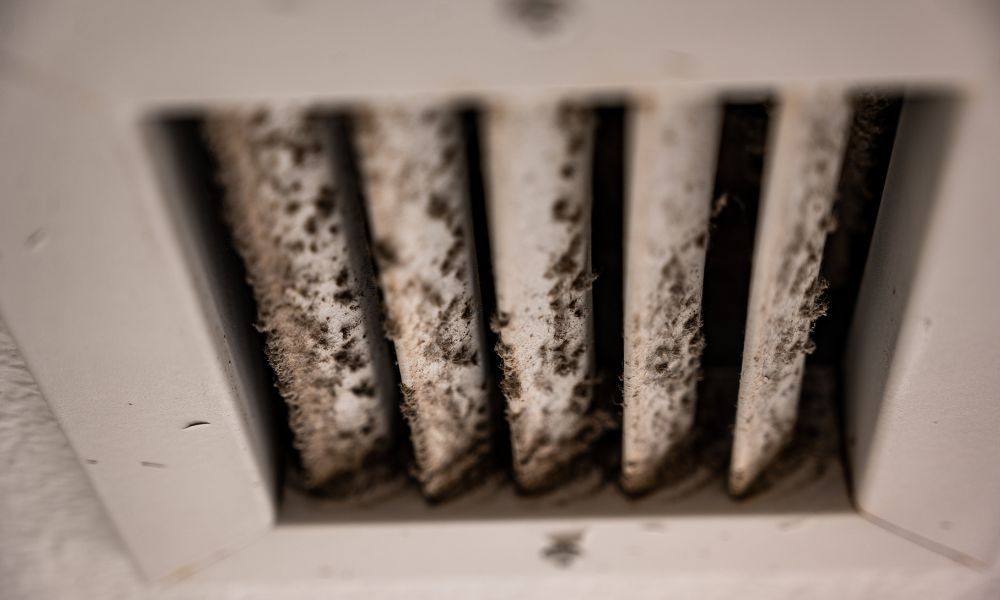
HVAC mold rarely looks dramatic at first. It often blends into dust and buildup.
From real inspections, common findings include:
- Mold lining the interior of supply ducts
- Growth inside air handlers and blower compartments
- Mold around evaporator coils and drain pans
Homeowners often clean vents and change filters, but mold thrives deeper inside the system where it goes unnoticed.
HVAC Mold Turns Local Issues Into Whole-Home Problems
Airflow Spreads Mold Everywhere
HVAC systems circulate air throughout the entire home. When mold grows inside ducts or air handlers, spores travel with that airflow.
This often leads to:
- Mold appearing in multiple rooms
- Spores settling on walls and ceilings
- Indoor air quality declining across the home
Mold rarely stays confined once it enters the HVAC system.
Condensation Is the Root Cause in Most HVAC Mold Cases
Inspection data consistently points to condensation as the driving factor behind HVAC mold.
Condensation problems usually result from:
- Improper insulation
- Poor airflow balance
- Clogged or slow drain lines
As long as condensation continues, mold growth almost always returns.
Why DIY Vent Cleaning Doesn’t Fix HVAC Mold
Many homeowners clean vent covers and feel relieved. Real inspections show this rarely solves the problem.
DIY vent cleaning:
- Reaches only visible surfaces
- Leaves mold deep inside ducts untouched
- Ignores condensation and humidity issues
If musty smells return shortly after cleaning, HVAC mold usually remains active inside the system.
Filters Help System Health, Not Mold Removal
Filters matter, but they don’t remove mold inside HVAC systems.
Inspection findings show:
- Dirty filters restrict airflow
- Restricted airflow increases condensation
- Moist filters can worsen mold conditions
Changing filters improves efficiency, but it doesn’t eliminate mold already growing inside ducts or air handlers.
Why Mold Appears in Rooms With No Water Damage
Homeowners often feel confused when mold appears far from any leak or moisture source.
This happens because:
- HVAC airflow distributes spores evenly
- Mold settles where conditions allow growth
- The original source stays hidden inside the system
The visible mold isn’t the starting point—it’s the result of airborne spread.
HVAC Mold Affects Air Quality Before Surfaces
In many North Lauderdale homes, HVAC mold impacts air quality long before visible mold appears.
Early warning signs include:
- Musty odors when the AC runs
- Increased allergy symptoms indoors
- Headaches or fatigue at home
These symptoms often improve outside the home, pointing directly to airborne exposure.
Why HVAC Mold Keeps Coming Back After Cleaning
Recurring mold usually means the HVAC system never got addressed properly.
Inspections often uncover:
- Mold remaining inside ductwork
- Ongoing condensation problems
- High indoor humidity
Without correcting moisture and airflow issues, cleaning efforts feel temporary and frustrating.
Older HVAC Systems Show Higher Mold Risk
Certain trends appear more often in older North Lauderdale homes.
These systems often have:
- Aging duct insulation
- Less efficient drainage
- Reduced airflow
These factors don’t cause mold by themselves, but they significantly increase risk when moisture is present.
What HVAC Mold Inspections Focus On
Real inspections don’t rely on guesswork. They evaluate conditions throughout the system.
Inspectors assess:
- Moisture levels inside HVAC components
- Visible growth inside ducts and air handlers
- Condensation patterns
- Airflow efficiency
This approach explains how mold entered the system and how it continues spreading.
What Proper HVAC Mold Remediation Addresses
Effective remediation focuses on breaking the mold cycle completely.
Proper remediation includes:
- Removing mold-contaminated HVAC components
- Correcting condensation and drainage issues
- Improving airflow and humidity control
- Preventing mold from re-establishing
When moisture control improves, mold loses its ability to survive.
Preventing HVAC Mold in North Lauderdale Homes
Prevention focuses on consistency, not reaction.
Helpful prevention steps include:
- Monitoring indoor humidity levels
- Addressing condensation quickly
- Maintaining HVAC systems regularly
- Ensuring proper airflow
When HVAC systems stay dry internally, mold struggles to grow.
Lessons From Real HVAC Mold Inspections
From countless inspections in North Lauderdale homes, one lesson stands out clearly. HVAC systems often drive mold problems more than any other factor.
Mold doesn’t always start on walls. It often starts in the system that moves air throughout the home.
Final Thoughts: HVAC Mold Explains the Pattern
If mold keeps returning despite repeated cleaning, the HVAC system deserves attention. Real inspections in North Lauderdale homes show this pattern again and again.
HVAC mold spreads quietly, affects air quality, and creates recurring problems when left unchecked. Understanding how it works replaces confusion with clarity.
The most important takeaway is simple and practical:
If mold keeps appearing throughout the home, it’s often traveling through the air your HVAC system moves every single day.
