
Why Florida Homes Are Mold Magnets
If you live in Florida, you’ve probably noticed something about your home: it seems like mold pops up everywhere. From a small black spot in the bathroom to a musty smell in the attic, mold has a way of sneaking into every corner. But it’s not magic—there are very specific reasons why Florida homes are essentially magnets for mold growth.
Living in cities like Hollywood, Tamarac, Miramar, Fort Lauderdale, or Deerfield Beach, you’re dealing with high humidity, frequent storms, aging homes, and air conditioning systems that create the perfect environment for mold. Many homeowners assume mold is just a minor annoyance they can clean away. Reality check: if you don’t understand why it thrives, you’ll be chasing it forever.
In this article, we’ll explore why Florida homes are particularly vulnerable, how mold spreads, the hidden risks, and what homeowners can do to protect their homes and families.
Florida’s Climate: Humidity Everywhere
Florida’s subtropical climate is the number one reason mold thrives here. Humidity levels routinely hover between 60–90%, creating an environment that mold loves. Unlike drier climates, Florida homes rarely experience extended dry periods, meaning moisture persists in walls, flooring, attics, and HVAC systems.
- High humidity: Supports mold growth on nearly any surface, especially porous materials like drywall, wood, and carpet.
- Seasonal rain and storms: Water intrusion from hurricanes or heavy rains saturates homes, creating hidden damp areas.
- Warm temperatures: Mold thrives between 70–90°F, which is basically Florida year-round.
Even if your home looks dry, moisture often hides inside walls, ceilings, or under floors. That’s why visible mold is almost always just the tip of the iceberg.
Air Conditioning: A Double-Edged Sword
Florida homes rely heavily on air conditioning. While AC keeps you cool, it also contributes to mold growth if not properly maintained:
- Condensation: Evaporator coils produce moisture that can leak into nearby walls, ducts, or insulation.
- Humidity swings: Poorly calibrated systems may not adequately reduce indoor humidity, creating pockets of dampness.
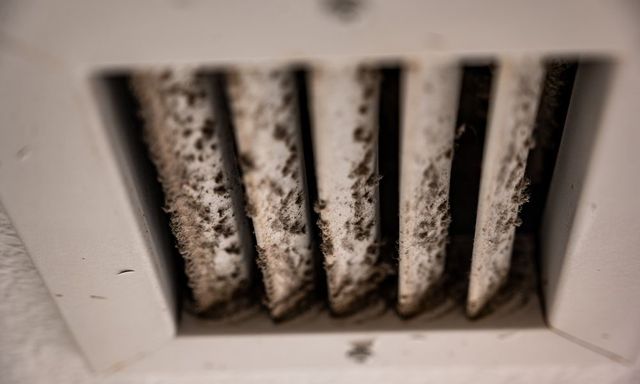
- Duct contamination: Dust and moisture inside ducts create the perfect environment for mold to grow and spread spores throughout your home.
Inspection data from South Florida homes shows that over 70% of HVAC systems have some level of mold contamination, even when owners maintain regular filter changes.
Structural Vulnerabilities
Florida homes, particularly older ones, have structural features that make mold growth more likely:
- Stucco and drywall: Porous materials trap moisture and support mold growth.
- Flat or low-slope roofs: These are prone to leaks during storms, which often go unnoticed.
- Crawlspaces: Limited ventilation traps humidity, creating a hidden breeding ground for mold.
- Poor insulation or ventilation: Attics and enclosed spaces become humid microenvironments, ideal for mold.
Even small leaks or condensation spots can feed colonies that grow over time, eventually becoming visible in bathrooms, kitchens, or ceilings.
Water Intrusion: Storms and Plumbing
Florida’s frequent storms are another major culprit:
- Hurricanes and heavy rains: Can flood homes or saturate walls, flooring, and insulation.
- Roof leaks: Often hidden until water stains appear on ceilings or mold grows behind walls.
- Plumbing leaks: Small, unnoticed leaks behind walls or under sinks provide continuous moisture for mold growth.
Inspections show that hidden water damage is present in over half of homes that report visible mold, meaning many homeowners are chasing symptoms rather than the actual source.
Why Mold Spreads Quickly
Florida homes provide ideal conditions for rapid mold proliferation:
- Moisture everywhere: Walls, floors, attics, and HVAC systems retain water from humidity, leaks, or condensation.
- Air circulation: Fans and AC systems can disperse spores throughout the house.
- Organic surfaces: Wood, drywall, insulation, and carpets give mold a perfect substrate.
- Hidden growth: Mold colonies often start in out-of-sight areas, allowing them to expand undetected.
By the time you notice a patch of mold on the wall, colonies are often thriving elsewhere, making DIY cleaning largely ineffective.
Health Risks in Mold-Prone Florida Homes
Hidden or visible mold in Florida homes can affect health in significant ways:
- Allergic reactions: Sneezing, congestion, itchy eyes, and post-nasal drip
- Respiratory issues: Chronic cough, asthma flare-ups, wheezing
- Fatigue and cognitive effects: Microbial volatile organic compounds (MVOCs) can affect energy and concentration
- Skin irritation: Rashes or hives
Children, seniors, and those with respiratory conditions are particularly sensitive. Many people don’t realize their recurring symptoms are related to hidden mold until professional testing is conducted.
Why DIY Solutions Often Fail
Many homeowners try to tackle mold on their own, thinking surface cleaning is enough. Here’s why that usually fails in Florida:
- Surface cleaning only: Scrubbing visible patches does nothing to remove hidden colonies inside walls, under flooring, or in ducts.
- Ignoring moisture sources: Leaks, condensation, or high humidity persist, allowing mold to return quickly.
- Airborne spores: Mold in HVAC systems or crawlspaces continues spreading spores despite cleaning visible areas.
Professional remediation is often the only way to fully address both the visible and hidden problem.
Expert Recommendations for Florida Homeowners
- Regular inspections: Focus on attics, crawlspaces, HVAC systems, bathrooms, and kitchens.
- Professional mold testing: Identify hidden colonies and determine the type and extent of mold.
- Moisture control: Fix leaks, maintain AC systems, and reduce indoor humidity to 45–55%.
- Targeted remediation: Remove contaminated materials, clean HVAC systems, and treat non-porous surfaces.
- Ongoing monitoring: Use moisture meters or thermal imaging to catch problems early.
Proactive measures reduce the risk of mold spreading silently and affecting your home or health.
Case Study: Hollywood Home
A Hollywood homeowner noticed minor black mold on a bathroom wall. DIY cleaning removed the patch temporarily, but it returned. Professional inspection revealed:
- Hidden mold behind bathroom drywall
- Spores circulating through the HVAC system
- Moisture buildup in the attic from condensation
After remediation, including drywall replacement, HVAC cleaning, and humidity control, the home’s air quality improved, mold recurrence stopped, and allergy symptoms decreased.
Bottom Line
Florida homes are mold magnets because of humidity, warm temperatures, structural vulnerabilities, water intrusion, and AC systems. Surface cleaning alone won’t solve the problem—hidden mold colonies almost always exist.
Professional inspection, testing, and remediation are critical for:
- Protecting your family’s health
- Preventing structural damage
- Reducing mold recurrence
- Ensuring indoor air quality
Remember: if your home is in Florida, mold isn’t a “maybe”—it’s a very real possibility. Understanding why it thrives is the first step to keeping it under control.
