
Health Effects of Long-Term Mold Exposure – What We See Inside Homes in Davie
If you live in Davie and your home smells a little… earthy… especially when the AC kicks on, you’ve probably asked yourself:
“Is this just Florida humidity?”
Or
“Could this actually affect my health?”
Here’s the honest answer:
Long-term mold exposure can impact health — but the severity depends on the environment, the mold levels, and the individual.
Inside homes across Davie, we consistently see patterns that explain why symptoms linger, why some family members feel worse than others, and why problems often go unnoticed for months.
Let’s break this down clearly, practically, and without fear-based exaggeration.
Why Davie Homes Create Ideal Mold Conditions
Davie sits in humid South Florida. That means:
- High year-round humidity
- Long rainy seasons
- Warm temperatures almost every month
- Heavy AC use
Mold needs three things:
- Moisture
- Organic material (drywall, wood, dust)
- Warmth
Davie homes naturally provide all three.
But here’s what most homeowners miss:
It’s rarely one dramatic flood that causes long-term exposure.
It’s usually slow, hidden moisture problems that quietly feed mold growth over time.
What We Actually See Inside Davie Homes
Before we talk health, let’s talk real inspection patterns.
Because symptoms make more sense when you understand the environment.
1. Air Handler Closets With Hidden Growth
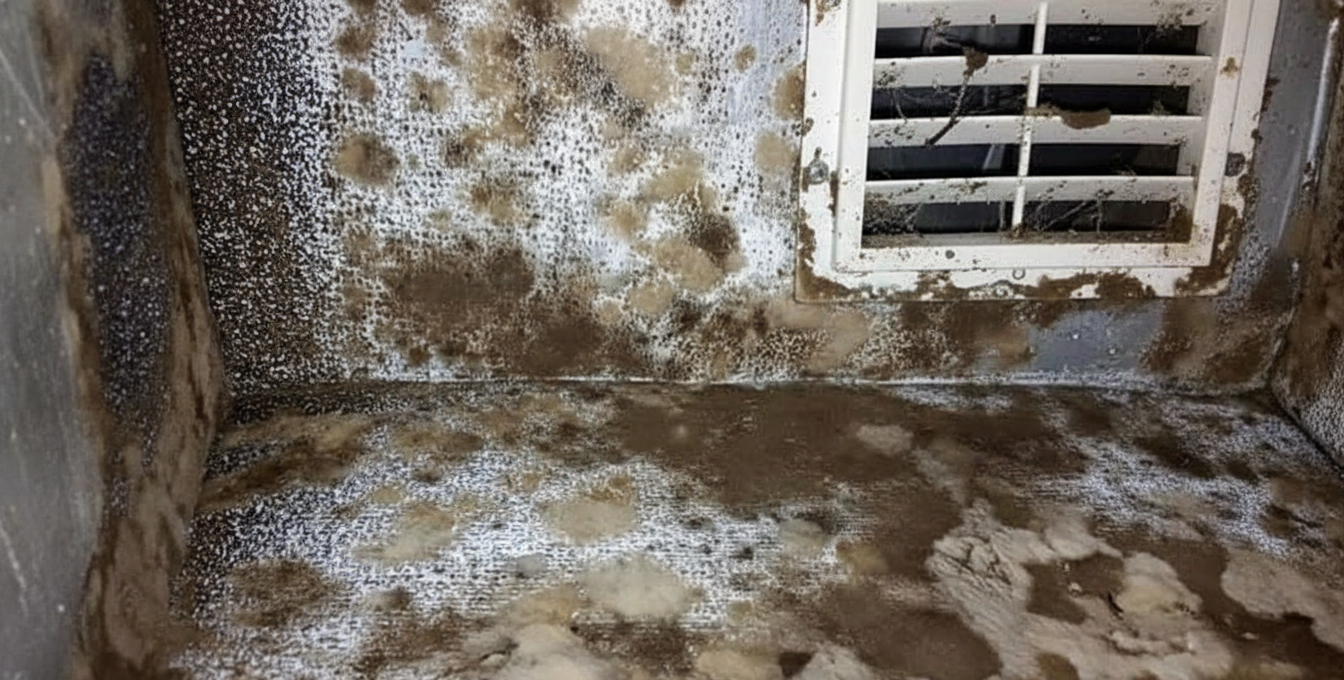
In Davie homes, one of the most common mold sources is the AC closet.
We often find:
- Mold behind air handler units
- Clogged condensate drain lines
- Rusted drain pans
- Elevated humidity inside enclosed closets
Homeowners usually report:
- Musty odor when AC starts
- Allergy symptoms indoors
- No visible mold in living areas
The AC system can circulate mold spores throughout the home without visible wall damage.
That’s where long-term exposure often begins.
2. Attic Mold That No One Checks
Davie homes frequently show:
- Mold growth on roof sheathing
- Damp insulation
- Poor ventilation
- Bathroom exhaust fans venting into the attic
Because attics are rarely inspected, mold can grow there for years.
Spores then enter living spaces through:
- Ceiling gaps
- Recessed lighting openings
- HVAC returns
Exposure doesn’t require visible mold in your bedroom.
It can originate above your ceiling.
3. Slab Leaks and Hidden Wall Moisture
We’ve inspected Davie homes where:
- Flooring slightly warped
- Baseboards showed faint staining
- No obvious leak was visible
Moisture mapping revealed elevated readings behind walls or under flooring.
Slow plumbing leaks feed mold inside wall cavities for months before detection.
That’s when families report persistent symptoms without knowing why.
So What Are the Health Effects of Long-Term Mold Exposure?
Now let’s talk about what people actually experience.
Not internet horror stories.
Real patterns.
1. Chronic Nasal and Sinus Issues
The most common complaint in Davie homes with elevated mold levels?
- Ongoing congestion
- Post-nasal drip
- Sinus pressure
- Frequent throat clearing
Many homeowners assume it’s “just allergies.”
But when symptoms improve outside the home and worsen indoors, mold exposure becomes a strong possibility.
Mold spores irritate the respiratory lining — especially with repeated exposure.
2. Persistent Cough or Throat Irritation
Long-term exposure can trigger:
- Dry cough
- Scratchy throat
- Increased mucus production
Children and elderly individuals are often more sensitive.
Homes with attic mold or HVAC contamination frequently show this pattern.
3. Worsening Asthma or Respiratory Conditions
For residents in Davie with asthma, mold exposure may:
- Increase flare-ups
- Trigger wheezing
- Reduce lung comfort
Not everyone develops asthma from mold.
But existing respiratory conditions can worsen in high-spore environments.
Humidity itself also increases respiratory discomfort.
And Florida homes can maintain high indoor humidity without homeowners realizing it.
4. Eye and Skin Irritation
In homes with elevated mold levels, we sometimes hear reports of:
- Watery or itchy eyes
- Mild skin rashes
- Facial pressure
Again, these symptoms vary by individual sensitivity.
Some people feel nothing at all.
Others react strongly.
5. Fatigue and Brain Fog (Reported, Not Universal)
Some homeowners describe:
- Low energy
- Difficulty concentrating
- Headaches
It’s important to be careful here.
Fatigue has many causes.
But in certain homes with significant mold growth and high spore counts, these symptoms improve after remediation.
Correlation doesn’t always equal causation — but environment matters.
Why Long-Term Exposure Matters More Than Short-Term Exposure
Brief exposure to mold is common and often harmless.
Outdoor air naturally contains spores.
The concern grows when:
- Indoor spore levels exceed outdoor levels
- Exposure continues daily
- Moisture source remains unresolved
- Sensitive individuals live in the home
Long-term exposure means repeated inhalation of elevated spores.
That’s when symptoms persist.
Who Is Most Vulnerable in Davie Homes?
While anyone can react, certain groups are more sensitive:
- Infants and young children
- Elderly residents
- Individuals with asthma
- People with weakened immune systems
- Those with severe allergies
In homes where multiple family members feel fine but one person struggles, sensitivity differences explain a lot.
The Role of Humidity in Health Effects
High indoor humidity alone can:
- Increase dust mites
- Worsen allergy symptoms
- Promote mold growth
In Davie, indoor humidity often exceeds 60% — especially during summer.
Optimal indoor humidity should stay between 45–55%.
Anything higher creates comfort and health challenges.
Oversized AC systems frequently cool air without properly removing moisture.
Cool house.
Humid air.
Respiratory discomfort.
Signs Your Home May Be Contributing to Symptoms
Watch for these patterns:
- Musty odor when AC turns on
- Symptoms improving outside the home
- Recurring mold on bathroom ceilings
- Ceiling stains after heavy rain
- Warped baseboards
- Humidity readings above 60%
One symptom alone isn’t proof.
But multiple environmental clues + persistent symptoms? That’s worth investigating.
What Professional Mold Evaluations Include
In Davie homes, a thorough evaluation may involve:
- Visual inspection
- Moisture mapping
- Thermal imaging
- Attic assessment
- HVAC inspection
- Air sampling (comparing indoor vs outdoor spore levels)
Data helps determine whether mold levels are elevated or typical for Florida environments.
Testing removes guesswork.
What We Tell Davie Homeowners
Here’s the balanced truth:
- Not every mold issue causes severe illness.
- Not every symptom is caused by mold.
- But long-term elevated indoor mold levels can affect respiratory comfort and overall well-being.
The key issue is moisture.
Fix the moisture.
You reduce mold.
You reduce exposure.
Practical Prevention for Davie Homes
You can’t control Florida weather.
But you can control your indoor environment.
✔ Keep Indoor Humidity Between 45–55%
Use a hygrometer to monitor levels.
✔ Service Your AC Twice Per Year
Ensure coils and drain lines stay clean.
✔ Address Leaks Immediately
Small drips turn into big contamination over time.
✔ Inspect Attics Annually
Especially after storm season.
✔ Use Bathroom Exhaust Fans Properly
And confirm they vent outside — not into the attic.
The Bottom Line
Inside Davie homes, long-term mold exposure usually starts quietly:
- A slow leak
- An AC drain clog
- Attic humidity
- Poor ventilation
Symptoms often appear gradually.
Not dramatically.
And because Florida humidity is normal, homeowners sometimes overlook the warning signs.
The goal isn’t fear.
It’s awareness.
If your home smells musty, feels humid, or seems to trigger ongoing respiratory discomfort, it’s worth evaluating.
Because in Davie, moisture doesn’t take a season off.
And where moisture lingers, mold follows.
