
How Mold Spreads Through HVAC Systems – Lessons From Real Inspections for Homes in Pompano Beach
Ever turn on your AC and suddenly catch a musty smell drifting through the house? I’ve walked into plenty of Pompano Beach homes where homeowners cleaned every surface, yet mold still floated through the air. The culprit usually hid inside the HVAC system.
Real inspections teach us one powerful lesson: once mold enters your HVAC system, it spreads everywhere fast. Let’s talk through real inspection insights so you can stop mold at the source instead of chasing it room by room.
Why HVAC Systems Become Mold Highways in Pompano Beach Homes
Pompano Beach homes run AC almost year-round. That constant cooling creates condensation, and condensation creates moisture. Mold loves moisture more than anything.
HVAC systems create mold-friendly conditions because:
- Cooling coils constantly produce condensation
- Drain lines sometimes clog or overflow
- Ductwork collects dust and moisture
- Poor insulation causes vent sweating
- Humid air circulates through the system
Mold spores already exist inside homes, so once moisture appears in HVAC components, growth begins quickly.
Ever wonder why every room smells musty at once? Your HVAC system probably spreads mold spores through every vent.
Real Inspection Lessons: Where Mold Actually Starts
Most homeowners blame visible mold spots on walls. Real inspections usually reveal something deeper.
Common HVAC Mold Locations
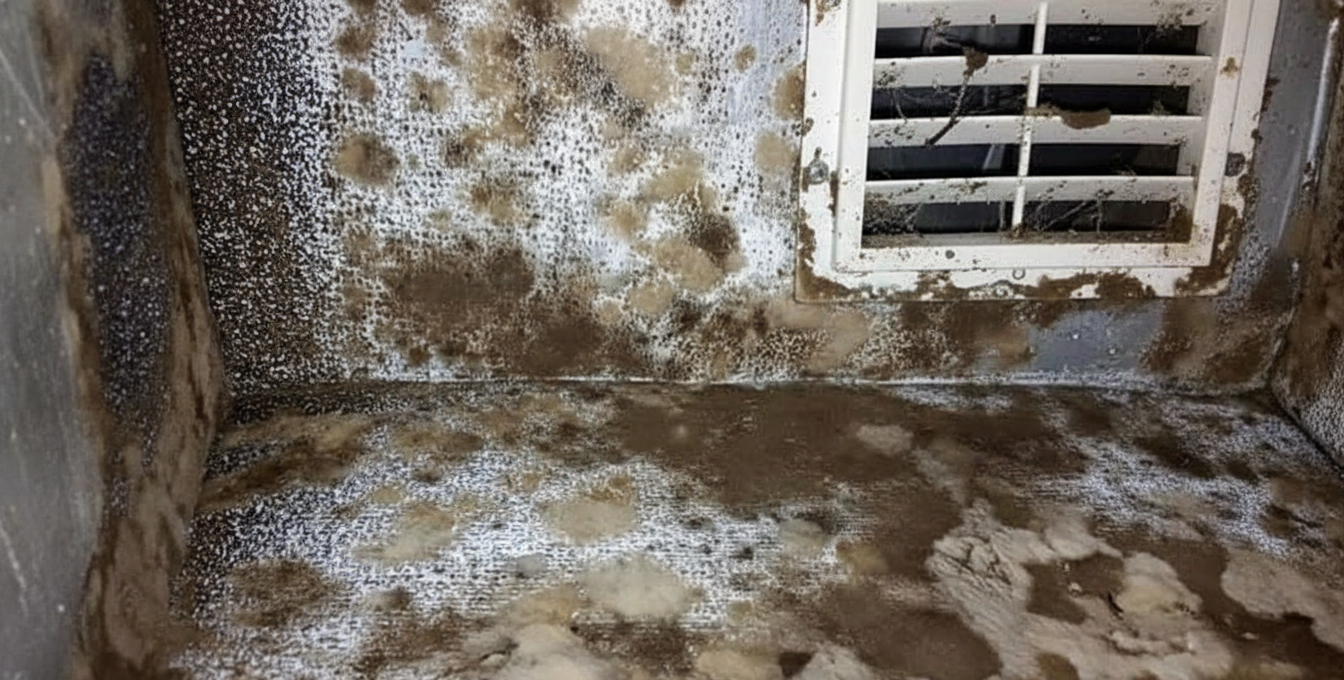
During inspections across Pompano Beach homes, we repeatedly find mold growing in:
- AC air handler units
- Evaporator coils
- Drain pans and drain lines
- Return air ducts
- Flexible duct insulation
- Vent registers
- Blower compartments
One homeowner cleaned mold in a bedroom three times, yet it kept returning. We inspected the HVAC system and found mold growing on damp coils spreading spores daily.
Ever cleaned mold only to watch it come back weeks later?
How Mold Travels Through HVAC Systems
Here’s how mold spreads through homes once HVAC systems become contaminated.
Mold Spread Timeline
- Moisture forms inside HVAC system.
- Mold grows on coils or ducts.
- Airflow circulates mold spores.
- Spores enter every room.
- Mold settles in new damp areas.
- Musty smells spread throughout the home.
By the time homeowners notice the smell, mold often spreads far beyond the original location.
Stopping mold requires stopping moisture inside the HVAC system first.
Why Pompano Beach Homes Face Higher HVAC Mold Risks
Living near the coast brings extra humidity challenges. Homes constantly battle moist air.
Local Conditions That Increase Risk
Homes here deal with:
- High outdoor humidity year-round
- Frequent rainstorms
- Salt air corrosion affecting HVAC parts
- Long AC operating hours
- Closed homes trapping indoor humidity
All these factors make HVAC systems work harder and collect more moisture.
IMO, coastal humidity makes regular HVAC inspections absolutely necessary.
Warning Signs Mold May Already Be in Your HVAC
Many homeowners miss early clues. Mold inside HVAC systems often hides quietly at first.
Signs You Should Watch For
Look out for:
- Musty smells when AC runs
- Allergy symptoms worsening indoors
- Dust buildup around vents
- Black or dark spots on vents
- Condensation around registers
- Uneven cooling or airflow
- Persistent indoor humidity
Ask yourself: does the smell appear right when the AC turns on?
That usually signals mold somewhere inside the system.
What Inspectors Actually Check During HVAC Mold Inspections
Homeowners often expect quick checks, but professional inspections dig much deeper.
HVAC Inspection Steps
Professional inspections usually include:
- Full HVAC visual inspection
- Moisture testing around air handler
- Coil and drain pan inspection
- Ductwork camera inspections
- Air quality mold spore testing
- Attic duct inspection
- Leak source detection
Inspectors then recommend solutions to remove contamination and prevent future mold growth.
Because here’s the reality: cleaning vents without fixing moisture means mold returns quickly.
Biggest HVAC Mold Mistakes Homeowners Make
FYI, homeowners often try quick fixes that hide the problem instead of solving it.
Common HVAC Mold Errors
• Cleaning vents without cleaning ducts
• Ignoring clogged drain lines
• Skipping AC maintenance
• Running AC too cold causing condensation
• Painting over mold stains
• Waiting months before inspection
Surface cleaning helps temporarily, but mold keeps spreading through airflow if contamination remains.
Solve moisture problems first, and mold stops spreading.
Health and Comfort Problems Mold Causes Through HVAC
Once mold enters HVAC systems, everyone in the home feels the effects.
Risks Mold Creates
HVAC mold contamination may cause:
- Allergy flare-ups
- Persistent coughing or sneezing
- Sinus irritation
- Headaches and fatigue
- Respiratory discomfort
- Indoor air quality decline
- Property value concerns
Children and elderly residents usually experience symptoms sooner.
Nobody wants their AC system spreading unhealthy air through the home.
How Homeowners Can Prevent HVAC Mold Problems
The good news? Preventing HVAC mold stays easier than removing it.
Practical Mold Prevention Steps
Follow these tips:
- Service AC systems annually
- Clean or replace filters regularly
- Keep humidity below 50%
- Flush AC drain lines routinely
- Seal duct leaks
- Improve attic ventilation
- Address leaks immediately
Simple maintenance protects indoor air quality and saves repair costs later.
Prevention always costs less than remediation. Why let mold win when stopping it early stays easier? 🙂
Real Inspection Case in Pompano Beach
One homeowner complained about constant allergies and musty odors despite cleaning every room. Inspection revealed heavy mold buildup inside the HVAC air handler and ducts.
After professional cleaning and moisture correction, air quality improved dramatically, and symptoms disappeared.
Sometimes the problem sits quietly inside the equipment you trust to keep your home comfortable.
Final Thoughts: Stop Mold at the HVAC Source
Mold spreads silently through HVAC systems long before homeowners notice visible signs. By the time smells appear, spores already circulate through the entire home.
Professional HVAC mold inspections help Pompano Beach homeowners detect problems early, protect indoor air, and prevent expensive remediation later. Acting quickly saves money, protects health, and keeps homes comfortable.
So next time your AC kicks on and something smells off, ask yourself: should I check the system before mold spreads further?
Trust me — future you will appreciate solving it now instead of dealing with a bigger mess later.
