
What Most People Get Wrong: Air Duct Mold Insights for Homes in Fort Lauderdale
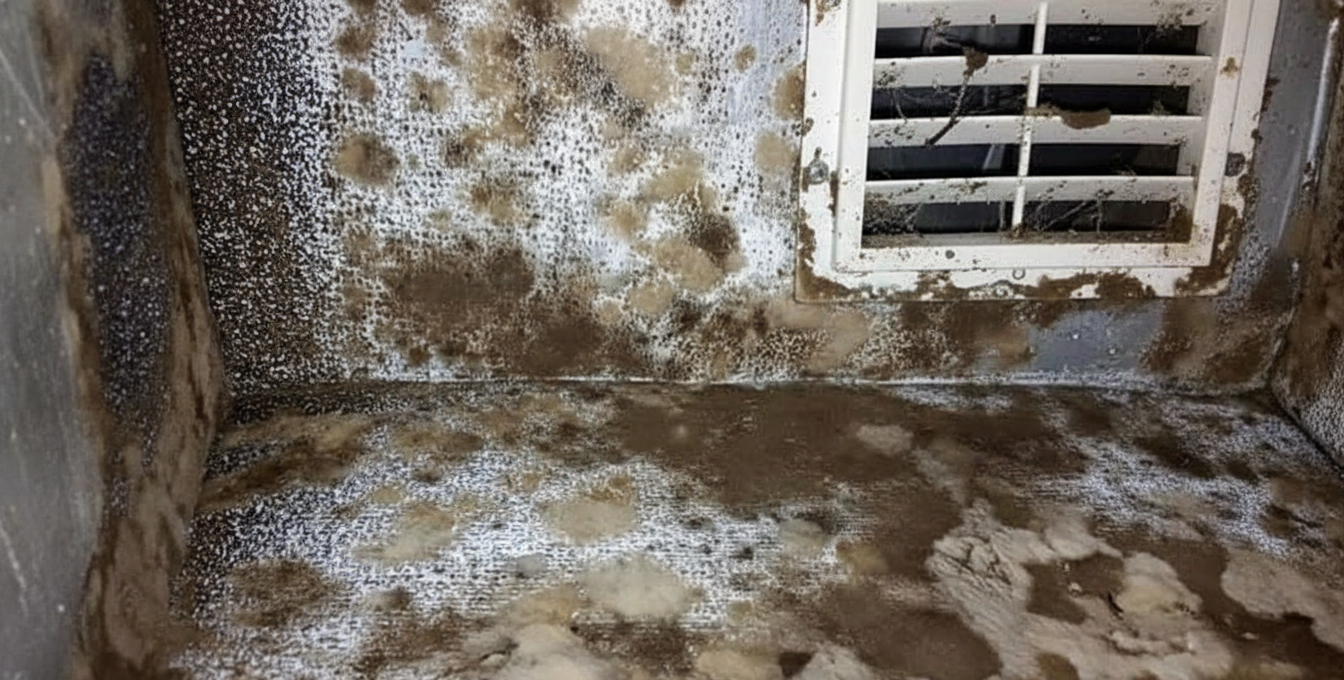
Mistake #1: “If My Vents Look Clean, My Ducts Are Clean”
This one comes up constantly.
Homeowners wipe the vent cover and assume the system is fine.
But during mold inspections, we often find growth:
- Inside flexible duct lining
- On evaporator coils
- Around blower motors
- Inside air handler compartments
The vent cover only shows the final exit point. The real system sits deeper inside.
Ever cleaned your vent and still noticed the smell? That’s why.
Mistake #2: Thinking Dust Equals Mold (Or Vice Versa)
Not every dark buildup around vents equals mold.
But not every mold issue looks dramatic either.
During mold testing in Fort Lauderdale homes, we often discover:
- Elevated airborne spore levels
- Hidden growth inside HVAC systems
- Contaminated insulation
Dust accumulates naturally. Mold grows when moisture stays present.
Moisture is the real trigger.
Why Fort Lauderdale Homes See More Air Duct Issues
Fort Lauderdale homes deal with:
- Constant humidity
- Year-round AC operation
- Warm attic temperatures
- Salt air exposure near coastal zones
When cold air flows through ducts in a hot attic, condensation forms.
That condensation dampens insulation and duct lining.
Add dust to that moisture, and mold finds a food source.
It’s simple science.
Mistake #3: “My AC Filter Prevents Mold”
Filters help reduce airborne particles.
They do not:
- Dry out condensation
- Clean internal coils
- Remove moisture from duct insulation
We frequently open air handlers during mold inspection and find microbial buildup behind perfectly clean filters.
Filters protect airflow quality — not internal moisture problems.
IMO, this misunderstanding leads to delayed action more than anything else.
How Mold Actually Spreads Through Air Ducts
Here’s what really happens.
- Moisture forms inside air handler or duct insulation.
- Mold begins growing in damp areas.
- Airflow distributes microscopic spores.
- Spores settle in rooms and vents.
Homeowners clean visible mold spots.
The HVAC system reseeds them weeks later.
That cycle continues until professional mold removal addresses the source.
What Mold Testing Often Reveals in Duct Cases
When we perform air sampling in Fort Lauderdale homes with suspected duct mold, we often find:
- Higher spore counts indoors than outdoors
- Increased readings near return vents
- Species commonly linked to HVAC moisture
Testing confirms whether contamination remains localized or spreads system-wide.
Without testing, homeowners guess.
With testing, remediation becomes targeted and precise.
Minor Duct Contamination vs Major Remediation
Let’s stay realistic.
Minor Issues:
- Light coil growth
- Small duct insulation dampness
- Low airborne spore levels
These often require targeted cleaning and moisture correction.
Larger Issues:
- Extensive duct insulation contamination
- High indoor spore counts
- Long-term condensation problems
These require structured mold remediation, sometimes including duct replacement.
Most Fort Lauderdale homes fall into the manageable category — when addressed early.
What Actually Prevents Air Duct Mold
Forget quick fixes.
Focus on:
- Keeping indoor humidity between 45–55%
- Clearing AC drain lines regularly
- Inspecting attic duct insulation
- Servicing HVAC systems annually
- Scheduling mold inspection if musty odors persist
FYI, small preventive steps prevent large remediation costs.
Humidity control remains everything in South Florida.
What We Consistently See Across Broward County
We inspect homes across Fort Lauderdale, Oakland Park, Tamarac, Coral Springs, Sunrise, and Pompano Beach, and one trend stands out:
Moisture drives duct mold.
Not dust. Not poor cleaning habits.
Moisture.
When condensation stays unchecked, mold follows.
Final Thoughts: Clean Vents Don’t Mean Clean Ducts
Air duct mold hides inside the system.
It grows quietly. It spreads through airflow. It often starts with something as simple as a clogged drain line.
Inspection data consistently shows:
- HVAC systems amplify mold issues
- Surface cleaning doesn’t fix internal growth
- Mold testing clarifies real contamination levels
- Early mold removal prevents system-wide spread
