


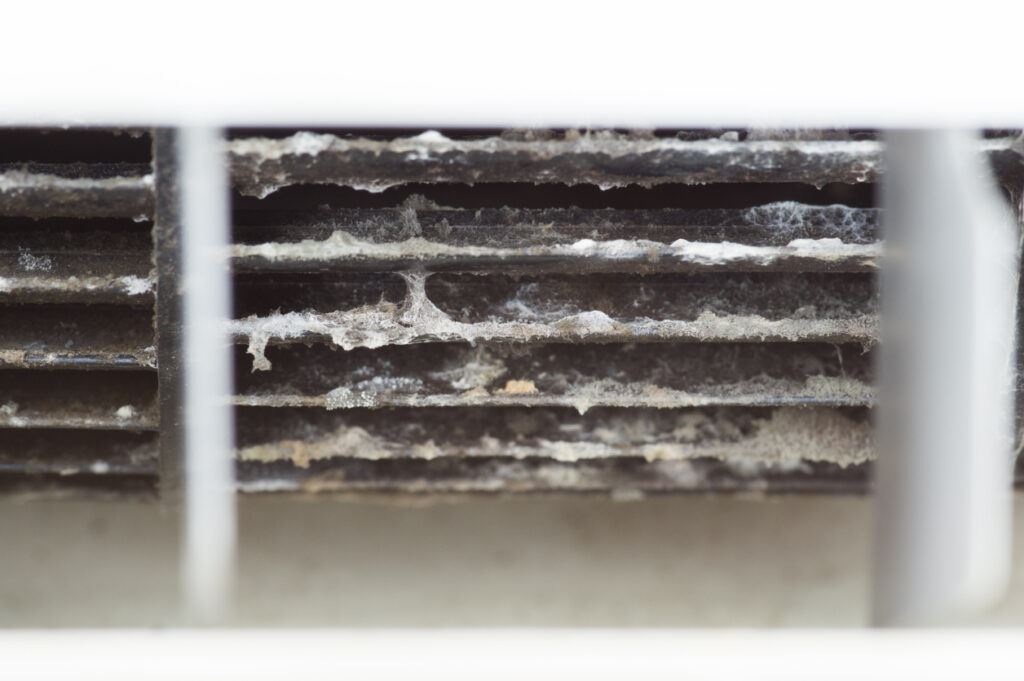
Mold doesn’t spread randomly, and it definitely doesn’t rely on bad luck. In Pompano Beach, the data lines up almost perfectly with what we see inside homes every day—HVAC systems play a massive role in how mold moves, grows, and sticks around. Homeowners often focus on visible mold spots, while the real problem quietly circulates through the air.
This article breaks down how mold spreads through HVAC systems in Pompano Beach homes, using real inspection data, field experience, and simple explanations that actually make sense.
Why HVAC Systems Matter So Much in Pompano Beach Homes
Living in Pompano Beach means air conditioning runs most of the year. HVAC systems don’t just cool air. They move air constantly, and that movement turns small mold problems into whole-house issues.
Data from inspections shows a clear pattern:
- Homes with persistent HVAC moisture show higher mold counts
- Contaminated systems spread spores room to room
- HVAC-related mold rarely stays localized
Ever notice how mold symptoms affect the entire house instead of one room? HVAC airflow explains that perfectly.
The Science Behind Mold and Air Movement
Mold spreads through microscopic spores. These spores travel easily through air, especially when systems run daily. HVAC systems create ideal conditions when moisture and airflow overlap.
Here’s the simple science:
- Warm, humid air enters the system
- Cooling creates condensation
- Moist surfaces allow mold growth
- Airflow distributes spores
When systems cycle multiple times per hour, spores don’t stay put. They travel.
Where Mold Starts Inside HVAC Systems
Mold doesn’t grow everywhere inside HVAC systems. It targets specific components where moisture lingers longest.
Inspection data shows mold commonly starts on:
- Evaporator coils
- Drain pans and drain lines
- Internal insulation
- Air handler cabinets
These areas stay dark, damp, and undisturbed. Mold treats them like prime real estate.
Condensation: The Biggest Mold Trigger We See
Condensation drives most HVAC mold problems. When temperature differences create moisture inside systems, mold growth follows fast.
We consistently measure:
- Excess moisture on coils
- Standing water in drain pans
- Damp insulation liners
- High humidity inside ductwork
Homeowners rarely see condensation happening. Mold absolutely does.
How HVAC Systems Spread Mold Through Entire Homes
Once mold establishes itself inside HVAC components, distribution becomes automatic. Every cycle moves spores into living spaces.
Data-backed spread patterns include:
- Mold spores exiting supply vents
- Contamination settling on furniture
- Growth appearing in multiple rooms
- Recurring odors after cleaning
That musty smell that moves from room to room usually points straight to HVAC involvement.
Mold Inspection Data: HVAC Systems Lead the List
During mold inspections, HVAC systems consistently rank among the top contamination sources. In Pompano Beach homes, inspection data shows HVAC involvement in a majority of mold cases.
We inspect:
- Air handlers
- Supply and return ducts
- Vent registers
- Surrounding building materials
Visual mold often represents only a fraction of the actual contamination.
When Mold Testing Confirms HVAC Spread
Mold testing helps connect symptoms to HVAC systems when growth stays hidden. Air samples near vents often show elevated spore counts compared to other areas.
Testing helps when:
- Odors appear without visible mold
- Allergies worsen when AC runs
- Mold returns after surface cleaning
- Documentation becomes necessary
Testing provides proof, not opinions.
Mold Removal Inside HVAC Systems
Mold removal inside HVAC systems requires precision. Surface cleaning alone doesn’t solve contamination when spores embed into insulation and components.
Proper removal includes:
- Containment to prevent spread
- HEPA filtration during work
- Cleaning or removing affected components
- Sanitizing non-porous surfaces
Incomplete removal leaves spores behind. Spores always find moisture again.
Mold Remediation: What the Data Supports
Data consistently shows that mold remediation succeeds only when moisture sources get corrected. Removing mold without addressing condensation or drainage failures leads to repeat growth.
Effective remediation focuses on:
- Correcting airflow problems
- Fixing drain line issues
- Reducing internal humidity
- Verifying dry conditions
Remediation stops the cycle. Removal alone pauses it.
DIY HVAC Mold Fixes Don’t Match the Data
Homeowners often try replacing filters or spraying vents. Inspection data doesn’t support these fixes.
DIY methods fail because:
- Filters don’t stop internal growth
- Sprays don’t reach coils or insulation
- Moisture sources remain active
- Spores redistribute during cleaning
Data shows repeat contamination happens far more often after DIY attempts.
HVAC Mold and Indoor Air Quality
HVAC-related mold directly impacts indoor air quality. Homes with contaminated systems consistently show higher airborne spore counts.
Homeowners report:
- Congestion indoors
- Headaches when AC runs
- Fatigue at home
- Persistent odors
Air quality improves noticeably after proper remediation. That result shows up again and again.
Why Pompano Beach Homes Face Higher HVAC Mold Risk
Homes throughout Broward County face mold pressure, but Pompano Beach adds coastal humidity and constant cooling demand. HVAC systems rarely get long dry cycles.
Contributing factors include:
- Year-round AC usage
- High outdoor humidity
- Aging duct insulation
- Inconsistent maintenance
Mold thrives when systems never fully dry out.
How Often HVAC Systems Should Be Inspected
Data supports proactive inspections. Homes with regular HVAC inspections show lower mold severity when issues arise.
We recommend inspections:
- Annually
- After water leaks
- When odors appear
- Before buying or selling
Early detection reduces remediation scope significantly.
Preventing HVAC Mold Long-Term
Prevention focuses on moisture control and maintenance. Small adjustments prevent large problems.
Effective strategies include:
- Regular HVAC maintenance
- Keeping drain lines clear
- Managing indoor humidity
- Ensuring proper airflow
Prevention costs far less than remediation.
Final Thoughts: The Data Makes It Clear
Mold spreads through HVAC systems because moisture, airflow, and time work together. The data confirms what inspections show daily in Pompano Beach homes. Ignoring HVAC systems allows mold to move freely and grow quietly.
The solution stays consistent: thorough mold inspection, smart mold testing, precise mold removal, and complete mold remediation. Address HVAC systems properly, and mold loses its biggest advantage.
If your home shows signs of mold that seem to travel room to room, trust the data. HVAC systems often hold the answer, and fixing them early saves money, health, and stress long-term.
