
Why Ignoring It Costs More: Black Mold Insights for Homes in Coral Springs
Black mold is one of those problems homeowners often hope will go away on its own. A small dark spot gets wiped down. A musty smell fades for a while. A wall stain gets painted over. And life moves on.
Until it doesn’t.
In Coral Springs homes, inspections repeatedly show the same pattern: black mold becomes expensive not because it appears suddenly—but because it’s ignored early. What starts as a manageable moisture issue quietly spreads, damages materials, and increases repair costs with every passing week.
This article explains why ignoring black mold costs more, what professionals actually see during inspections, and how early action saves homeowners thousands.
First Things First: What People Mean by “Black Mold”
Homeowners often use the term black mold to describe any dark-colored growth. While not all black mold is the same species, inspectors agree on one thing:
👉 Dark mold almost always indicates ongoing moisture.
And moisture—not color—is what causes damage and cost.
Black mold commonly grows on:
- Drywall
- Wood framing
- Baseboards
- Insulation
- Inside HVAC systems
The longer moisture remains, the deeper mold spreads.
Why Coral Springs Homes Are Especially Vulnerable
Coral Springs homes face conditions that allow mold to grow fast:
- High humidity most of the year
- Heavy seasonal rainfall
- Constant air-conditioning use
- Slab foundations that hide plumbing leaks
- Modern construction that traps moisture
Mold doesn’t need a flood. It needs time + moisture—both of which are common here.
How Ignoring Black Mold Turns Small Problems Into Big Ones
Stage 1: Early Growth (Low Cost)
At this stage, mold is usually:
- Hidden behind walls or baseboards
- Limited to a small area
- Caused by a minor leak or condensation
Fixing it early often means:
- Stopping the moisture source
- Removing a small section of material
- Drying the area properly
This is the least expensive phase.
Stage 2: Spread and Structural Involvement (Higher Cost)
When mold is ignored:
- It spreads into wall cavities
- Adjacent materials become contaminated
- Wood framing may be affected
- Flooring and cabinets absorb moisture
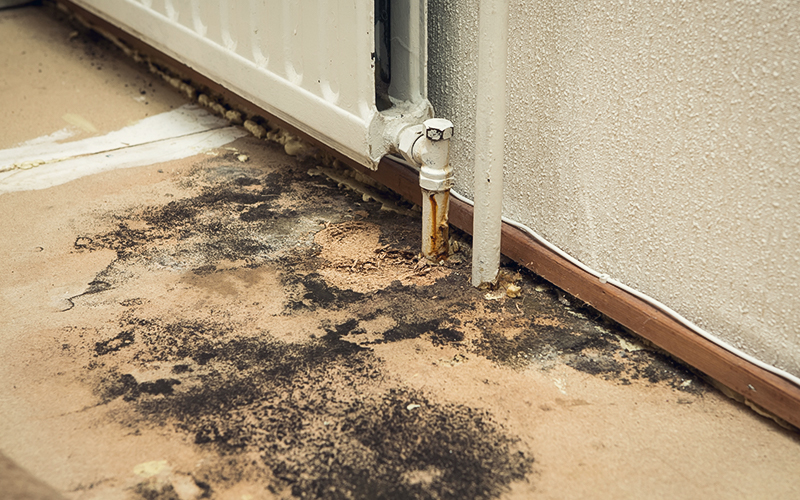
At this point, repairs often require:
- Multiple wall sections removed
- Flooring replacement
- Extended drying time
Costs increase quickly.
Stage 3: HVAC Contamination (Very Expensive)
This is where costs jump significantly.
If black mold reaches:
- Air handlers
- Evaporator coils
- Duct insulation
Spores can circulate throughout the home.
Once HVAC systems are involved, remediation becomes more complex, disruptive, and costly.
The Most Expensive Mistake: Cleaning and Forgetting
One of the biggest reasons costs rise is DIY surface cleaning.
Homeowners often:
- Scrub visible mold
- Use bleach or sprays
- Paint over stains
- Assume the issue is solved
What actually happens:
- Mold roots remain in porous materials
- Moisture stays trapped
- Mold regrows—often worse than before
Each “temporary fix” allows mold to spread further before real action is taken.
Why Insurance Often Doesn’t Help When Mold Is Ignored
Another cost surprise comes later.
Insurance claims are frequently denied when:
- Mold results from long-term leaks
- Damage is considered “maintenance-related”
- Homeowners delayed addressing known issues
Ignoring early signs can mean paying entirely out of pocket later.
Health Costs Add Up Too (Not Just Repairs)
While this article focuses on financial cost, health impacts also matter.
Long-term exposure to black mold may contribute to:
- Chronic congestion
- Headaches
- Fatigue
- Worsening allergies or asthma
Health concerns often push homeowners to act—but by then, mold growth is usually widespread.
Early Warning Signs That Are Commonly Ignored
Inspectors in Coral Springs often note these signs long before major mold damage:
- Paint bubbling or peeling
- Baseboards pulling away
- Flooring that feels soft or warped
- Musty smells that come and go
- Persistent indoor humidity
- Repeated “small” water issues
These are cost-saving warning signs—if acted on early.
Why Time Is the Most Expensive Factor
From real inspection outcomes, the pattern is consistent:
- Early action = localized repair
- Delayed action = widespread removal
- Repeated ignoring = structural involvement
Mold doesn’t suddenly become expensive.
It becomes expensive because it’s given time to grow.
What Professionals Do Differently (And Why It Costs Less)
Professional remediation focuses on stopping the cause, not hiding the symptom.
They:
- Identify and eliminate moisture sources
- Measure moisture inside materials
- Remove contaminated porous materials
- Dry affected areas thoroughly
- Prevent conditions that allow regrowth
When done early, this process is far less disruptive and far less costly.
Why Coral Springs Homeowners Benefit From Acting Early
Because humidity and warmth accelerate mold growth, delays are more costly here than in drier climates.
Homeowners who act early often avoid:
- Major demolition
- HVAC system contamination
- Long repair timelines
- Repeat mold problems
Early intervention protects both the home and the budget.
Practical Advice Without Fear
This isn’t about panic—it’s about practicality.
If black mold appears:
- Treat it as a moisture issue first
- Don’t rely on repeated cleaning
- Investigate what’s behind the surface
- Address leaks and humidity immediately
Ignoring mold doesn’t make it harmless.
It makes it more expensive.
Final Thoughts: Black Mold Gets Costly When It’s Ignored
In Coral Springs homes, black mold isn’t automatically a disaster—but ignoring it often turns it into one.
The cost doesn’t come from the mold itself.
It comes from:
- Time
- Moisture
- Delayed action
Homeowners who respond early stay in control. Those who wait usually pay more—financially, physically, and emotionally.
