
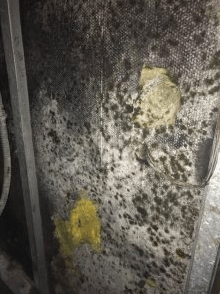
Mold doesn’t spread through HVAC systems because homeowners ignore obvious disasters. In North Lauderdale, it spreads because small, quiet issues stay out of sight while the system does exactly what it’s designed to do—move air everywhere. We open air handlers in homes that look spotless and still find mold actively circulating through the system. That’s not bad luck. That’s physics, moisture, and time doing their thing.
This article shares lessons from real inspections on how mold spreads through HVAC systems in North Lauderdale homes. No fear tactics. No hypotheticals. Just what inspections consistently show once the panels come off.
Why HVAC Systems Matter So Much in North Lauderdale Homes
Living in North Lauderdale means air conditioning runs most of the year. HVAC systems don’t just cool the house. They control airflow, moisture movement, and indoor air quality all at once.
That matters because:
- Air recirculates repeatedly
- Moisture forms inside system components
- Spores move efficiently with airflow
Once mold enters the HVAC system, it rarely stays contained.
Lesson One: Mold Rarely Starts Where You See It
One of the biggest misconceptions we hear is that mold starts at vents. Vents show symptoms, not sources.
Real inspections show mold usually starts in:
- Evaporator coils
- Drain pans and drain lines
- Internal HVAC insulation
- Air handler cabinets
By the time mold appears around vents or ceilings, it already grew deeper inside the system.
Condensation Drives Most HVAC Mold Cases
Leaks get blamed often, but condensation causes far more HVAC mold problems than plumbing failures ever do. Warm, humid air enters the system and hits cold metal surfaces. Moisture forms immediately.
From inspection data, the pattern looks like this:
- High outdoor humidity enters the system
- Cooling creates condensation on coils
- Short cycles limit drying time
- Moisture stays trapped on internal components
That steady dampness feeds mold quietly.
Where Mold Thrives Inside HVAC Systems
Mold doesn’t spread evenly. It targets areas that stay wet the longest and dry the slowest.
The most common growth locations we document include:
- Evaporator coils that remain wet
- Drain pans with standing water
- Fiberglass insulation inside air handlers
- Blower compartments with condensation
These areas stay dark, damp, and undisturbed—exactly what mold prefers.
Lesson Two: Filters Don’t Prevent HVAC Mold
Homeowners often assume frequent filter changes stop mold. Filters help airflow and dust control. They don’t stop mold growth inside the system.
Inspection findings regularly show:
- Clean filters with moldy coils
- Mold growing behind filters
- Drain pans full despite maintenance
Mold grows upstream of the filter, not after it.
How HVAC Systems Spread Mold Through the Home
Once mold establishes itself inside HVAC components, spread becomes automatic. Every time the system runs, spores move through ductwork and exit supply vents.
From real inspections, we consistently observe:
- Mold appearing in multiple rooms
- Odors that move with airflow
- Symptoms worsening when the AC runs
- Mold returning after surface cleaning
That “it feels like it’s everywhere” problem usually starts in the HVAC system.
Lesson Three: HVAC Mold Turns Small Problems Into Big Ones
A small amount of mold inside an air handler doesn’t stay small. HVAC systems amplify the problem by distributing spores repeatedly.
Ignoring HVAC mold often leads to:
- Ductwork contamination
- Internal insulation replacement
- Multi-room remediation
- Higher labor and material costs
Early intervention keeps remediation localized. Waiting expands it.
HVAC Mold and Indoor Air Quality
HVAC-related mold directly affects indoor air quality. Homes with contaminated systems often show elevated airborne spore levels throughout the house.
Homeowners commonly report:
- Congestion indoors
- Headaches at home
- Fatigue without explanation
- Persistent musty odors
Air quality rarely improves until HVAC contamination gets addressed directly.
Mold Inspection: Where Professionals Focus First
A proper mold inspection doesn’t stop at visible growth. HVAC systems receive special attention because they often act as the distribution hub.
During inspections, we evaluate:
- Air handlers and internal components
- Supply and return ductwork
- Drain pans and drain lines
- Moisture levels near HVAC systems
Skipping HVAC inspection almost guarantees missed mold sources.
When Mold Testing Helps Clarify Spread
Not every situation requires mold testing, but testing becomes useful when HVAC systems likely spread mold without obvious growth.
Testing helps when:
- Odors persist without visible mold
- Symptoms worsen when AC runs
- Mold keeps returning
- Documentation matters for real estate
Testing confirms whether spores circulate through the system.
Lesson Four: Mold Removal Alone Doesn’t Stop HVAC Spread
Many homeowners try mold removal without full mold remediation. That approach almost always leads to repeat issues.
Here’s the distinction that matters:
- Mold removal eliminates existing contamination
- Mold remediation fixes moisture and airflow conditions
Removing mold without correcting condensation guarantees regrowth.
Why DIY HVAC Mold Fixes Fail
DIY solutions focus on what’s easy to reach. Mold rarely grows there.
DIY efforts fail because:
- Internal growth stays untouched
- Moisture sources remain active
- Insulation stays damp
- Spores redistribute during cleaning
We often remediate larger areas after DIY attempts than before.
Structural and System Damage From HVAC Mold
HVAC mold doesn’t stop at air quality. Over time, moisture and contamination damage materials.
During remediation, we often uncover:
- Deteriorated duct insulation
- Corroded components
- Compromised drywall near vents
- Secondary mold growth elsewhere
Structural repairs drive costs much higher than early remediation.
Why North Lauderdale Homes Face Ongoing HVAC Mold Risk
Homes throughout Broward County face mold pressure, but North Lauderdale adds aging infrastructure and constant AC use.
Inspection trends frequently show:
- Elevated indoor humidity
- Older HVAC systems
- Limited ventilation
- Condensation-driven growth
These factors allow HVAC mold to spread quietly when misunderstood.
Real Inspection Lesson: “The Smell Moves”
One North Lauderdale homeowner complained that the musty smell moved from room to room. No visible mold anywhere. Inspection revealed mold on the evaporator coil and damp insulation inside the air handler.
Once the HVAC system was remediated, odors disappeared throughout the home. Waiting would have allowed deeper duct contamination.
How Professionals Stop HVAC Mold From Spreading
Professional mold remediation focuses on stopping mold and preventing recurrence—not just cleaning surfaces.
Effective HVAC remediation includes:
- Containment to prevent spore spread
- HEPA filtration
- Cleaning or removing contaminated components
- Moisture correction and verification
When moisture stops, mold loses its advantage.
Post-Remediation Verification Matters
Verification confirms remediation actually worked and prevents repeat costs.
Verification often includes:
- Moisture measurements
- Visual confirmation
- Optional follow-up testing
Homes without verification face higher recurrence rates.
How Often HVAC Systems Should Be Evaluated
Regular evaluation keeps small HVAC issues from becoming expensive ones.
We recommend HVAC mold evaluations:
- Annually
- After water damage
- When musty odors appear
- Before buying or selling a home
Early checks always cost less than late remediation.
Preventing HVAC Mold Long-Term
Prevention focuses on moisture control and system performance.
Effective prevention includes:
- Routine HVAC maintenance
- Keeping drain lines clear
- Managing indoor humidity
- Ensuring proper airflow
Small adjustments prevent large remediation projects.
Final Thoughts: Real Inspections Tell the Same Story
Mold spreads through HVAC systems in North Lauderdale homes because moisture and airflow work together quietly. Real inspections show the same lesson repeatedly—HVAC systems don’t hide mold, they spread it efficiently once it forms.
The solution stays consistent: thorough mold inspection, targeted mold testing when needed, proper mold removal, and complete mold remediation. Address HVAC mold early, and the problem stays manageable.
If odors travel, symptoms worsen when the AC runs, or mold feels widespread despite cleaning, don’t wait for visible proof. HVAC systems rarely fix themselves, and the longer mold circulates, the more expensive it becomes to stop.
