
What Most People Get Wrong: Mold Remediation Insights for Homes in Pompano Beach
Let’s start with a hard truth.
Most homeowners in Pompano Beach don’t mess up because they ignore mold. They mess up because they half-fix it.
They scrub the surface. They spray something strong. They repaint. And then… it comes back.
I’ve seen this pattern more times than I can count. Mold remediation isn’t about killing what you see. It’s about fixing why it grew in the first place. Let’s talk about what people commonly get wrong — and how to do it right.
Mistake #1: Thinking Bleach Solves the Problem
This one happens constantly.
Bleach can lighten surface stains. It does not remove mold roots inside porous materials like drywall or wood.
In Pompano Beach homes, mold usually grows because:
- Indoor humidity stays above 60%
- AC condensation builds up
- Minor roof leaks go unnoticed
- Plumbing drips hide behind cabinets
If moisture remains, mold returns.
Bleach doesn’t fix humidity. It just makes you feel productive for about a week.
Mistake #2: Ignoring the Moisture Source
Here’s the real issue.
Mold remediation without moisture correction equals temporary relief.
We frequently inspect homes where:
- Drywall was replaced but the leak remained
- Mold was cleaned but attic ventilation stayed poor
- Ducts were sprayed but condensation continued
Moisture feeds mold. Remove moisture, and mold loses its advantage.
If remediation doesn’t include moisture control, it’s incomplete.
Always.
Mistake #3: Treating the Visible Area Only
Visible mold often represents a fraction of the contamination.
In Pompano Beach homes, we regularly find:
- Damp insulation beyond stained drywall
- Elevated moisture three feet beyond visible damage
- Mold inside adjacent wall cavities
- Contamination inside nearby ductwork
Mold spreads where moisture travels.
Would you only clean the tip of an iceberg? Exactly.
Professional mold inspection identifies the full scope before remediation begins.
Mistake #4: Skipping Containment
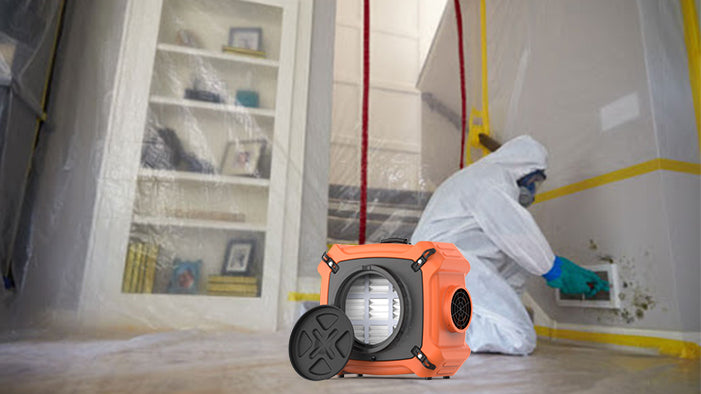
Proper mold remediation involves containment.
Without containment:
- Spores spread to clean areas
- HVAC systems pull contamination through ducts
- Cross-contamination increases
Professional remediation includes:
- Plastic containment barriers
- Negative air pressure
- HEPA air filtration
- Controlled removal of contaminated materials
Skipping containment saves time upfront but increases cleanup later.
IMO, improper containment creates bigger problems than the original mold in some cases.
Mistake #5: Overreacting and Demolishing Everything
Now let’s go the other direction.
Some homeowners panic and remove entire rooms unnecessarily.
Not all mold situations require full demolition.
Proper remediation focuses on:
- Assessing contamination size
- Determining material saturation
- Testing moisture levels
- Removing only compromised materials
Targeted remediation often solves the problem efficiently.
Panic costs money.
Strategy saves it.
HVAC Contamination: The Missed Factor
Many remediation jobs focus on walls but ignore the HVAC system.
If mold grows near ducts or air handlers, spores can circulate through the home daily.
In Pompano Beach inspections, we often uncover:
- Mold on evaporator coils
- Damp duct insulation
- Clogged AC drain pans
If your AC smells musty after remediation, something was missed.
Remediation should include evaluating airflow and condensation issues.
Real Inspection Example From Pompano Beach
We recently inspected a coastal home where the homeowner had cleaned visible mold three times.
It kept returning in the same bedroom corner.
Our findings:
- Indoor humidity at 65%
- Minor roof flashing leak
- Damp attic insulation
- Mold inside ceiling cavity
The cleaning wasn’t wrong. It was incomplete.
After fixing the leak and correcting humidity, remediation worked permanently.
That’s the difference moisture control makes.
What Proper Mold Remediation Should Include
Here’s what complete remediation looks like:
- Identify and stop the moisture source
- Contain affected areas
- Remove contaminated porous materials
- HEPA vacuum and clean surfaces
- Treat remaining materials appropriately
- Verify moisture levels are normal
- Address HVAC concerns if necessary
Anything less increases the chance of recurrence.
Shortcuts usually show up later.
Why Pompano Beach Homes Require Extra Attention
Coastal humidity adds constant pressure.
Even after remediation, high indoor humidity can reactivate dormant spores.
Keep indoor humidity between 45–55%.
Monitor it. Measure it. Don’t guess.
FYI, most repeat mold cases we see involve humidity that no one tracked.
Final Thoughts: Remediation Is About Moisture, Not Fear
Mold remediation in Pompano Beach doesn’t require panic. It requires precision.
Fix the moisture source. Contain properly. Remove compromised materials. Control humidity.
What most people get wrong isn’t effort. It’s direction.
Scrubbing mold without addressing moisture wastes time.
Addressing moisture first changes everything.
Because in South Florida, mold doesn’t grow by accident.
It grows where water stays.
