
Health Effects of Long-Term Mold Exposure – A Homeowner’s Guide for Homes in Deerfield Beach
Let’s talk about something homeowners in Deerfield Beach quietly deal with but rarely connect right away — ongoing allergy symptoms that don’t fully go away.
You wake up congested. Your throat feels scratchy. The house smells slightly musty, but nothing looks alarming. You assume it’s “just humidity.”
But here’s the thing: long-term mold exposure doesn’t always show up dramatically. It builds slowly, especially in coastal climates like Deerfield Beach.
Let’s break this down in a calm, practical way.
First: What Long-Term Mold Exposure Actually Means
Every home contains mold spores. That’s normal.
The problem starts when moisture allows mold to grow continuously over weeks or months. In Deerfield Beach, humidity stays high most of the year. That creates steady pressure on homes.
Long-term exposure happens when:
- Mold grows behind walls
- HVAC systems circulate spores daily
- Indoor humidity stays above 60%
- Water damage doesn’t fully dry
You don’t need a wall covered in black patches for exposure to occur. Airborne spores do the work quietly.
Common Symptoms Homeowners Report
During inspections in Deerfield Beach, we frequently hear similar complaints.
Long-term mold exposure can contribute to:
- Persistent nasal congestion
- Sneezing indoors
- Itchy or watery eyes
- Chronic coughing
- Sinus pressure
- Throat irritation
- Mild headaches
Ever notice symptoms improve when you leave the house for a few hours? That pattern matters.
Your body often notices indoor air quality problems before you see visible mold.
Respiratory Issues and Asthma Triggers
People with asthma or allergies often feel effects faster.
Mold spores irritate airways and can trigger:
- Wheezing
- Shortness of breath
- Chest tightness
- Increased asthma flare-ups
Long-term exposure doesn’t guarantee severe illness. But ongoing irritation stresses the respiratory system over time.
Coastal humidity in Deerfield Beach keeps mold active longer than in drier climates.
That constant exposure adds up.
Fatigue and “Brain Fog”
This one surprises people.
Some homeowners report:
- Difficulty concentrating
- Ongoing fatigue
- Mild dizziness
- Poor sleep quality
Poor indoor air quality can contribute to feeling off without obvious illness.
If multiple family members feel better when away from home, indoor mold becomes a reasonable factor to investigate.
It’s not about panic. It’s about patterns.
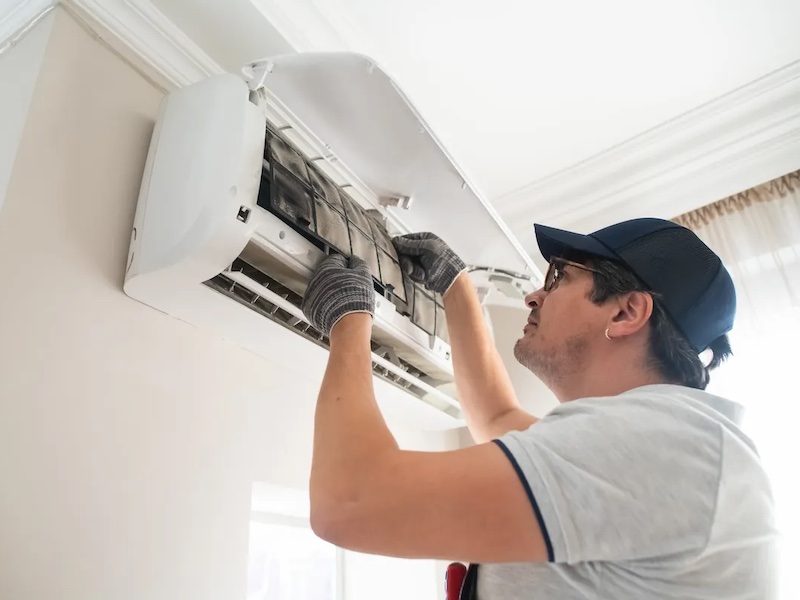
Why HVAC Systems Play a Big Role
Your HVAC system runs almost daily in Deerfield Beach.
If mold grows inside:
- Evaporator coils
- Drain pans
- Flex ducts
- Air handler cabinets
Spores circulate throughout the house constantly.
IMO, HVAC-related mold causes more long-term exposure than visible wall growth.
If your AC smells musty when it turns on, that’s a red flag.
Humidity: The Silent Contributor
Indoor humidity should stay between 45–55%.
In many Deerfield Beach homes, we measure levels above 60%, especially during summer.
High humidity:
- Encourages mold growth
- Worsens respiratory irritation
- Supports dust mites
- Makes air feel heavy
You can’t see humidity. But you definitely feel it.
FYI, a simple hygrometer can reveal whether your indoor air stays within a healthy range.
Hidden Mold: The Problem You Don’t See
Visible mold represents only part of the story.
We often uncover hidden growth:
- Behind drywall after small leaks
- Inside attic insulation
- Beneath laminate flooring
- Under bathroom cabinets
- Inside duct insulation
Hidden mold still releases spores.
You might clean visible spots repeatedly and still experience symptoms.
Ever deep-clean everything and still smell something earthy? That’s usually a clue.
When Should You Be Concerned?
You don’t need to panic over every sneeze.
But consider professional inspection if:
- Symptoms persist for weeks
- Musty odors linger
- Multiple family members feel affected
- Water damage occurred recently
- Mold keeps returning after cleaning
Professional mold inspection in Deerfield Beach identifies moisture sources and airborne spore levels clearly.
Guesswork rarely solves long-term exposure.
What Experts Recommend
We focus on practical steps, not fear.
Here’s what actually works:
- Keep indoor humidity between 45–55%
- Service HVAC systems annually
- Clean AC drain lines monthly
- Replace air filters regularly
- Fix leaks immediately
- Improve ventilation in bathrooms and kitchens
Moisture control prevents most long-term mold exposure cases.
Waiting usually allows growth to spread.
Real Inspection Example From Deerfield Beach
We recently inspected a coastal home where the homeowner reported chronic sinus irritation.
Walls looked clean.
We found:
- Indoor humidity at 65%
- Condensation inside return ducts
- Mold growth starting on evaporator coils
- Minor attic ventilation issues
After correcting humidity and servicing the HVAC system, symptoms improved significantly within weeks.
The solution wasn’t dramatic demolition. It was environmental correction.
Sometimes the fix starts with moisture control.
Final Thoughts: Pay Attention to Patterns
Long-term mold exposure in Deerfield Beach doesn’t usually show up as a horror movie scene. It shows up as subtle, recurring symptoms.
The science stays simple:
Moisture feeds mold. Mold releases spores. Spores affect air. Air affects you.
If your home feels damp, smells musty, or triggers ongoing irritation, take it seriously but calmly.
Schedule a professional inspection. Control humidity. Address leaks early.
Because in Deerfield Beach’s climate, prevention always costs less than correction — and breathing comfortably in your own home shouldn’t feel optional.
