
How Mold Spreads Through HVAC Systems – Why Ignoring It Costs More for Homes in
Let’s get straight to it. Ignoring HVAC mold in Florida homes is one of the fastest ways to turn a small issue into a big bill. We see this play out over and over during inspections. A homeowner notices a smell, maybe some dust from vents, shrugs it off, and keeps the AC running. That delay is where costs quietly start stacking up.
Florida’s climate already gives mold a head start. When HVAC systems get involved, mold doesn’t just grow—it spreads. And once it spreads, fixing it gets a lot more expensive.
HVAC Systems Don’t Keep Mold Contained
Your HVAC system doesn’t isolate problems. It distributes air everywhere, which means it also distributes mold spores when growth exists inside the system.
During inspections across Florida, we often see:
- Mold appearing in multiple rooms
- Odors traveling through the home
- Regrowth after surface cleaning
That’s not bad luck. That’s airflow doing exactly what it’s designed to do.
Condensation Starts the Problem Quietly
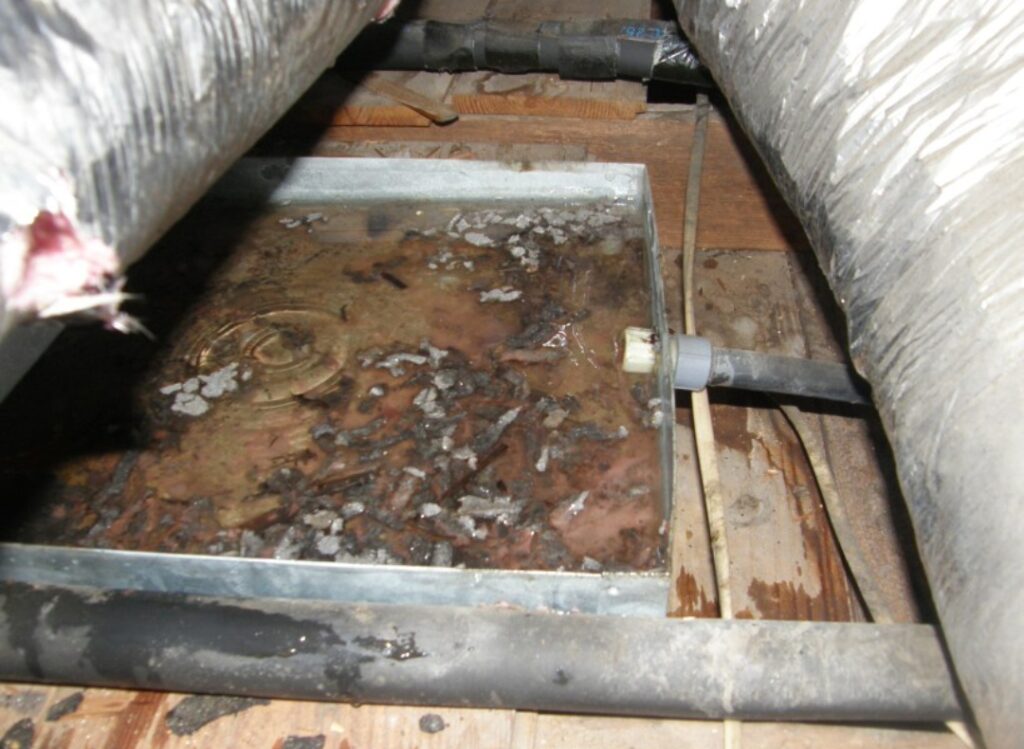
Condensation inside HVAC systems is normal. Persistent moisture is not. Florida humidity makes it harder for systems to dry out between cycles.
Common issues we uncover include:
- Clogged drain lines
- Overflowing drain pans
- Damp insulation inside air handlers
When moisture sticks around, mold settles in fast—and keeps spreading every time the AC runs.
Why Ignoring HVAC Mold Gets Expensive
Early HVAC mold issues usually stay limited. When homeowners ignore them, inspections often reveal:
- Mold spreading deeper into ductwork
- Contamination reaching air handlers
- Secondary mold growth on walls and ceilings
Each stage adds time, labor, and cost. The price jump from “early” to “delayed” remediation is never small.
Ductwork Multiplies the Damage
Once mold enters ductwork, it stops being a single-location problem. Ducts move spores efficiently and repeatedly.
We frequently find:
- Mold near multiple supply vents
- Damp duct insulation
- Odors that never fully disappear
Ignoring duct involvement almost guarantees higher remediation costs later.
DIY Cleaning Often Increases Costs
This one hurts. Homeowners try to save money by cleaning vents or spraying solutions. Inspections after DIY attempts often show:
- Mold disturbed and spread further
- Spores released into living areas
- Faster regrowth
IMO, DIY HVAC mold cleaning usually turns a smaller issue into a larger one. 😬
Humidity Keeps the Clock Running
Florida humidity keeps HVAC components damp longer and allows spores to stay airborne longer.
Inspection readings often show:
- Indoor humidity above recommended levels
- Condensation forming repeatedly
- Air that feels damp even when cool
As long as humidity stays high, mold keeps spreading—and costs keep climbing.
HVAC Mold Affects More Than One System
Another expensive surprise: HVAC mold rarely stays limited to ducts. Over time, it spreads into:
- Air handlers
- Evaporator coils
- Drain pans
Once multiple components are involved, remediation becomes more complex and more costly.
The Cost Difference Is Real
Based on inspection data, early HVAC mold issues usually require:
- Targeted remediation
- Limited component work
- Minimal disruption
Delayed issues often require:
- Expanded remediation areas
- HVAC component treatment
- Longer project timelines
Waiting always costs more. Every single time.
What Actually Keeps Costs Down
Experts agree on one thing: timing matters.
Cost-saving steps include:
- Inspecting HVAC systems at the first sign of odors
- Addressing moisture and drainage issues early
- Controlling indoor humidity
- Avoiding DIY disturbance
Early action keeps problems small—and budgets intact.
Why Inspections Save Money Long-Term
Inspections prevent guessing. They show exactly what’s affected and what isn’t.
A proper inspection helps:
- Limit remediation scope
- Prevent unnecessary work
- Stop repeat problems
Skipping inspections often leads to paying twice.
Final Thoughts
HVAC mold doesn’t become expensive overnight—but it gets there fast when ignored. In Florida homes, constant humidity and nonstop AC use mean HVAC systems need attention, not assumptions.
Homes across deal with the same conditions, and the lesson stays the same: early action costs less than delayed regret.
If your HVAC system smells off or mold keeps returning, ignoring it is the most expensive option.
