
Practical Advice From Experts: Mold Remediation Insights for Homes in Weston
If you own a home in Weston, mold remediation doesn’t have to be overwhelming—but it does need to be done right. After years of real inspections and remediation projects in Weston, experts see the same issues repeat: moisture gets underestimated, cleanup gets rushed, and mold comes back. The homes that avoid repeat problems follow a clear, practical playbook.
Below is expert advice that actually works for mold remediation in Weston homes—what to prioritize, what to avoid, and how to keep small problems from turning into expensive do-overs.
Start With the Real Cause: Moisture (Always)
Every successful remediation begins with moisture control. Period.
In Weston homes, experts most often trace mold back to:
- AC drain line backups or overflowing pans
- Condensation from oversized or short-cycling HVAC systems
- Slow plumbing leaks inside walls
- Roof leaks after storms
- Window or sliding-door intrusion
- Indoor humidity consistently above 55%
Expert rule: If moisture isn’t identified and fixed first, mold remediation will fail—sometimes quickly, sometimes months later.
Why “Cleaning Mold” Is Not Remediation
A common misconception is that remediation equals wiping or spraying mold.
Cleaning removes surface discoloration.
Remediation removes contaminated materials and corrects the conditions that allowed growth.
True remediation includes:
- Containment to prevent spore spread
- Safe removal of affected materials
- Controlled drying and dehumidification
- Verification that moisture levels are normal
If a plan skips these steps, it’s cosmetic—not corrective.
Containment Is Non-Negotiable
Experts consistently see problems worsen when containment is skipped or rushed.
Without proper containment:
- Spores spread into clean rooms
- HVAC systems distribute contamination
- Small issues become whole-home problems
Professional remediation isolates affected areas so work doesn’t contaminate the rest of the house—protecting both surfaces and air quality.
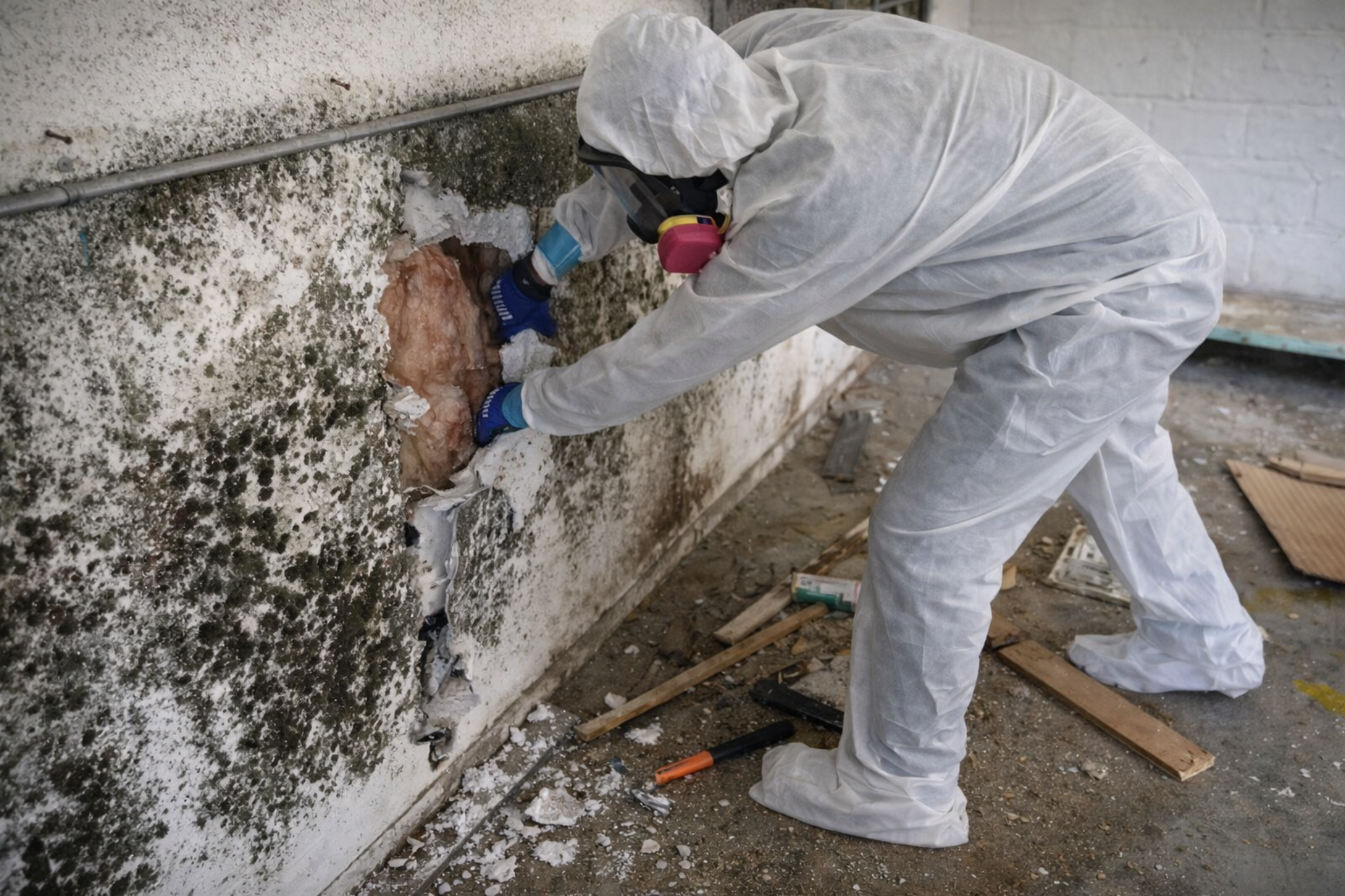
Drywall Is Often the First Material to Go
In Weston homes, drywall is involved in most remediation projects.
Why experts remove it instead of cleaning:
- Paper backing feeds mold
- Moisture penetrates deeply
- Mold grows on the back side first
If drywall shows elevated moisture or backside contamination, removal is usually the safest and most effective option. Cleaning wet drywall often leads to regrowth.
HVAC Systems Deserve Special Attention
Because AC runs nearly year-round in Weston, HVAC systems are common mold pathways.
Experts frequently find mold on:
- Evaporator coils
- Drain pans
- Air handlers
- Duct insulation
If remediation ignores HVAC components when they’re involved, spores keep circulating—undoing all other work. Addressing the system is often essential for long-term success.
Air Testing Is a Tool—Not a Shortcut
Experts use testing strategically, not automatically.
Testing is most useful for:
- Confirming hidden mold activity
- Comparing indoor vs. outdoor air
- Post-remediation verification
Testing alone doesn’t locate moisture or fix mold. Data must be paired with inspection findings to guide decisions.
Why DIY Remediation Usually Backfires
Experts often inspect homes after DIY attempts—and the outcomes are consistent.
Common DIY mistakes include:
- Bleach or sprays on porous materials
- Scrubbing without containment
- Running household fans that spread spores
- Painting over moisture damage
DIY efforts often remove evidence while allowing mold to spread quietly, turning a manageable project into a larger, costlier one.
Timing Matters More Than Most Homeowners Realize
From real Weston projects, a clear pattern emerges:
- Early remediation → localized removal, lower cost
- Delayed remediation → demolition, HVAC involvement, rebuilding
Mold grows and spreads with time. Waiting rarely saves money—it usually multiplies the scope.
Verification Prevents Repeat Problems
One of the most important expert recommendations is verification before rebuilding.
Proper remediation includes:
- Moisture readings confirming dry conditions
- Visual confirmation of removal
- Sometimes post-remediation testing
Skipping verification is a top reason mold problems return.
Why Weston Homes Need a Florida-Specific Approach
Methods that work in dry climates often fail here.
Weston homes face:
- Constant humidity
- Warm temperatures that accelerate growth
- Airtight construction
- Heavy AC use that creates condensation
Experts adapt remediation plans accordingly—prioritizing drying, airflow, and humidity control.
Prevention Advice Experts Give After Remediation
The goal isn’t just removal—it’s avoiding round two.
Experts recommend:
- Keeping indoor humidity below 55%
- Servicing HVAC systems regularly
- Fixing leaks immediately (even small ones)
- Using exhaust fans longer in bathrooms and laundry rooms
- Avoiding furniture tight against exterior walls
Homes that follow these steps experience far fewer repeat issues.
Red Flags Experts Say Should Never Be Ignored
Investigate promptly if you notice:
- Persistent musty odors
- Mold returning in the same area
- Allergy symptoms worsening indoors
- Condensation that doesn’t go away
- Past water damage with no verification
These usually mean moisture is still present somewhere.
What a Solid Mold Remediation Plan Looks Like
From an expert perspective, a good plan should:
- Explain why mold formed
- Identify where it’s growing
- Address how moisture will be controlled
- Clearly define what gets removed vs. cleaned
- Include verification before rebuilding
Plans that jump straight to chemicals or fear—without explanation—miss the fundamentals.
Final Thoughts: Mold Remediation Works When It’s Done Right
Mold remediation in Weston doesn’t have to be stressful or repetitive. When experts focus on moisture, containment, proper removal, and verification, mold problems become manageable and preventable.
The most important takeaway is simple:
Mold remediation isn’t about reacting—it’s about correcting conditions.
Homeowners who understand this stop paying for the same problem twice—and keep their Weston homes healthier, drier, and easier to maintain.
