
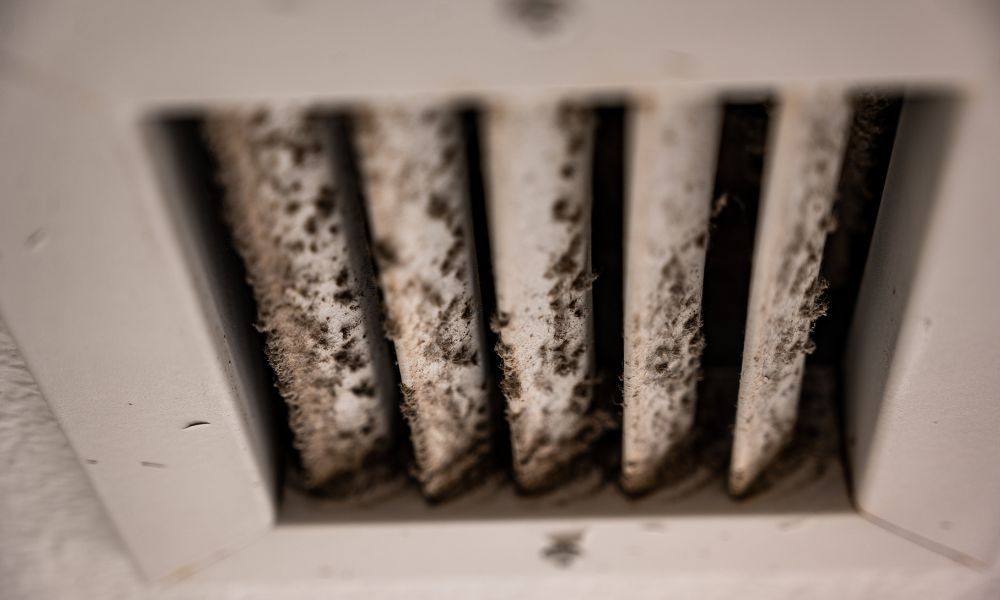
How Mold Spreads Through HVAC Systems – What the Data Tells Us for Homes in North Lauderdale
In North Lauderdale, Florida, HVAC systems play a much bigger role in mold problems than most homeowners realize. Based on inspection data, repeat visits, and post-remediation findings, one pattern appears over and over again: when mold is present in the HVAC system, it rarely stays in one place. Instead, it spreads quietly through the home every time the air conditioning runs.
This article breaks down how mold actually spreads through HVAC systems, what real inspection data shows in North Lauderdale homes, and why cleaning visible mold alone rarely solves the problem.
Why HVAC Systems Are Central to Mold Spread in North Lauderdale
North Lauderdale homes rely on air conditioning almost year-round. That constant operation creates ideal conditions for mold inside HVAC systems because they combine:
- Moisture from condensation
- Dust and debris as a food source
- Dark, enclosed spaces
- Continuous airflow
Inspection data shows that HVAC systems don’t just host mold—they distribute it.
The Data Pattern Inspectors See Repeatedly
Across North Lauderdale inspections, the same sequence appears:
- A moisture issue develops in the HVAC system
- Mold begins growing in one component
- The AC continues running normally
- Mold spores are carried through ductwork
- Mold appears in multiple rooms over time
Homeowners often mistake this for “new mold” when it’s actually systemic spread.
Where Mold Starts Inside HVAC Systems
Data shows mold most commonly begins in specific HVAC components.
High-risk areas include:
- AC drain pans holding standing water
- Partially clogged drain lines
- Evaporator coils with constant condensation
- Insulated duct interiors
- Air handlers located in closets or garages
Once growth starts in any of these areas, the system becomes a delivery mechanism.
How Mold Spores Travel Through the Home
Mold spreads through HVAC systems in a very mechanical way.
When the AC runs:
- Air passes over contaminated components
- Spores are pulled into the airflow
- Ductwork distributes spores to every room
- Spores settle on walls, ceilings, and furnishings
This explains why mold often appears far from the original source.
Why Mold Appears in Multiple Rooms at Once
Inspection data shows that when mold is HVAC-related, homeowners often report:
- Mold returning in the same area after cleaning
- Mold appearing in new rooms with no leaks
- Musty odors throughout the home
- Symptoms affecting the whole household
These patterns strongly correlate with contaminated HVAC systems.
Condensation: The Root Driver Behind HVAC Mold
The data consistently points to condensation as the main driver of HVAC mold in North Lauderdale homes.
Common causes include:
- High indoor humidity
- Poor airflow
- Dirty coils
- Improper system sizing
- Inadequate insulation around ducts
Even without leaks, daily condensation can sustain mold growth.
Why Changing Filters Doesn’t Stop Mold Spread
Many homeowners assume frequent filter changes solve HVAC mold issues. Inspection data shows otherwise.
Filters help with dust, but they do not:
- Remove mold inside the system
- Stop condensation
- Dry wet components
- Prevent growth on coils or insulation
Mold growth occurs after the filter in many systems.
Why Mold Often Returns After Surface Cleaning
A common complaint in North Lauderdale homes is mold that keeps coming back after cleaning.
Data shows this usually happens when:
- Mold exists inside ducts or the air handler
- Spores continue circulating
- Moisture conditions remain unchanged
As long as the HVAC system is contaminated, surface cleaning becomes a temporary fix.
The Health Data Connection
Inspection data aligns closely with health complaints.
Homes with HVAC-related mold often report:
- Persistent coughing or sneezing indoors
- Sinus or throat irritation
- Headaches or fatigue at home
- Worsening asthma or allergies
Symptoms often improve when occupants leave the home—another indicator of HVAC involvement.
Why North Lauderdale Homes Are Especially Vulnerable
Several local factors increase HVAC mold risk:
- High year-round humidity
- Frequent rain and storms
- Long AC run times
- Older HVAC systems
- Ductwork in hot attic spaces
These conditions make HVAC systems one of the most common mold spread pathways in the area.
What the Data Says About DIY Solutions
Inspection data consistently shows that DIY efforts fail when HVAC systems are involved.
Common ineffective actions include:
- Cleaning vents only
- Spraying disinfectants into ducts
- Running air fresheners or purifiers
- Repainting affected areas
None of these address moisture or contamination inside the system.
What Actually Stops HVAC-Related Mold Spread
Data shows mold spread stops only when system conditions change.
Effective solutions focus on:
- Correcting moisture and drainage issues
- Addressing condensation sources
- Cleaning or replacing contaminated components
- Improving airflow and humidity control
Once the HVAC system is no longer feeding mold, surface growth typically stops.
Practical Takeaways for North Lauderdale Homeowners
Based on real inspection data, the most important lessons are:
- HVAC systems are common mold spreaders
- Mold often travels farther than expected
- Surface cleaning doesn’t stop systemic issues
- Moisture control is essential
- Early intervention prevents widespread problems
Mold spread through HVAC systems is predictable—not mysterious.
Final Thoughts
In North Lauderdale, Florida, mold rarely spreads randomly. The data makes one thing clear: when HVAC systems are involved, mold becomes a whole-home issue, not a single-room problem.
The most important takeaway is simple—if moisture and mold exist inside your HVAC system, every room connected to it is potentially affected. Understanding how mold spreads through HVAC systems allows homeowners to focus on real solutions, protect indoor air quality, and stop recurring mold problems at their source.
