
Why Ignoring It Costs More: HVAC Mold Insights for Homes in South Florida, Florida
If you live in South Florida, your HVAC system runs almost nonstop. It cools, dehumidifies (when everything’s right), and circulates air to every room. That constant operation is exactly why ignoring early HVAC mold signs almost always costs more later. From real inspections across South Florida, the pattern is consistent: small moisture issues inside the system quietly grow into house-wide problems when they’re left alone.
This guide explains why delays drive up costs, what inspectors actually find inside HVAC systems, and how early action keeps repairs contained—without fear tactics.
The Core Reality: HVAC Mold Is a Moisture Problem First
Across inspections, one conclusion never changes:
Mold doesn’t start because a system is “dirty.” It starts because moisture lingers.
Inside HVAC systems, moisture shows up as:
- Condensation on evaporator coils
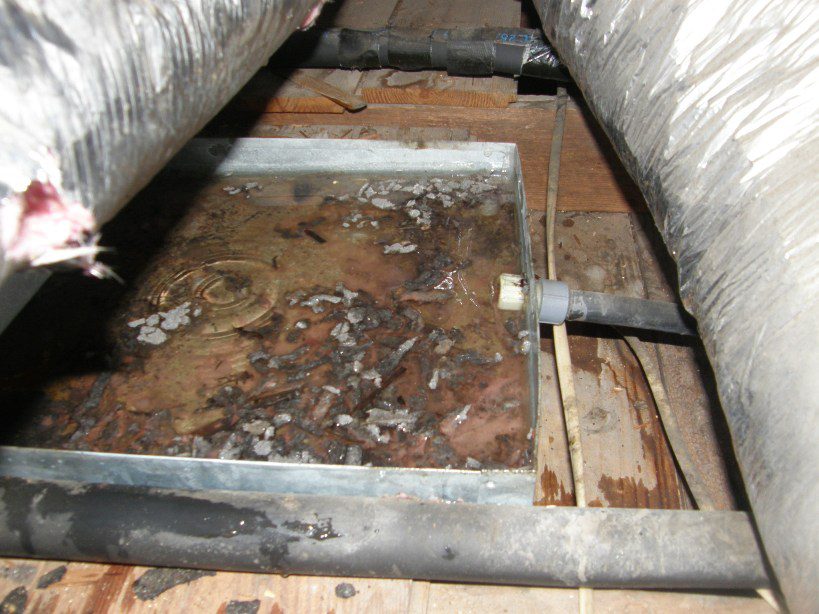
- Standing water in drain pans
- Partially clogged condensate lines
- Damp insulation inside cabinets or ducts
When moisture stays, mold growth is predictable. When it’s ignored, spread is likely.
Where Inspectors Most Often Find HVAC Mold
Real inspections in South Florida homes commonly uncover growth in:
- Evaporator Coils – Cold surfaces collect moisture; dirty or restricted coils stay wet longer.
- Drain Pans & Lines – Partial clogs allow standing water, one of the most reliable mold triggers.
- Air Handler Cabinets – Often tucked in closets/garages where humidity and dust collect.
- Internally Insulated or Flex Ducts – Insulation traps moisture; once contaminated, mold embeds.
These areas are out of sight—so problems advance quietly.
Why Ignoring Early Signs Makes Costs Jump
Early HVAC mold clues are subtle:
- Musty odor when the AC starts
- Smells strongest near vents
- Condensation on vent covers
- Filters clogging faster than normal
- A home that never feels fully dry
When these are ignored, costs rise because:
- Spread increases (spores circulate system-wide)
- More materials are affected (insulated ducts, cabinets)
- HVAC involvement expands (beyond one component)
- Remediation scope grows (containment, replacement, rebuild)
Time—not mold type—is the cost driver.
The HVAC Spread Effect (Why It Becomes House-Wide)
Once mold establishes inside the system:
- Spores release into moving air
- The blower distributes spores through ducts
- Spores exit vents into living spaces
- New growth begins in other damp areas
That’s why homeowners say:
“I cleaned one spot, but it keeps coming back everywhere.”
It’s not stubborn mold—it’s redistribution.
Filters Don’t Prevent HVAC Mold (Common Myth)
Myth: Changing filters stops mold.
Fact: Filters help airflow and dust control, but mold grows downstream where condensation forms—on coils, pans, cabinets, and insulated ducts. Moisture control is the fix.
Why DIY Sprays and Fogging Backfire
Sprays don’t remove embedded growth or fix drainage/humidity. Disturbing mold without containment can release more spores into circulation—turning a localized issue into a wider one. Short-term odor relief often masks ongoing growth, delaying real fixes and increasing cost.
Duct Material Matters (Clean vs Replace)
- Bare metal ducts: Often cleanable if contamination is light and moisture is corrected.
- Internally insulated or flex ducts: Frequently require replacement once contaminated; mold embeds in insulation.
Trying to “save” the wrong duct type usually means repeat work and higher bills.
Why South Florida Homes Are Especially Vulnerable
South Florida homes share conditions that favor HVAC mold:
- High outdoor humidity most of the year
- Long AC run times
- Mild, rainy days that limit dehumidification
- Slab construction that limits drying
- Tightly sealed homes that trap moisture
These factors mean HVAC moisture problems don’t self-correct.
What Early Action Actually Looks Like (and Saves)
Homes that avoid big HVAC mold bills do a few things early:
- Keep indoor humidity below 60%
- Clear and maintain condensate drains
- Clean coils and correct airflow
- Use containment if remediation is needed
- Replace contaminated insulated ducts when necessary
- Verify drying before restarting systems
Early steps keep scope small and localized.
The Cost Difference: Early vs Late
Early response usually means:
- Component-level fixes
- Minimal material removal
- Short downtime
- Lower total cost
Late response often means:
- Multiple affected rooms
- Duct replacement
- Extended containment
- Rebuild of cabinets/ceilings
- Much higher total cost
The mold didn’t suddenly worsen—the delay expanded the job.
When South Florida Homeowners Should Act
Don’t wait if you notice:
- Musty odors tied to AC operation
- Condensation on vents or ceilings
- Mold returning near vents
- Persistent high humidity
- Symptoms worse indoors
These are early HVAC signals, not overreactions.
Final Takeaway: Delay Is the Expensive Choice
From real inspections across South Florida, the lesson is clear: ignoring HVAC mold signs costs more because moisture keeps feeding growth and airflow spreads it. Acting early—by controlling moisture and addressing the right components—keeps repairs contained, protects indoor air quality, and saves money.
If something smells off when the AC runs or your home never feels dry, that’s useful information. In South Florida, calm, early action is the cheapest fix you’ll ever make.
