
A Homeowner’s Guide: Air Duct Mold Insights for Homes in Tamarac
Air duct mold doesn’t usually start with panic. It starts with questions. Why does the house smell musty when the AC turns on? Why do allergies act up indoors but calm down outside? After inspecting plenty of homes in Tamarac, I’ve learned this: air duct mold confuses homeowners because it hides well and spreads efficiently.
This guide keeps things simple and practical. No scare tactics. No overselling. Just clear explanations of how air duct mold forms, why it matters, and what homeowners actually need to know to avoid repeat problems and wasted money.
What Air Duct Mold Actually Is
Let’s strip away the mystery first.
Air duct mold isn’t a special type of mold. It’s regular mold growing where conditions allow it—inside ductwork or HVAC components that stay damp long enough.
Mold needs three things:
- Moisture
- A food source
- Time
Air ducts provide dust as food. HVAC systems create moisture through condensation. Florida provides time. Put those together, and mold doesn’t hesitate.
Ducts don’t create mold. They host it when moisture sticks around.
Why Tamarac Homes See Air Duct Mold More Often
Humidity Never Fully Lets Up
Tamarac homes deal with high humidity most of the year. Even when the AC runs nonstop, moist air keeps pushing indoors.
That humidity:
- Slows drying inside ducts
- Increases condensation frequency
- Keeps surfaces damp longer
In drier climates, ducts dry out naturally. In Tamarac, they often don’t.
Modern Homes Can Trap Moisture
Energy-efficient homes seal tightly. That design lowers utility bills but limits air exchange.
Without proper ventilation and humidity control, moisture builds inside HVAC systems and ductwork quietly. Mold prefers stability, not chaos.
Where Air Duct Mold Usually Starts
Inside the Air Handler
Air handlers rank at the top of inspection findings.
They naturally create condensation. That’s normal. Problems begin when:
- Drain lines clog
- Drain pans rust or crack
- Coils stay dirty
- Airflow becomes restricted
Moisture lingers instead of draining away. Dust accumulates. Mold grows.
Inside Ductwork
Once mold establishes near the air handler, ductwork becomes the distribution network.
Mold often grows:
- On interior duct surfaces
- In flexible ducts that trap moisture
- Near duct seams and low spots
Because ducts stay hidden, growth often goes unnoticed until air quality complaints appear.
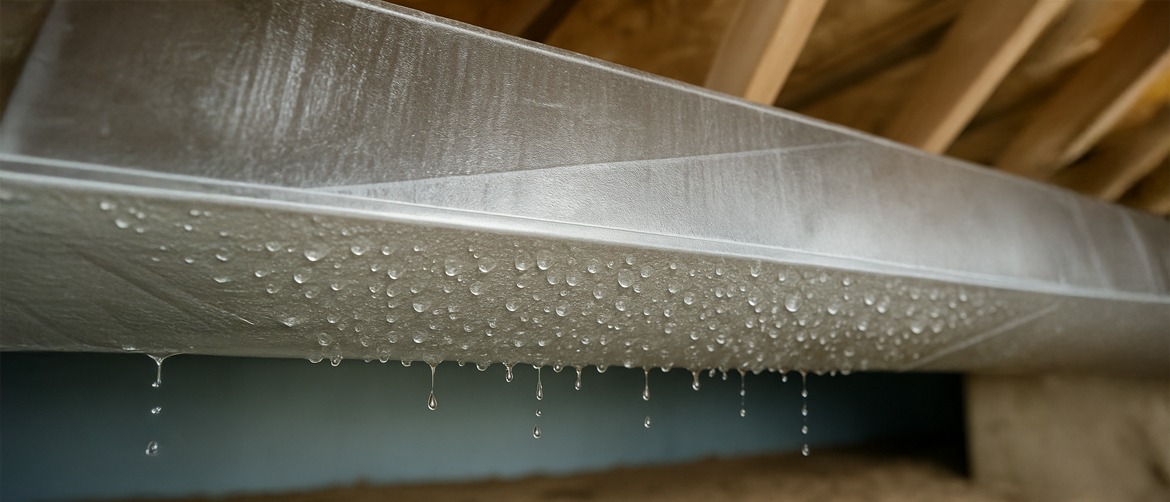
Condensation: The Root Problem Most People Miss
Why Condensation Forms in Ducts
Warm, humid air holds moisture. Cold surfaces pull that moisture out of the air. That’s basic physics.
In duct systems, condensation increases when:
- Duct insulation degrades
- Ducts leak and pull humid attic air inside
- HVAC systems short-cycle
Even small amounts of condensation, repeated daily, create long-term damp conditions mold loves.
Oversized HVAC Systems Make It Worse
Oversized systems cool air fast and shut off early. That short cycling removes less moisture from the air.
The home feels cool. The ducts stay damp. Mold conditions improve quietly.
Cooling comfort doesn’t equal moisture control.
How Mold Spreads Through Duct Systems
Airflow Does the Work
Mold spores don’t crawl through ducts. Airflow carries them.
Every time the system runs:
- Spores lift from contaminated surfaces
- Air pressure pushes them forward
- Supply vents distribute them room by room
That’s why duct mold affects indoor air quality more than mold in one isolated area.
Repeated Cycling Increases Exposure
HVAC systems don’t run once per day. They cycle dozens of times.
Each cycle reintroduces spores. Exposure becomes consistent instead of occasional. That consistency explains lingering symptoms and recurring odors.
Health Effects Without the Hype
What Long-Term Exposure Can Do
Air duct mold doesn’t usually cause sudden severe illness. That’s where fear-based messaging goes too far.
Long-term exposure more commonly leads to:
- Chronic congestion
- Sneezing indoors
- Coughing
- Eye irritation
- Asthma flare-ups
Symptoms often feel worse at home and better outside. That pattern matters.
Why HVAC Mold Feels Hard to Pinpoint
Because exposure spreads evenly, symptoms don’t point to one room. People clean bathrooms and bedrooms while the system keeps circulating spores.
Until ducts or air handlers get addressed, relief stays limited.
Common Myths That Keep Duct Mold Around
“If I Can’t See Mold, It’s Not in My Ducts”
Most duct mold stays hidden. Visual confirmation usually comes late.
Inspections often find mold inside systems even when walls and ceilings look clean.
“Sprays and Fogging Fix Duct Mold”
Sprays don’t change condensation, airflow, or humidity.
They may reduce odor temporarily, but mold returns if moisture stays. Physics always wins.
“Duct Cleaning Alone Solves It”
Cleaning removes dust and some contamination. It doesn’t stop condensation.
Duct cleaning works best when paired with moisture correction, not as a standalone fix.
When Air Duct Cleaning Actually Helps
Air duct cleaning makes sense when:
- Mold growth exists inside ducts
- Heavy dust buildup holds moisture
- Odors trace back to system operation
Cleaning helps reset the system, but it doesn’t prevent regrowth unless conditions change.
Effective solutions combine:
- Duct cleaning
- Duct sealing
- Insulation repair
- HVAC maintenance
One step alone rarely lasts.
The Role of Duct Leaks in Mold Growth
Leaky ducts don’t just lose air. They pull humid air from attics and wall cavities.
That air:
- Raises moisture inside ducts
- Introduces contaminants
- Feeds mold growth
Sealing ducts reduces condensation and improves airflow. In many Tamarac homes, sealing matters as much as cleaning.
HVAC Maintenance Changes Outcomes
Regular HVAC maintenance correlates strongly with fewer mold issues.
Maintenance helps by:
- Keeping coils clean and dry
- Preventing drain line clogs
- Improving airflow
- Reducing humidity inside the system
Neglected systems show higher mold findings across inspections. That pattern repeats consistently.
Signs Homeowners Shouldn’t Ignore
Air duct mold deserves attention when homeowners notice:
- Musty smells when the AC starts
- Condensation on vents
- Dust that feels damp
- Persistent indoor allergy symptoms
- Humidity that won’t stabilize
Ignoring these signs allows exposure to continue quietly.
Why DIY Fixes Usually Fail
DIY efforts focus on visible areas. Duct mold rarely stays visible.
DIY approaches often:
- Miss air handlers and duct interiors
- Spread spores during scrubbing
- Leave moisture untouched
That’s why mold “comes back” after cleaning. It never actually left the system.
FYI, recurring odors or symptoms usually signal system-level issues, not surface problems.
How Professionals Evaluate Air Duct Mold
Experienced inspectors don’t guess. They measure.
They evaluate:
- Moisture levels
- HVAC condition
- Duct insulation and leakage
- Airflow patterns
- Indoor and outdoor air samples
This data-driven approach prevents unnecessary work and missed sources.
The Cost Difference Between Early and Late Action
Early Action Stays Targeted
Homes that act early often need:
- Maintenance
- Minor sealing
- Moisture adjustments
Costs stay controlled because mold hasn’t spread far.
Delayed Action Expands Scope
Homes that delay often face:
- HVAC remediation
- Larger duct cleaning jobs
- Containment requirements
- Higher overall costs
Same issue. Different timing. Very different outcomes.
Lessons From Real Homes in Tamarac
Across inspections, one lesson stays consistent. Homes that manage moisture and maintain HVAC systems show fewer air duct mold problems.
Homes that ignore humidity or rely on cleaning alone often deal with recurrence. The difference isn’t luck. It’s understanding how ducts behave in humid climates.
IMO, once homeowners treat HVAC systems as part of indoor air quality—not just cooling equipment—problems get easier to manage.
Practical Steps Homeowners Can Take Now
You don’t need extreme measures. You need consistency.
Smart steps include:
- Monitoring indoor humidity
- Scheduling regular HVAC maintenance
- Checking for condensation on vents
- Addressing duct leaks promptly
- Taking odors seriously
These steps prevent small duct issues from becoming whole-home problems.
Final Thoughts: Air Duct Mold Is a System Problem
Air duct mold doesn’t need fear-based explanations. It needs system-level understanding. Homes in Tamarac face real humidity challenges, and duct systems sit right at the intersection of moisture and airflow.
When homeowners focus on moisture control, airflow, and maintenance—not just cleaning—air duct mold becomes manageable instead of frustrating. The goal isn’t panic. It’s control, and that’s exactly how healthier indoor air actually happens.
