
A Homeowner’s Guide: Black Mold Insights for Homes in Hollywood
Black mold gets talked about like it’s either the end of the world or a total myth. Neither take helps homeowners. After inspecting many homes in Hollywood, I can say this confidently: black mold is a real issue, but not for the reasons most people think. The risk comes from moisture, exposure, and time—not from scary names or internet horror stories.
This guide keeps things practical. No fear tactics. No minimizing real risks. Just straight answers homeowners can actually use.
What People Mean When They Say “Black Mold”
Let’s clear this up first because confusion starts here.
“Black mold” usually refers to dark-colored mold growth, not a single species. Some black molds raise more concern than others, but color alone doesn’t determine risk.
What matters far more than color:
- How much mold exists
- Where it’s growing
- How long exposure lasts
- Whether it affects indoor air
Black mold isn’t special because it’s black. It’s a problem when conditions allow it to grow and spread.
Why Hollywood Homes See Black Mold More Often
Humidity Does the Heavy Lifting
Hollywood’s warm, humid climate creates ideal mold conditions almost year-round. Moist air doesn’t stay outside. It moves indoors and settles wherever airflow slows down.
That humidity leads to:
- Damp drywall
- Condensation on HVAC components
- Moist duct interiors
- Slow drying after showers or cooking
Mold doesn’t need a flood. It needs moisture that sticks around.
Homes Rarely “Dry Out”
In drier climates, homes get breaks between humid periods. Florida homes don’t.
When moisture stays consistent, black mold gets time to establish itself quietly, often before homeowners notice anything wrong.
Where Black Mold Usually Grows (And Why)
Bathrooms and Showers
Bathrooms top the list. Steam builds fast, and poor ventilation traps moisture behind walls and ceilings.
Common bathroom mold spots include:
- Above showers
- Behind tile
- On ceilings
- Inside wall cavities
Fans that don’t vent outside or don’t run long enough make the problem worse.
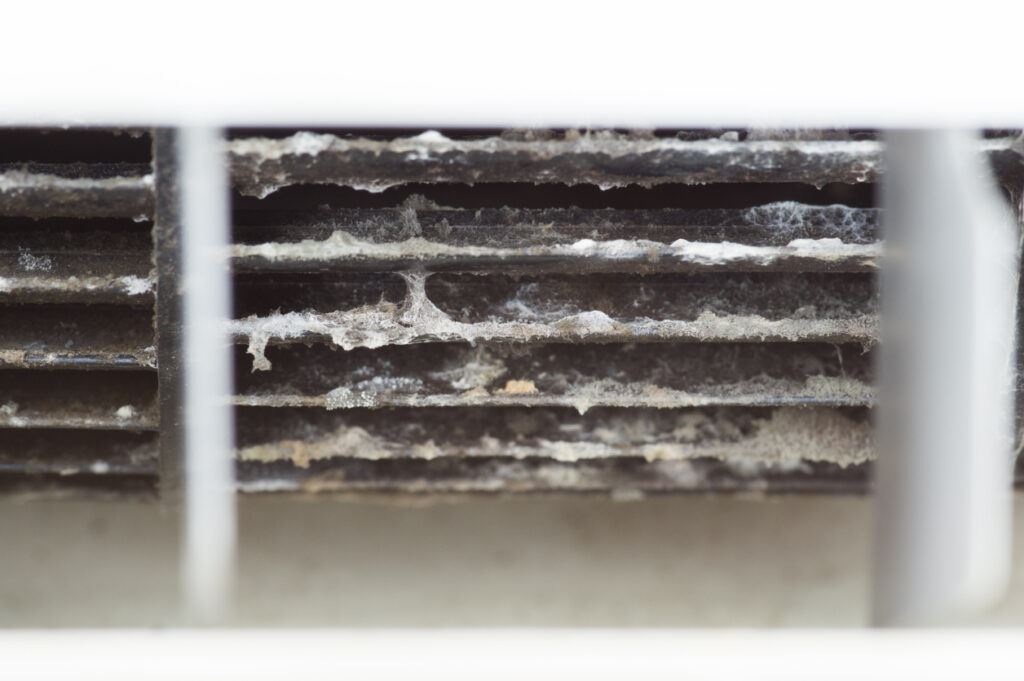
HVAC Systems and Air Handlers
HVAC systems naturally create condensation. That’s normal. Problems start when moisture doesn’t drain properly.
Black mold often shows up:
- In drain pans
- On evaporator coils
- Inside air handlers
Once mold grows there, air circulation spreads spores through the home.
Behind Walls and Under Flooring
Slow leaks, condensation, or humidity buildup feed mold in hidden spaces.
By the time mold becomes visible on walls, growth usually existed behind the surface for a while.
The Health Side of Black Mold (Without the Drama)
What Long-Term Exposure Can Do
Black mold exposure affects people differently. Some react quickly. Others barely notice at first.
Common long-term symptoms include:
- Persistent congestion
- Sneezing indoors
- Coughing
- Eye irritation
- Asthma flare-ups
These symptoms usually build gradually, not suddenly.
What Black Mold Usually Doesn’t Do
This matters because fear thrives on exaggeration.
Black mold usually does not:
- Cause sudden severe illness
- Affect everyone the same way
- Create problems overnight
Duration of exposure matters more than mold type. Living with moderate exposure for months causes more issues than brief contact with a larger growth.
Why People Miss Black Mold for So Long
Symptoms Feel “Normal”
Homeowners often say:
- “It’s just allergies”
- “It’s Florida humidity”
- “The house is older”
Those explanations delay investigation while exposure continues.
Odors Come and Go
Musty smells tied to black mold often appear only when:
- The AC runs
- Humidity spikes
- Certain rooms stay closed
That inconsistency confuses people and buys mold more time.
Common Myths That Make Black Mold Worse
“Bleach Kills Black Mold”
Bleach doesn’t fix mold problems in homes. It doesn’t penetrate porous materials well and doesn’t prevent regrowth if moisture stays.
It also leaves moisture behind, which mold loves.
“If I Clean It, It’s Gone”
Surface cleaning removes what you see. It doesn’t address:
- Moisture sources
- Hidden growth
- Airborne spores
Mold comes back when conditions stay the same.
“AC Takes Care of Humidity”
Not always. Oversized HVAC systems cool air fast but remove less moisture.
The home feels cool. Mold feels invited.
How Black Mold Affects Indoor Air Quality
Airflow Turns Local Mold Into Whole-Home Exposure
Black mold on a wall affects one area. Black mold in HVAC systems affects the entire house.
Every time the system runs:
- Spores circulate
- Exposure becomes consistent
- Symptoms linger
That’s why HVAC-related mold often causes more complaints than visible wall growth.
Dust Makes Exposure Worse
Dust inside ducts and homes contains organic material mold feeds on. Add moisture, and mold growth accelerates.
Clean homes still generate dust. Mold doesn’t care how tidy things look.
When Black Mold Inspections Make Sense
Homeowners should consider inspections when they notice:
- Persistent musty odors
- Allergy symptoms that worsen at home
- Water damage history
- Condensation on vents or windows
- HVAC moisture issues
Inspections help determine:
- Where mold grows
- How widespread it is
- Whether HVAC systems contribute
- What moisture source drives growth
Guessing almost always costs more.
What Proper Black Mold Solutions Actually Involve
Moisture Control Comes First
Every successful solution starts here.
Effective moisture control includes:
- Managing indoor humidity
- Maintaining HVAC systems
- Fixing leaks promptly
- Improving ventilation
Without moisture control, mold removal fails long-term.
Containment Matters During Removal
Disturbing mold without containment spreads spores. Professional remediation uses barriers and controlled airflow to protect clean areas.
Skipping containment turns small problems into larger ones.
Verification Prevents Repeat Problems
Post-remediation verification ensures mold levels return to normal ranges. It confirms the problem actually got solved.
FYI, verification costs far less than repeating remediation later.
Lessons From Real Homes in Hollywood
Across inspections, one pattern repeats. Homes that manage moisture experience fewer black mold issues.
Homes that:
- Ignore humidity
- Skip HVAC maintenance
- Rely on surface cleaning
often see mold return. The difference isn’t luck. It’s understanding how moisture behaves indoors.
IMO, black mold becomes far less intimidating once homeowners stop focusing on the name and start focusing on conditions.
Practical Steps Homeowners Can Take Now
You don’t need extreme measures. You need consistency.
Helpful steps include:
- Monitoring indoor humidity
- Running bathroom fans properly
- Maintaining HVAC systems regularly
- Checking for condensation and leaks
- Taking musty odors seriously
Small actions prevent big problems.
What Homeowners Get Wrong Most Often
Based on inspections, these misunderstandings repeat:
- Believing color determines danger
- Waiting for visible mold
- Treating mold as a surface issue
- Ignoring HVAC systems
- Assuming humidity is unavoidable
Each misunderstanding delays effective solutions.
Final Thoughts: Black Mold Is a Condition Problem, Not a Mystery
Black mold doesn’t grow because homeowners fail. It grows because moisture, airflow, and time line up in Florida homes. Homes in Hollywood face constant humidity pressure, and black mold responds to that pressure predictably.
When homeowners focus on moisture control instead of fear, black mold becomes manageable. Real risks deserve calm, informed solutions, and those solutions protect both the home and the people living inside it.
