
Air Duct Mold Shows Up More Than Homeowners Expect
If you live in Florida, especially in cities like Hollywood, Tamarac, or Fort Lauderdale, chances are your AC is running almost constantly. But here’s a scary little secret: your air ducts might be growing mold right under your nose—or rather, above your ceiling, behind your walls, or in your attic.
Most homeowners don’t realize that air duct mold is far more common than surface mold or visible water damage. It’s sneaky, hidden, and can compromise indoor air quality without you even knowing. In this article, we’ll explain why air duct mold shows up so frequently, what the data from Florida homes tells us, and practical advice to prevent or remediate it.
Why Air Duct Mold Is More Common Than You Think
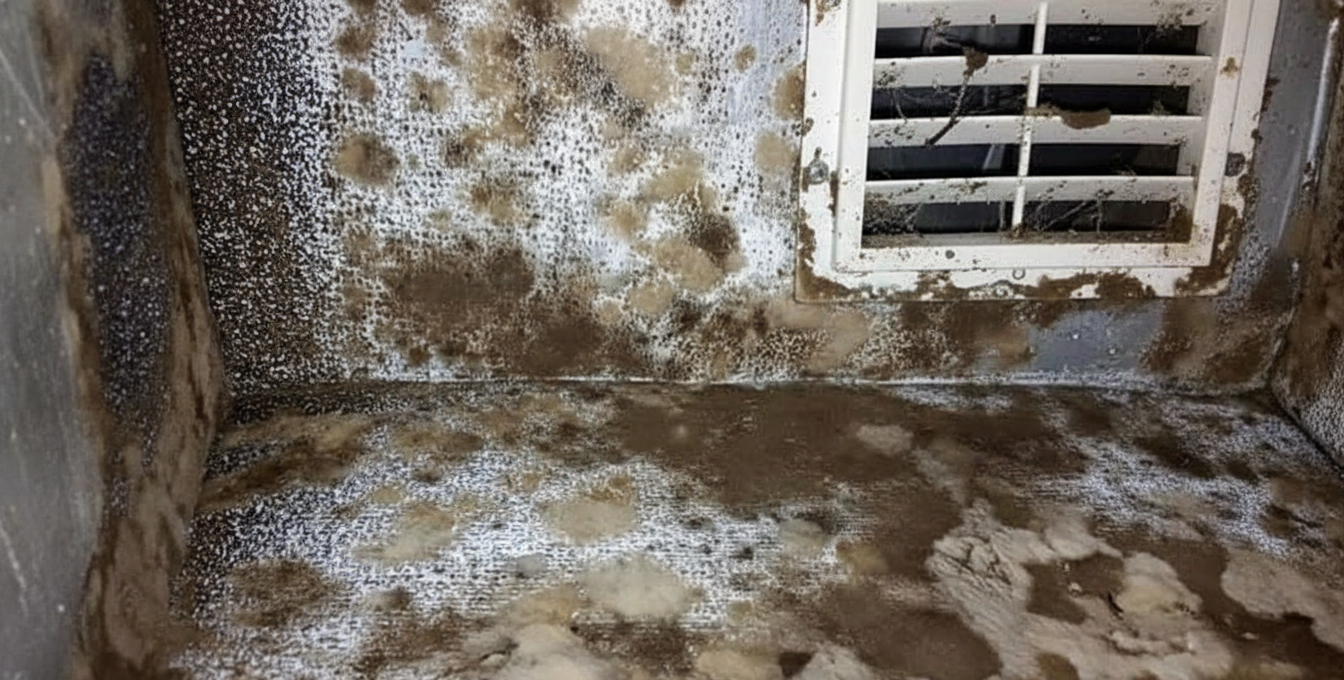
Here’s the deal: air ducts provide the perfect environment for mold growth because they combine three essential factors:
- Moisture – Condensation forms on coils, inside drain pans, or along duct seams.
- Organic material – Dust, lint, and dirt inside ducts provide nutrients for mold.
- Airflow – HVAC systems circulate air, which spreads spores throughout your home.
Even if your walls look fine and your floors are dry, your HVAC system can silently distribute mold spores in every room.
Data From Real Florida Homes
Our inspections in Tamarac, Hollywood, and Oakland Park consistently reveal:
- 60–70% of homes with AC systems show some form of mold contamination in ducts or on coils.
- Musty odors often originate from the HVAC system, even when homeowners report no visible mold.
- Recurring allergy or asthma symptoms in residents often improve after duct cleaning and remediation.
- Homes relying solely on DIY cleaning of vents rarely see long-term improvements in air quality.
In other words, air duct mold is not rare—it’s expected in humid Florida homes if maintenance is neglected.
How Air Duct Mold Develops
1. Condensation on AC Components
When warm, humid air passes over cold evaporator coils, condensation forms. If drain lines are clogged or pans don’t drain fully, water accumulates, feeding mold.
2. Poorly Sealed or Insulated Ducts
- Leaks allow humid attic or crawl space air to enter ducts.
- Moisture condenses inside ducts, creating hidden colonies.
- Dust accumulation inside ducts acts as food for mold growth.
3. Lack of Maintenance
Neglected air filters, dirty coils, and infrequent inspections make mold growth almost inevitable. Even high-quality HVAC systems aren’t immune if maintenance is skipped.
Health Implications
Air duct mold isn’t just ugly—it affects your health because spores get circulated directly into your breathing space:
- Allergic reactions: Sneezing, itchy eyes, congestion
- Respiratory issues: Chronic cough, asthma attacks, wheezing
- Fatigue and cognitive symptoms: Brain fog or low energy
- Skin irritation: Rashes or hives
Children, seniors, and anyone with respiratory conditions are particularly vulnerable. Often, symptoms disappear when leaving the house, which is a clue your HVAC system may be the culprit.
Common Homeowner Misconceptions
- “If I can’t see mold, it’s not a problem.”
Wrong. Duct mold is often hidden in plenum spaces, coils, or attic ducts. - “I can clean it myself.”
DIY duct cleaning removes dust but rarely reaches mold growing inside coils or tight duct spaces. - “Only black mold matters.”
False. Many other mold species in ducts can affect air quality and health. - “Bleach fixes it.”
Surface cleaning may kill spores temporarily, but it does nothing for embedded mold or moisture issues.
Steps to Properly Address Air Duct Mold
Step 1: Inspect and Identify Moisture Sources
- Check evaporator coils, drain pans, and AC drain lines.
- Identify leaks or condensation in ducts and plenum.
- Use moisture meters or thermal imaging to detect hidden wet spots.
Step 2: Containment
- Seal off areas during remediation to prevent spores from spreading.
- Negative air machines and plastic barriers are used in professional setups.
Step 3: Clean and Remediate
- HEPA vacuuming and antimicrobial treatment for duct interiors.
- Coil cleaning and drain pan disinfection.
- Removal of severely contaminated sections if necessary.
Step 4: Post-Remediation Verification
- Air and surface testing ensures spore counts are back to safe levels.
- Inspect after cooling cycles to confirm no condensation or regrowth occurs.
Preventing Mold in Air Ducts
- Maintain indoor humidity 45–55%
- Replace filters regularly and consider high-efficiency models
- Inspect and clean AC coils annually
- Seal ducts and insulate properly
- Ventilate bathrooms, kitchens, and laundry areas to reduce humidity load on the HVAC system
Proactive maintenance drastically reduces mold risk, saves money, and protects indoor air quality.
Why Acting Early Matters
Ignoring duct mold leads to:
- Continuous exposure to spores throughout your home
- Chronic health problems for residents
- Musty odors and reduced indoor air quality
- Increased costs for later remediation, especially if mold spreads to walls or insulation
Data shows that early inspection and professional remediation can reduce recurrence rates by up to 90%, compared to DIY or surface-only approaches.
The Bottom Line
Air duct mold shows up far more than homeowners expect, especially in humid Florida cities like Hollywood, Tamarac, and Oakland Park. Your HVAC system can silently circulate spores, compromising health and indoor air quality even when walls and floors look fine.
The science is simple: moisture + dust + airflow = mold growth. Surface cleaning alone won’t solve the problem. Addressing air duct mold requires proper inspection, remediation, and moisture control.
If you notice musty odors, recurring allergy symptoms, or unexplained indoor air issues, don’t wait. Early action protects both your home and your family’s health—and prevents mold from turning into a much bigger headache.
