
Early Warning Signs of Mold Growth – Facts vs Common Myths for Homes in Weston
Mold almost never shows up without warning. The problem is that most of those warnings don’t look serious, dramatic, or urgent. In Weston homes, early mold signs often get brushed off as humidity, dust, or normal wear and tear. Then one day, mold suddenly feels like it “appeared out of nowhere.” Real inspections tell a very different story. Mold gives clues long before it becomes obvious.
This article breaks down the early warning signs of mold growth, separates real facts from common myths, and explains what inspections inside Weston homes consistently reveal. No scare tactics. Just practical, clear information homeowners can actually use.
Fact: Mold Always Starts With Moisture
Mold cannot grow without moisture. That’s not an opinion—it’s biology. Before mold ever becomes visible, moisture always shows up first.
In Weston homes, early moisture sources often include:
- High indoor humidity
- AC condensation issues
- Small plumbing leaks
- Minor roof or window leaks after rain
If moisture sticks around longer than it should, mold growth becomes likely.
Myth: You’ll See Mold Right Away
Many homeowners believe mold becomes visible as soon as it starts growing. Real inspections prove that’s rarely true.
In reality:
- Mold often grows behind walls first
- Growth spreads inside insulation and drywall
- Visible mold appears late in the process
By the time you see mold, it has usually been active for weeks or months.
Fact: Musty Odors Are One of the Earliest Signs
Smell Often Comes Before Sight
That faint, earthy smell people describe as “old” or “damp” air is often an early mold warning.
During inspections, musty odors usually point to:
- Mold growing behind walls
- Growth above ceilings
- Mold inside HVAC systems
If a smell appears when the AC turns on or stays confined to one room, mold is often nearby.
Myth: If You Can’t Smell It, There’s No Mold
Not all mold produces strong odors. Some growth releases spores quietly without a noticeable smell.
Inspections frequently uncover:
- Significant hidden mold with no odor
- Airborne spores affecting air quality
- Mold growth discovered only through moisture testing
Relying on smell alone causes many early signs to get missed.
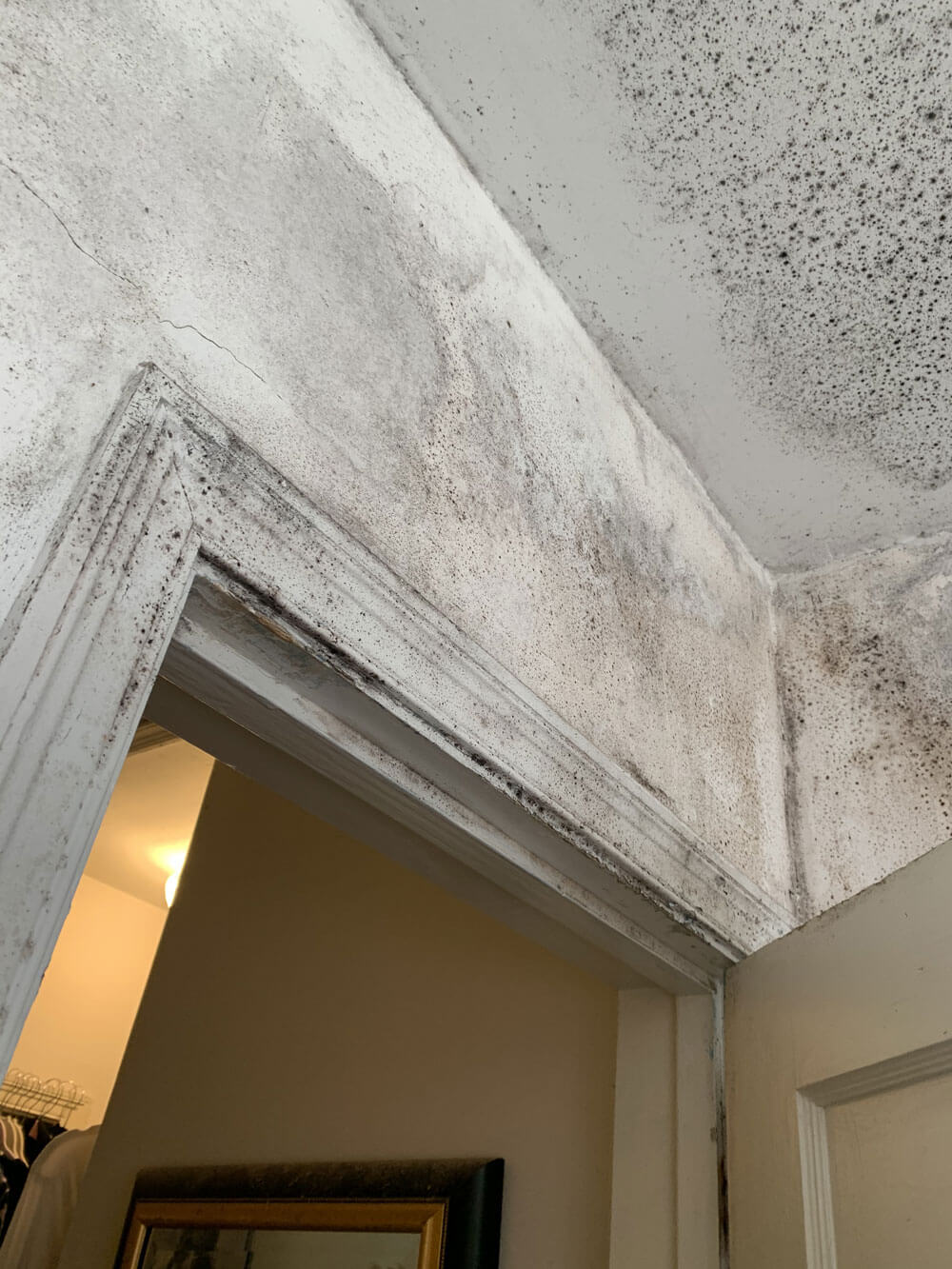
Fact: Discoloration Is an Early Warning, Not a Cosmetic Issue
Early mold growth rarely looks dramatic. It often blends in with normal discoloration.
Early visual signs include:
- Light brown or yellow staining
- Gray or green speckling
- Areas that look dirty but won’t clean
When stains keep returning after cleaning or painting, moisture—and often mold—exists underneath.
Myth: Paint Peeling Is Just Age or Poor Paint
Peeling or bubbling paint often signals moisture trapped behind the surface.
In Weston homes, inspections show peeling paint often means:
- Moisture inside drywall
- Condensation forming behind walls
- Early mold growth beneath the paint layer
Paint reacts quickly to moisture, making it a valuable early warning sign.
Fact: Condensation Is a Major Red Flag
Moisture Where It Shouldn’t Be
Condensation appears when warm, humid air meets cooler surfaces. In Weston homes, this happens frequently.
Common condensation locations include:
- Around AC vents
- On windows and frames
- Inside HVAC ductwork
Repeated condensation feeds mold growth quietly and consistently.
Myth: Condensation Is Normal and Harmless
Occasional condensation happens. Persistent condensation is not normal.
Inspections show ongoing condensation often leads to:
- Mold growth behind walls
- Damp insulation
- Declining indoor air quality
If condensation appears regularly, mold risk increases significantly.
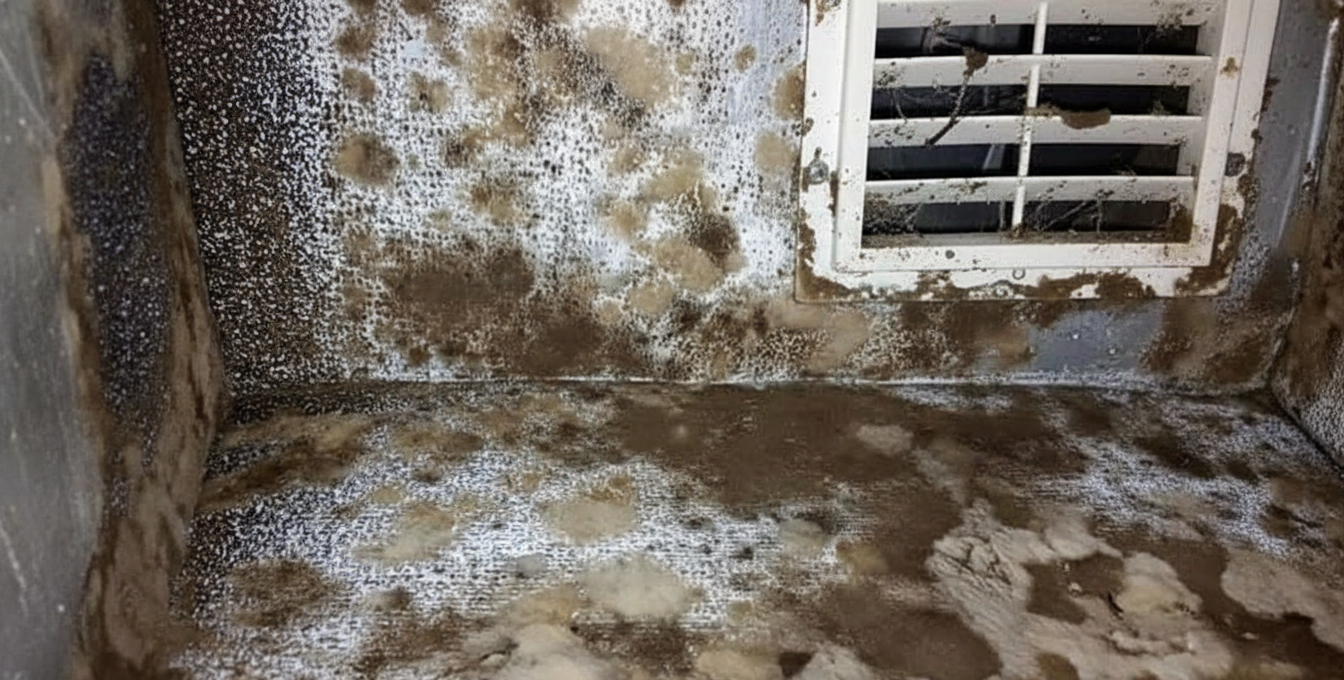
Fact: HVAC Systems Often Show Early Mold Clues
HVAC systems naturally produce condensation. When moisture doesn’t drain or dry properly, mold starts forming inside.
Early HVAC-related signs include:
- Musty smells when the AC starts
- Dust sticking to vent edges
- Dark buildup just inside vents
Mold inside HVAC systems spreads spores long before visible mold appears elsewhere.
Myth: Changing Filters Prevents Mold Growth
Filters help HVAC performance, but they don’t stop mold growth inside the system.
Inspection data shows:
- Dirty filters restrict airflow
- Restricted airflow increases condensation
- Mold still grows inside ducts and air handlers
Filters support system health, not mold prevention.
Fact: Allergy Symptoms Often Appear Before Mold Is Visible
Many homeowners notice health changes before they ever see mold.
Early exposure often causes:
- Sneezing or congestion indoors
- Headaches that improve outside
- Itchy eyes or throat irritation
When symptoms improve after leaving the home, indoor air quality often plays a role.
Myth: Mold-Related Symptoms Are Always Severe
Early mold exposure rarely causes dramatic symptoms.
Instead, symptoms often:
- Come and go
- Feel mild at first
- Get blamed on stress or weather
Because symptoms feel manageable, early warning signs often get ignored.
Fact: Weston Homes Face Unique Mold Risks
Weston homes share environmental factors that make early mold growth more likely.
Risk factors include:
- High humidity most of the year
- Heavy air conditioning use
- Well-sealed homes with limited ventilation
These conditions allow moisture to linger even when homes look clean and well maintained.
Myth: Newer Homes Don’t Get Mold
New construction doesn’t prevent mold. In some cases, it increases risk.
Inspections in newer homes often find:
- Moisture trapped in wall cavities
- Limited airflow in tight construction
- Condensation forming inside HVAC systems
Mold cares about moisture, not the age of the home.
Fact: Mold Grows Behind Walls First
Visible mold represents a late-stage issue. Early mold growth prefers hidden spaces.
Common hidden growth locations include:
- Inside wall cavities
- Behind baseboards
- Under sinks and cabinets
- Above ceilings
By the time mold reaches visible surfaces, it has often spread elsewhere.
Myth: Cleaning Early Signs Stops Mold Growth
Cleaning addresses appearance, not cause.
DIY cleaning often:
- Removes surface discoloration
- Leaves moisture untouched
- Allows mold to continue growing underneath
Without moisture control, early signs always return.
Fact: Moisture Testing Finds Problems Before Mold Explodes
Real inspections focus on moisture, not just mold.
Inspectors evaluate:
- Moisture levels inside materials
- Condensation patterns
- HVAC humidity control
- Airflow balance
Finding moisture early prevents mold from becoming established.
Lessons From Real Inspections in Weston Homes
From real inspections, one lesson stands out clearly. Mold always gives warning signs before it becomes a major problem.
Homes with significant mold issues almost always show:
- Long-term moisture problems
- Ignored early signs
- Delayed response
Catching the signs early changes everything.
What Homeowners Should Pay Attention To
Early awareness makes mold manageable.
Warning signs that deserve attention include:
- Persistent musty odors
- Repeated stains or discoloration
- Condensation that keeps returning
- Allergy symptoms indoors
These signs matter more than visible mold.
Final Thoughts: Early Signs Are Mold’s Weak Point
Mold doesn’t start big. It starts quietly, slowly, and predictably. In Weston homes, real inspections show that early warning signs always appear before mold becomes overwhelming.
Understanding the facts—and ignoring common myths—gives homeowners the upper hand. When moisture gets addressed early, mold never gets the chance to take over.
The most important takeaway is simple and practical:
Pay attention early, control moisture, and mold stays small instead of becoming a major problem.
