
Facts vs Common Myths: HVAC Mold Insights for Homes in Oakland Park, Florida
If you own a home in Oakland Park, your HVAC system works hard almost year-round. Between South Florida humidity, long cooling seasons, and frequent rain, your air conditioning system doesn’t just cool your home—it constantly manages moisture. And where moisture exists, mold can quietly follow.
Unfortunately, HVAC mold is also one of the most misunderstood mold problems homeowners face. Myths spread faster than facts, and those myths often delay action until mold has already traveled through ductwork and indoor air.
This article breaks down facts vs common myths about HVAC mold, based on what’s actually found inside real homes in Oakland Park—not fear tactics, not sales talk, just reality.
Why HVAC Mold Is So Common in Oakland Park Homes
Oakland Park homes face several mold-friendly conditions:
- High year-round humidity
- Older duct systems mixed with newer AC units
- Closets and garages housing air handlers
- Long AC run times creating condensation
Your HVAC system naturally removes moisture from the air. That moisture has to go somewhere—and when drainage, airflow, or maintenance slips, mold gets an opening.
FACT vs MYTH #1: “If My AC Is Cooling, It Can’t Have Mold”
Myth: Cooling performance equals a healthy system.
Fact: Mold can thrive even when your AC works perfectly.
Many homeowners are shocked to learn their system cools just fine while mold grows:
- Inside the air handler cabinet
- On the evaporator coil
- In insulation-lined ducts
Cooling and cleanliness are two different things. HVAC mold often develops without affecting temperature output—at least at first.
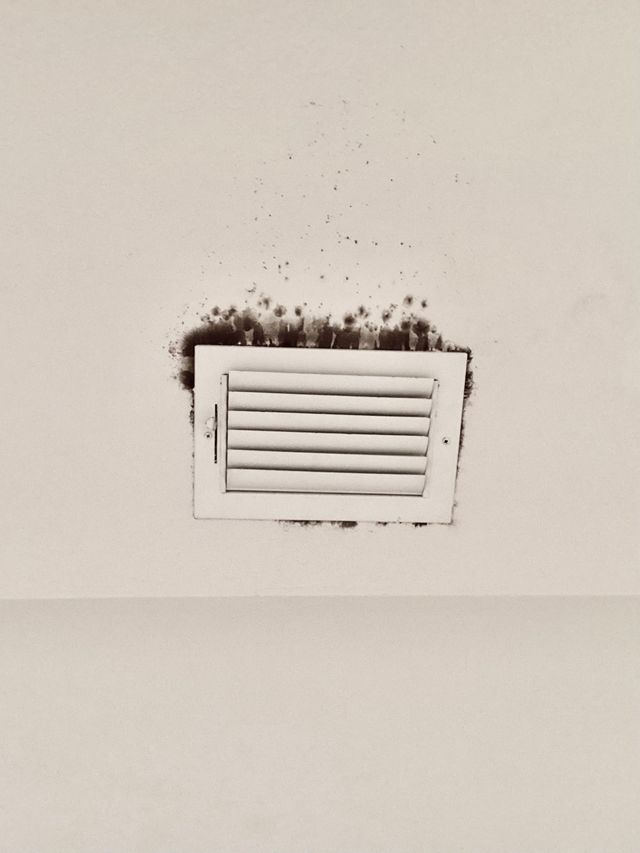
FACT vs MYTH #2: “Mold in Vents Is Easy to Spot”
Myth: You’ll clearly see mold around vents.
Fact: Most HVAC mold is hidden.
Visible vent mold usually means:
- The problem has already progressed
- Spores may already be circulating
In Oakland Park inspections, mold is commonly found:
- Deep inside ductwork
- On internal coil surfaces
- Beneath insulation layers
By the time it’s visible at the vent, it’s rarely a small issue.
FACT vs MYTH #3: “Dust or Dirt in Ducts Is the Same as Mold”
Myth: Dark buildup = just dirt.
Fact: Mold and dust behave very differently.
Dust:
- Is dry and loose
- Settles over time
Mold:
- Grows in patches or streaks
- Smells musty or sour
- Returns quickly after surface cleaning
Only proper inspection and, when needed, testing can tell the difference. Guessing wrong often delays proper remediation.
FACT vs MYTH #4: “Bleach or Sprays Fix HVAC Mold”
Myth: Spraying disinfectant solves the problem.
Fact: Surface sprays don’t address root causes.
Why sprays fail:
- They don’t penetrate insulation
- They don’t fix moisture issues
- They don’t prevent regrowth
In HVAC systems, moisture control is more important than chemicals. Without correcting condensation, drainage, or airflow, mold simply comes back.
FACT vs MYTH #5: “Only Old Systems Get Mold”
Myth: New HVAC systems don’t get mold.
Fact: Newer systems can be just as vulnerable.
In fact, newer systems sometimes:
- Run shorter cycles
- Remove less humidity
- Create intermittent condensation
Without proper sizing and humidity control, even brand-new systems in Oakland Park homes can develop mold surprisingly fast.
Early Warning Signs of HVAC Mold Homeowners Miss
HVAC mold rarely announces itself clearly. Early signs include:
- Musty smell when AC starts
- Odor strongest near vents or closets
- Excess condensation on vents
- Filters clogging faster than normal
- Increased allergy symptoms indoors
If symptoms improve when leaving the house, indoor air quality—often tied to HVAC issues—may be involved.
How HVAC Mold Affects Indoor Air Quality
Your HVAC system moves air throughout the entire home. When mold develops inside it:
- Spores can circulate room to room
- Odors spread evenly
- Symptoms affect the whole household
This is why HVAC mold often causes house-wide issues, even if growth originates in a single component.
Common Places Mold Grows Inside HVAC Systems
Based on real inspections in Oakland Park homes, mold is frequently found:
- On evaporator coils
- Inside air handler cabinets
- On insulation lining ducts
- Near clogged or improperly sloped drain lines
- Around return plenums
These areas stay dark, damp, and undisturbed—perfect mold conditions.
Why Ignoring HVAC Mold Gets Expensive
Delaying action can lead to:
- Mold spreading through ductwork
- Larger remediation zones
- Damage to insulation and components
- Declining indoor air quality
- Higher repair or replacement costs
Early intervention usually means simpler cleaning and moisture correction instead of full system remediation.
What Actually Prevents HVAC Mold (Facts, Not Myths)
Effective prevention focuses on:
- Proper humidity control
- Clean and clear condensate drains
- Adequate airflow and system sizing
- Regular inspections—not just filter changes
Filters help, but they don’t stop mold growth inside the system itself.
When Homeowners in Oakland Park Should Take Action
Consider professional inspection if:
- Odors persist despite cleaning
- Symptoms continue indoors
- Moisture or condensation is visible
- Mold keeps returning near vents
Ignoring early signs allows mold to settle deeper into the system—making it harder and more expensive to resolve.
Final Takeaway: Facts Protect Homes, Myths Don’t
HVAC mold isn’t rare in Oakland Park homes—it’s just commonly misunderstood. Cooling performance doesn’t equal cleanliness, and surface solutions don’t fix moisture-driven problems.
When homeowners rely on facts instead of myths, HVAC mold stays manageable. When myths win, mold quietly spreads through the one system designed to move air everywhere.
If something smells off, feels damp, or keeps returning, trust the signs. HVAC mold doesn’t fix itself—but early action makes a massive difference.
