
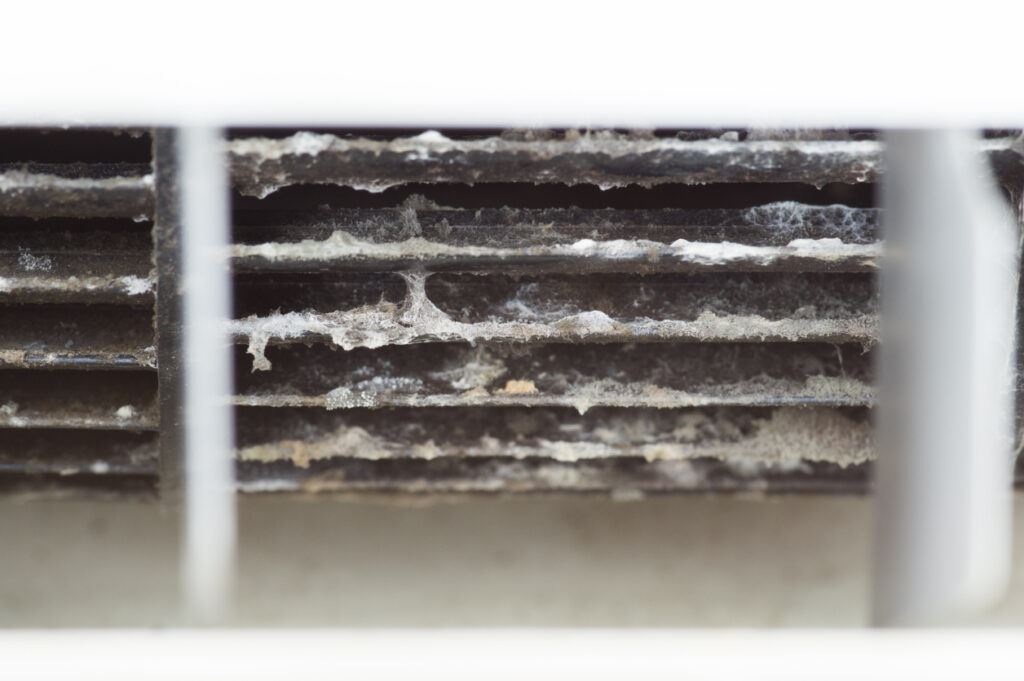
How Mold Spreads Through HVAC Systems – A Homeowner’s Guide for Homes in Broward County
Most homeowners in Broward County don’t think about mold spreading until it shows up in more than one room. One vent looks dirty. A bathroom wall grows spots. A bedroom smells off. That’s when the panic kicks in. But by that point, mold didn’t suddenly “move.” It followed airflow—and HVAC systems are very good at moving air.
What we see inside homes across Broward County makes one thing clear. HVAC systems don’t create mold, but they are the fastest way mold spreads when moisture goes unchecked. This guide explains how that process actually works, what homeowners usually get wrong, and how to stop mold from turning into a whole-house problem.
Start With the Basics: Mold Needs Moisture
Mold growth always starts the same way.
The Only Conditions Mold Needs
Mold grows when it has:
- Moisture
- Moderate temperatures
- Organic material
Homes already provide warmth and food. Moisture is the deciding factor—and HVAC systems create moisture by design.
Why HVAC Systems Naturally Produce Water
This part surprises many homeowners.
How Cooling Air Creates Condensation
When your AC runs:
- Warm air passes over cold evaporator coils
- Moisture condenses out of the air
- Water collects in the drain pan
This process works correctly when drainage and drying happen fast enough. Problems start when moisture lingers inside the system.
Why Broward County Homes Face Higher HVAC Mold Risk
Climate changes how fast mold spreads.
Local Conditions That Matter
Homes in Broward County deal with:
- High year-round humidity
- Long cooling seasons
- Heavy AC usage
- Slow indoor drying
HVAC systems here run frequently and stay cool longer, which gives moisture more time to stick around.
Where Mold Usually Starts Inside HVAC Systems
Mold rarely starts in the ducts.
The Most Common Starting Points
During inspections, we most often find mold:
- On evaporator coils
- In drain pans
- On internal HVAC insulation
- Inside air handlers
Once mold grows in these areas, spores easily enter the airflow.
How Mold Actually Spreads Through HVAC Systems
This process is simple and predictable.
The Real Spread Process
- Moisture stays active inside HVAC components
- Mold grows on damp surfaces
- Spores release into the airflow
- Air distributes spores through ductwork
- Spores settle throughout the home
Mold doesn’t crawl through ducts. Airflow does the work for it.
Why Mold Often Shows Up at Vents First
This confuses homeowners constantly.
What Mold at Vents Really Means
Supply vents:
- Sit at temperature transition points
- Collect condensation
- Catch spores moving through airflow
Mold at a vent usually points to a problem upstream inside the HVAC system, not the vent itself.
Condensation Is the Earliest Warning Sign
Condensation appears before mold.
Where Condensation Commonly Appears
In Broward County homes, we often see condensation:
- On supply vents
- Around duct boots
- On refrigerant lines
- Inside air handlers
Condensation means moisture is present where it shouldn’t be. Mold often follows if nothing changes.
Why HVAC Filters Don’t Stop Mold Spread
Filters get misunderstood.
What Filters Do—and Don’t—Do
Filters:
- Catch particles entering the system
- Improve general air cleanliness
They do not:
- Remove moisture
- Dry coils or drain pans
- Prevent mold growth inside components
A clean filter does not mean a mold-free HVAC system.
How HVAC Mold Affects Indoor Air Quality
This is where health concerns begin.
What Homeowners Commonly Notice
When HVAC systems spread mold spores, homeowners often report:
- Allergy symptoms indoors
- Nasal congestion
- Headaches or fatigue
- Symptoms improving outside the home
These patterns often lead inspectors straight to the HVAC system.
Why Mold Can Spread Without Any Smell
Odor is not a reliable indicator.
Why Smell Often Comes Late
Many homes with HVAC mold have:
- No musty odor
- No visible mold at vents
- No obvious water damage
Mold can affect air quality long before it produces a noticeable smell.
Attics and Wall Cavities Help Mold Travel
HVAC systems aren’t the only pathway.
Other Spread Pathways We See
Mold spores also move through:
- Wall cavities
- Ceiling voids
- Attic spaces connected to ductwork
This is why mold sometimes appears far from the HVAC unit itself.
Mold Removal vs Mold Remediation in HVAC Systems
These terms are not interchangeable.
Why Mold Removal Alone Fails
Mold removal:
- Cleans visible surfaces
- Leaves moisture active
- Allows regrowth
Why Mold Remediation Works
Proper remediation includes:
- Containment to prevent spore spread
- HEPA air filtration
- Cleaning or removing contaminated components
- Moisture and drainage correction
- Preventive treatments
Remediation stops the cycle instead of restarting it.
Why HVAC Mold Keeps Coming Back in Some Homes
This pattern shows up repeatedly.
The Real Reason Mold Returns
When mold keeps returning, inspections usually reveal:
- Ongoing humidity issues
- Poor drainage
- Short AC cycles
- Moisture never fully corrected
Mold doesn’t return randomly. Conditions stayed favorable.
When Duct Cleaning Helps—and When It Doesn’t
This gets oversold often.
What Duct Cleaning Can Do
Duct cleaning may help when:
- Dust buildup is heavy
- Contamination is localized
What It Cannot Do
Duct cleaning cannot:
- Remove mold growing on coils
- Fix condensation
- Correct moisture sources
Cleaning without correction leads to repeat problems.
Why Early Inspection Matters So Much
Inspection prevents guesswork.
What HVAC-Focused Inspection Reveals
Inspection helps identify:
- Mold growth locations
- Moisture sources
- HVAC component involvement
- Spread pathways
This prevents unnecessary duct replacement or incomplete cleanup.
Mold Testing: When It Adds Value
Testing isn’t always required, but it has a role.
When Testing Makes Sense
Testing supports inspection when:
- Symptoms exist without visible mold
- HVAC contamination is suspected
- Documentation is needed
Testing confirms exposure. Inspection explains the cause.
Warning Signs HVAC Mold Spread Is Already Active
Based on inspections across Broward County:
- Mold appearing in multiple rooms
- Mold returning after cleaning
- Condensation on vents
- Musty air when AC runs
- Health symptoms worsening indoors
Multiple signs usually mean HVAC involvement.
Practical Steps to Limit HVAC Mold Spread
You don’t need panic. You need consistency.
Smart Homeowner Actions
- Control indoor humidity
- Address condensation early
- Maintain HVAC drainage
- Inspect systems regularly
- Treat moisture, not just mold
Each step reduces mold’s ability to spread.
When Immediate Action Saves the Most Money
Act quickly when:
- Mold spreads across rooms
- HVAC components show contamination
- Odors appear when AC runs
- Health symptoms worsen indoors
At this stage, waiting almost always increases cost.
Final Thoughts: HVAC Systems Spread Mold When Moisture Wins
Mold spreads through HVAC systems in Broward County homes because moisture stays where it shouldn’t, for longer than it should. HVAC systems don’t cause mold—but they distribute it efficiently when conditions allow.
Inspect early. Fix moisture. Treat the system, not just the vents. When homeowners understand how HVAC systems actually spread mold, problems stop escalating and start getting solved the right way.
