
How Mold Spreads Through HVAC Systems – Practical Advice From Experts for Homes in Hollywood, Florida
If you live in Hollywood, your HVAC system runs almost nonstop. It cools, dehumidifies (when it’s working right), and moves air to every room. That last part is the problem: when mold gets into an HVAC system, it gains a free ride throughout the house.
This guide explains—plain and simple—how mold spreads through HVAC systems, why it happens so often in South Florida homes, and what experts actually recommend to stop it before it turns into a whole-house issue.
Why HVAC Systems Are a Perfect Mold Highway
Mold needs three things: moisture, a food source, and time. HVAC systems in Hollywood homes accidentally provide all three.
Here’s how:
- Moisture: Condensation forms naturally on coils and inside air handlers
- Food: Dust, skin cells, and debris collect inside ducts and cabinets
- Time: Dark, enclosed spaces rarely disturbed
Once mold establishes itself inside the system, every cooling cycle can pull spores in and push them out to bedrooms, living areas, and closets.
Where Mold Usually Starts Inside HVAC Systems
From real inspections in Hollywood homes, mold most often starts in these areas:
1. Evaporator Coils
Cold coils pull moisture from warm air. When airflow is restricted or cleaning is neglected, moisture lingers—and mold takes hold.
2. Air Handler Cabinets
Often located in closets or garages, air handlers sit in warm, humid spaces where condensation can linger unnoticed.
3. Condensate Drain Lines
Clogged or poorly sloped drains back up water, creating standing moisture—one of mold’s favorite conditions.
4. Insulated Ductwork
Flexible ducts and internally insulated ducts trap dust and moisture, making them especially vulnerable once spores enter.
How Mold Actually Spreads Through the System
Mold doesn’t “travel” like an insect. It spreads by releasing microscopic spores.
Here’s the step-by-step reality:
- Mold grows in one HVAC component
- Spores release into moving air
- The blower distributes spores through ducts
- Spores settle in other damp areas
- New mold colonies begin
This is why homeowners often notice musty smells everywhere, even though the original growth started in just one spot.
Early HVAC Warning Signs Homeowners Overlook
Mold rarely announces itself loudly. Watch for these early clues:
- Musty or sour smell when AC turns on
- Odors strongest near vents or closets
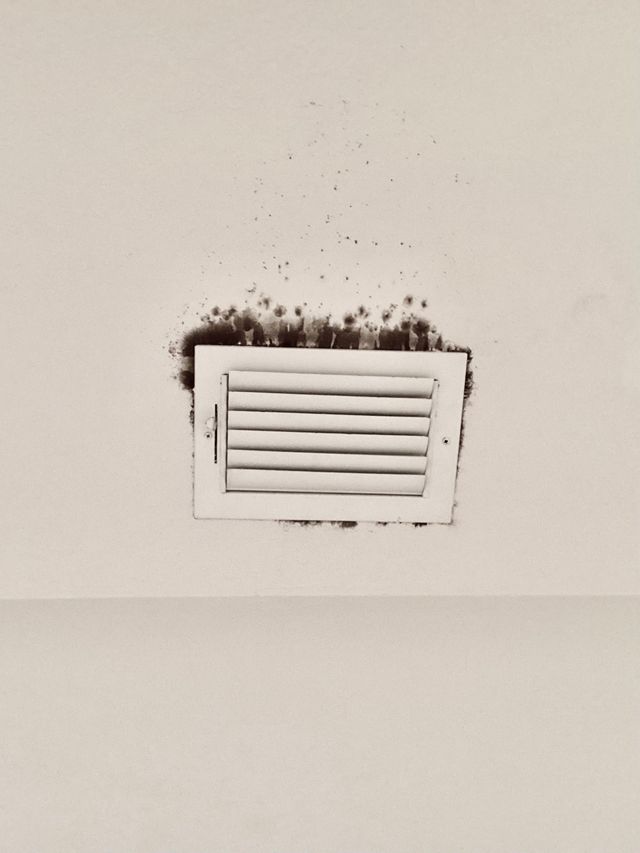
- Excess condensation on vents or ceilings
- Filters clogging faster than usual
- Allergy symptoms that improve when leaving home
If the smell appears only when the AC runs, that’s a major red flag pointing toward the HVAC system.
Common Myths That Let HVAC Mold Spread
Myth: “If I Can’t See Mold, It’s Not There”
Reality: HVAC mold is usually hidden—by the time it’s visible at vents, it’s often well established inside the system.
Myth: “Changing Filters Prevents Mold”
Reality: Filters catch particles, not moisture. Mold grows downstream, where filters can’t help.
Myth: “Bleach or Sprays Solve HVAC Mold”
Reality: Sprays don’t penetrate insulation or fix condensation issues. Mold almost always returns.
Why DIY HVAC Mold Cleaning Often Makes Things Worse
Disturbing mold without containment causes:
- Spore release into the air
- Spread through ductwork
- Contamination of clean rooms
Scrubbing vents, fogging chemicals, or spraying coils without addressing moisture turns a localized issue into a whole-home problem.
Experts focus on control first, removal second.
Practical Expert Advice to Stop HVAC Mold Spread
1. Control Moisture First
No moisture = no mold growth. This means:
- Clearing and maintaining drain lines
- Correcting airflow issues
- Ensuring proper system sizing
- Managing indoor humidity
2. Address the Source, Not Just the Symptoms
Odors at vents usually mean growth inside, not at the vent cover.
3. Use Proper Containment When Removing Mold
Professionals isolate affected areas and use HEPA filtration to prevent spore migration.
4. Inspect Duct Materials
Some ducts can be cleaned; others must be replaced if contaminated—especially internally insulated ones.
How HVAC Mold Affects Indoor Air Quality
Your HVAC system distributes air evenly. That’s great—until mold is involved.
Once contaminated:
- Spores circulate continuously
- Odors become house-wide
- Symptoms affect everyone indoors
This is why HVAC-related mold often causes persistent, unexplained health complaints, even when visible mold is minimal.
When Homeowners in Hollywood Should Act
Don’t wait if:
- Odors persist after cleaning
- Mold keeps returning near vents
- Indoor humidity stays high
- Allergy symptoms worsen indoors
- Water or condensation is visible near HVAC components
Early action usually means simpler fixes. Delayed action often means duct replacement or major remediation.
Preventing Future HVAC Mold (What Actually Works)
Long-term prevention focuses on:
- Keeping indoor humidity below 60%
- Ensuring consistent airflow
- Maintaining clean drain lines
- Scheduling regular HVAC inspections
- Addressing small leaks immediately
Prevention isn’t about chemicals—it’s about environmental control.
Final Thoughts: HVAC Mold Spreads Quietly—Until It Doesn’t
In Hollywood homes, HVAC systems don’t just move cool air—they move whatever’s in the system. When mold gets inside, it spreads quietly, evenly, and efficiently.
The good news? Understanding how mold spreads makes it easier to stop. Control moisture, address the source, and don’t rely on surface solutions. HVAC mold doesn’t fix itself—but when caught early, it’s far easier to manage.
