
How Mold Spreads Through HVAC Systems – The Science Explained Simply for Homes in South Florida
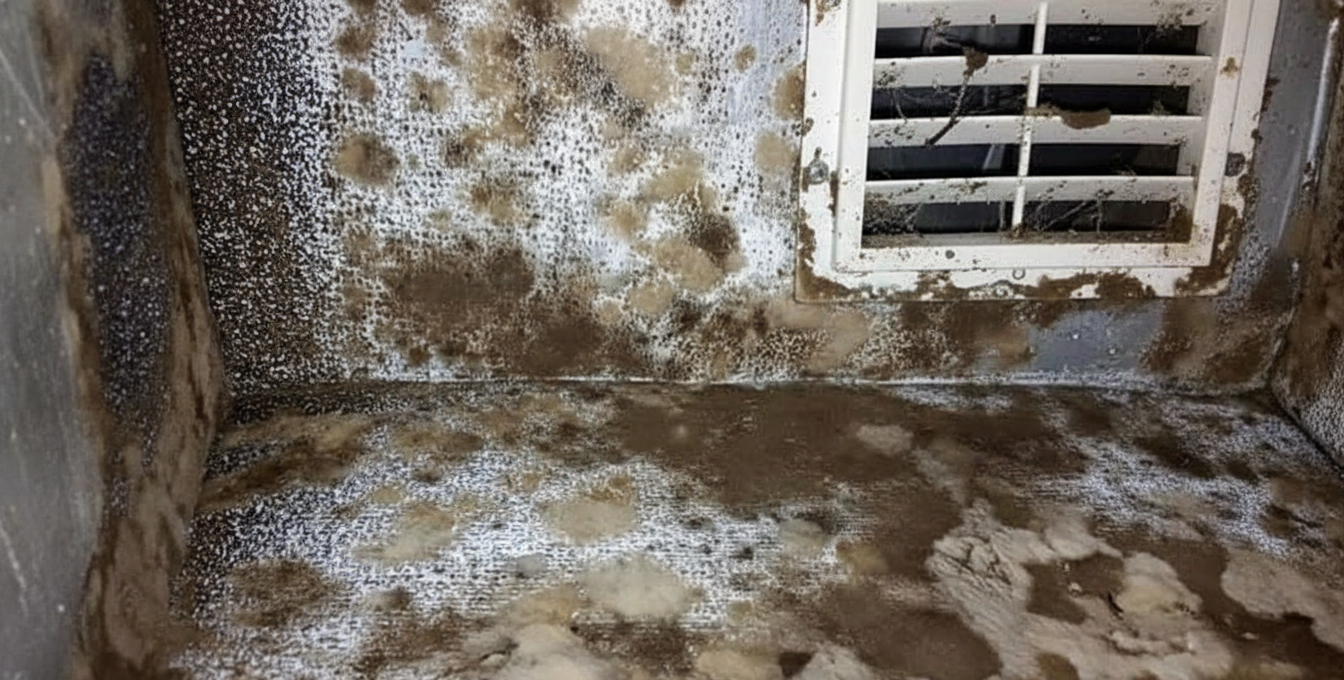
Ever turned on your AC and caught that damp, musty smell drifting through the house?
That smell doesn’t just “float around.” Your HVAC system carries it.
After years of performing mold inspection, mold testing, mold removal, and mold remediation across South Florida, I’ve seen one pattern repeat over and over: when mold grows inside an HVAC system, it doesn’t stay in one room.
Why HVAC Systems Create the Perfect Mold Environment
South Florida homes run air conditioning almost year-round. That means your HVAC system constantly:
- Pulls warm, humid air inside
- Cools it rapidly
- Produces condensation
That condensation forms on evaporator coils and inside drain pans.
If moisture drains properly, no problem.
But when:
- Drain lines clog
- Coils stay damp
- Duct insulation absorbs moisture
Mold finds a place to grow.
No moisture? No mold. Moisture present? Mold takes advantage.
Step-by-Step: How Mold Actually Spreads Through HVAC Systems
Let’s simplify the process.
Step 1: Mold Begins at the Source
Mold often starts inside:
- The air handler
- The evaporator coil
- The drain pan
- Damp duct insulation
Spores naturally exist in the air. When they land on a moist surface, they grow.
That’s basic biology.
Step 2: Airflow Distributes Spores
Your HVAC system doesn’t just cool air. It moves it.
Once mold colonies form inside components, airflow pushes microscopic spores into:
- Bedrooms
- Living rooms
- Closets
- Hallways
Every vent becomes a delivery point.
Ever wondered why allergies feel worse when the AC runs? That airflow explains it.
Step 3: Spores Settle in New Locations
When spores travel through ducts, they settle on:
- Dust inside vents
- Ceiling drywall near registers
- Carpets and furniture
- Wall cavities
If those areas stay dry, spores remain inactive.
If moisture appears again? Growth continues.
That’s why recurring mold issues often connect to HVAC contamination.
Why South Florida Homes Face Higher Risk
Humidity stays high across Fort Lauderdale, Miramar, Tamarac, Coral Springs, Oakland Park, Pembroke Pines, and Deerfield Beach.
Your AC works overtime. That constant condensation increases mold risk inside systems.
We perform mold inspection throughout Broward County, and HVAC contamination ranks among the most common hidden problems.
Older duct systems especially show:
- Insulation breakdown
- Condensation buildup
- Microbial growth inside flexible ducts
And here’s the part many homeowners miss — cleaning visible vents doesn’t fix internal system growth.
What Mold Testing Often Reveals
When we perform professional mold testing in South Florida homes, we often find:
- Elevated indoor spore counts
- Higher readings near air returns
- Significant difference between indoor and outdoor samples
Testing confirms whether your HVAC spreads contamination.
We don’t rely on visual guesswork.
We use air sampling and moisture readings to guide proper mold removal and mold remediation.
IMO, testing prevents unnecessary demolition and wasted money.
Signs Your HVAC May Be Spreading Mold
Watch for these indicators:
- Musty smell when AC starts
- Dark dust around vents
- Recurring allergy symptoms indoors
- Visible growth near supply registers
- Water pooling near air handler
One sign alone doesn’t confirm contamination.
Multiple signs? Time for inspection.
Why DIY Cleaning Rarely Solves HVAC Mold
I understand the temptation.
You see dust around vents. You grab a spray bottle.
But here’s what DIY methods miss:
- Internal coil contamination
- Contaminated blower fans
- Damp duct insulation
- Air handler mold behind panels
Without proper containment and mechanical cleaning, spores continue circulating.
Professional mold removal requires:
- System disassembly
- HEPA filtration
- Negative air containment
- Moisture correction
Otherwise, mold returns.
The Role of Mold Remediation in HVAC Systems
Proper mold remediation focuses on two things:
- Remove active growth
- Eliminate moisture source
We often:
- Clean and sanitize internal components
- Replace contaminated insulation
- Clear clogged drain lines
- Improve attic ventilation
If you only remove mold but ignore moisture, growth resumes. Every time.
Science doesn’t care about shortcuts.
Minor Contamination vs Severe HVAC Mold
Not every case requires major intervention.
Minor Cases:
- Light surface growth
- Low spore counts
- Early detection
These require targeted cleaning and moisture correction.
Severe Cases:
- Heavy coil buildup
- High airborne spore levels
- Widespread duct contamination
These require structured mold remediation and sometimes duct replacement.
Most South Florida homes fall somewhere in between — especially when homeowners act early.
What You Can Do Today
Start with simple steps:
- Keep indoor humidity between 45–55%
- Inspect AC drain lines quarterly
- Replace filters regularly
- Address roof or plumbing leaks immediately
- Schedule periodic mold inspection
FYI, prevention costs far less than full remediation.
Final Thoughts: Simple Science, Smart Action
Here’s the simple truth.
Mold spreads through HVAC systems because airflow distributes spores. Moisture allows growth. Humidity accelerates it.
That’s not dramatic. That’s mechanical science.
