
How Mold Spreads Through HVAC Systems – What Most People Get Wrong for Homes in Pompano Beach
When mold keeps showing up in different rooms, most homeowners in Pompano Beach assume the mold is “traveling through the air.” That idea isn’t totally wrong—but it skips the most important part of the story. Mold doesn’t spread randomly. It spreads efficiently, and HVAC systems are usually the reason.
What we see inside real homes tells us this: most people misunderstand how HVAC systems actually contribute to mold spread. They focus on vents, filters, or ducts alone and miss the deeper problem happening inside the system. This article breaks down the biggest misconceptions, what inspections consistently reveal instead, and why getting this wrong almost always leads to repeat mold problems.
Mistake #1: Thinking HVAC Systems Create Mold
HVAC systems don’t create mold. They enable it.
What Actually Causes Mold Growth
Mold grows when:
- Moisture stays present
- Temperatures stay moderate
- Organic material exists
HVAC systems simply provide:
- Constant airflow
- Cool surfaces
- Moisture from condensation
In Pompano Beach homes, those conditions come together easily, especially during long cooling seasons.
Mistake #2: Believing Mold Only Spreads Through Ducts
Ducts get all the blame, but they’re only part of the picture.
What Inspections Actually Show
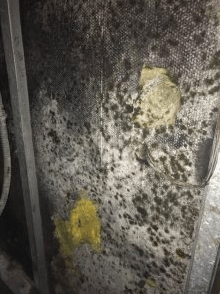
During HVAC-related mold inspections, we often find mold:
- Inside air handlers
- On evaporator coils
- In drain pans
- On internal insulation
Mold doesn’t need dirty ducts to spread. Once spores enter the airflow at the air handler, they distribute throughout the home.
Mistake #3: Assuming a Clean Filter Stops Mold Spread
Filters help—but not the way people think.
Why Filters Don’t Solve Mold Problems
Even high-quality filters:
- Don’t stop mold growth inside the system
- Don’t prevent condensation
- Don’t dry internal components
Filters trap particles moving into the system. They don’t fix moisture already present inside it.
Mistake #4: Thinking Mold Can’t Grow in HVAC Systems
This one causes constant disbelief.
Why HVAC Systems Are Mold-Friendly
Inside HVAC systems, we consistently see:
- Dark, damp environments
- Organic dust buildup
- Constant condensation
Evaporator coils and drain pans stay wet by design. In Pompano Beach’s humid climate, that moisture often doesn’t dry out fully—perfect conditions for mold.
Mistake #5: Believing Mold Smell Must Come From Vents
Odor isn’t reliable.
Why Mold Often Spreads Without Smell
Many homes with HVAC-related mold have:
- No strong musty odor
- No visible mold at vents
- No obvious stains
Mold spores circulate silently. By the time smell appears, spread usually already occurred.
Mistake #6: Thinking Mold Spread Means a “Bad Infestation”
Spread doesn’t always mean severity.
What Spread Actually Indicates
When mold appears in multiple rooms, it often means:
- HVAC systems are distributing spores
- Moisture exists somewhere in the system
- The source remains active
Small amounts of mold inside HVAC components can affect the entire home over time.
Mistake #7: Ignoring Condensation as a Mold Warning
Condensation feels harmless. It isn’t.
Where We See Condensation First
In Pompano Beach homes, condensation commonly appears:
- On supply vents
- Inside air handlers
- Around duct boots
- On refrigerant lines
Condensation means moisture is active. Mold often follows if nothing changes.
Mistake #8: Assuming Mold in HVAC Means Full Duct Replacement
This assumption creates panic.
What Inspections Usually Reveal
Not every case requires duct replacement. Inspections often show:
- Localized contamination
- Mold limited to air handler components
- Moisture issues that can be corrected
Proper inspection defines scope before unnecessary demolition happens.
Mistake #9: Treating HVAC Mold as a Cleaning Problem Only
Cleaning helps—but it’s not enough.
Why Cleaning Alone Fails
HVAC cleaning without correction:
- Leaves moisture active
- Allows regrowth
- Doesn’t stop spore circulation
Without addressing why moisture exists, mold returns quickly.
How Mold Actually Spreads Through HVAC Systems
Here’s the simple version.
The Real Spread Process
- Moisture builds up inside HVAC components
- Mold grows on coils, pans, or insulation
- Spores enter airflow
- Air distributes spores throughout the home
- Mold appears in new areas
This cycle continues until moisture is corrected.
Why Pompano Beach Homes Are Especially Vulnerable
Climate makes a huge difference.
Local Factors That Matter
Homes here deal with:
- High coastal humidity
- Heavy AC usage
- Slower drying between cycles
- Long cooling seasons
These conditions keep HVAC systems damp longer than they should be.
Health Symptoms Often Reveal HVAC Mold First
People feel it before they see it.
Common Complaints We Hear
In homes with HVAC-related mold spread, homeowners often report:
- Allergy symptoms indoors
- Headaches or fatigue
- Sinus irritation
- Symptoms improving outside the home
These patterns frequently lead inspectors straight to the HVAC system.
Mold Inspection Is the Missing Step for Most Homeowners
Guessing keeps problems alive.
What HVAC-Focused Inspection Reveals
Inspection identifies:
- Mold growth inside HVAC components
- Moisture sources
- Airflow issues
- Spread pathways
This clarity prevents unnecessary duct replacement or repeated cleaning.
Mold Testing: When It Helps With HVAC Concerns
Testing isn’t automatic, but it has value.
When Testing Makes Sense
Testing supports inspection when:
- Symptoms exist without visible mold
- HVAC contamination seems likely
- Documentation is needed
Testing confirms exposure. Inspection explains the source.
Mold Removal vs Mold Remediation in HVAC Systems
This difference determines success.
Why Removal Alone Fails
Removal:
- Cleans surfaces
- Leaves moisture active
- Allows regrowth
Why Remediation Works
Proper remediation includes:
- Containment to prevent spore spread
- HEPA air filtration
- Cleaning or replacing contaminated components
- Moisture correction
- Preventive treatments
Remediation changes conditions so mold can’t thrive.
Warning Signs HVAC Mold Spread Is Already Happening
Based on real inspections:
- Mold appearing in multiple rooms
- Mold returning after cleaning
- Musty air when AC starts
- Condensation on vents
- Health symptoms worsening indoors
Multiple signs usually mean HVAC involvement.
Practical Advice Homeowners Should Actually Follow
Skip panic. Follow logic.
Smart HVAC Mold Prevention Steps
- Address condensation early
- Maintain proper drainage
- Keep humidity under control
- Inspect HVAC systems regularly
- Don’t rely on filters alone
Each step limits mold’s ability to spread.
When Immediate Action Saves the Most Money
Act quickly when:
- Mold spreads across rooms
- HVAC components show contamination
- Odors persist when AC runs
- Health symptoms worsen indoors
Waiting almost always expands scope and cost.
Final Thoughts: HVAC Systems Spread Mold When Moisture Wins
Mold spreads through HVAC systems in Pompano Beach homes not because systems fail—but because moisture stays active inside them. What most people get wrong is treating HVAC mold as a duct problem instead of a moisture problem.
Inspect early. Fix moisture. Treat the system, not just the vents. When homeowners understand how HVAC systems actually spread mold, problems stop cycling—and start getting solved.
