


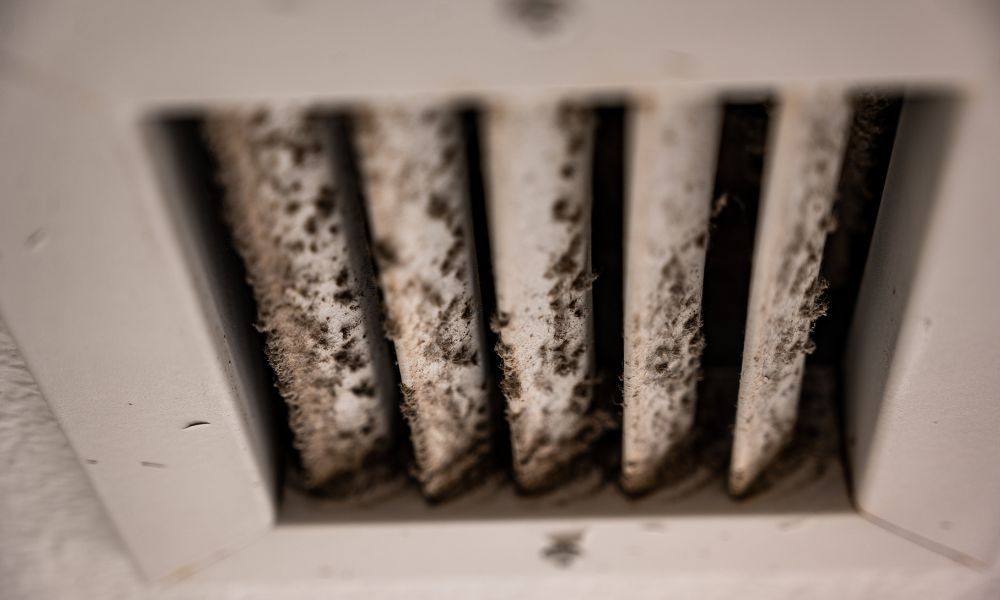
Mold doesn’t spread through HVAC systems because something dramatic went wrong. In Pembroke Pines, it spreads because small, boring issues get ignored—condensation that never fully dries, drain pans that stay damp, and air handlers that quietly turn into distribution centers. We inspect homes all the time where one overlooked HVAC issue turned a small mold problem into a whole-home expense. The system did exactly what it was built to do: move air everywhere.
This article explains how mold spreads through HVAC systems and why ignoring it costs more for homes in Pembroke Pines, based on real inspections. No scare tactics. No exaggeration. Just the mechanics, the mistakes, and the costs that follow when HVAC mold goes unchecked.
Why HVAC Mold Gets Missed in Pembroke Pines Homes
Living in Pembroke Pines means air conditioning runs most of the year. HVAC systems manage cooling, airflow, and moisture all at once, which makes problems easy to overlook.
Most homeowners assume:
- Mold would start on walls, not inside the system
- Changing filters prevents HVAC mold
- Clean vents mean a clean system
Inspections consistently show those assumptions cost homeowners later.
Where Mold Actually Starts Inside HVAC Systems
Mold almost never starts at the vents. Vents show symptoms after the fact. The real starting points sit deeper inside the system where moisture lingers.
We most often find mold in:
- Evaporator coils
- Drain pans and clogged drain lines
- Internal fiberglass insulation
- Air handler cabinets
These areas stay dark, damp, and undisturbed—perfect conditions for mold growth.
Condensation: The Quiet Driver of HVAC Mold
Leaks get blamed a lot, but condensation causes most HVAC mold cases. Warm, humid air enters the system and hits cold components. Moisture forms immediately.
Real inspection patterns look like this:
- High outdoor humidity enters the system
- Cooling creates condensation on coils
- Short cycles limit drying time
- Moisture stays on internal surfaces
That constant dampness feeds mold without leaving obvious water damage.
Why Filters Don’t Stop HVAC Mold
One of the most common misconceptions involves filters. Filters matter for airflow and dust, but they don’t prevent mold growth inside HVAC systems.
We routinely see:
- Brand-new filters with moldy coils
- Mold growing behind filters
- Drain pans full despite regular maintenance
Mold grows before the filter, not after it. Filters can’t fix moisture.
How HVAC Systems Spread Mold Through the Home
Once mold establishes itself inside an HVAC system, spread becomes automatic. Every time the system runs, spores move through ductwork and exit supply vents.
From real inspections, we consistently observe:
- Mold appearing in multiple rooms
- Odors that move with airflow
- Symptoms worsening when the AC runs
- Mold returning after surface cleaning
HVAC systems don’t hide mold. They distribute it efficiently.
Why Ignoring HVAC Mold Gets Expensive Fast
The biggest cost jump happens when mold moves from a localized issue to a system-wide one. HVAC involvement changes the scope entirely.
Ignoring HVAC mold often leads to:
- Ductwork contamination
- Internal insulation replacement
- Multi-room remediation
- Higher labor and material costs
Early action keeps remediation focused. Waiting multiplies it.
HVAC Mold and Indoor Air Quality
HVAC-related mold directly impacts indoor air quality. Homes with contaminated systems often show elevated airborne spore levels throughout the house.
Homeowners commonly report:
- Congestion indoors
- Headaches at home
- Fatigue without explanation
- Persistent musty odors
Air quality rarely improves until HVAC contamination gets addressed.
Mold Inspection: Why HVAC Systems Matter First
A proper mold inspection always includes the HVAC system because it often acts as the distribution hub.
During inspections, we evaluate:
- Air handlers and internal components
- Supply and return ductwork
- Drain pans and drain lines
- Moisture levels around HVAC equipment
Skipping HVAC inspection almost guarantees missed sources.
When Mold Testing Clarifies HVAC Spread
Not every case needs mold testing, but testing becomes valuable when HVAC involvement is suspected without visible mold.
Testing helps when:
- Odors persist without visible growth
- Symptoms worsen when AC runs
- Mold keeps returning
- Documentation matters for real estate
Testing confirms whether spores circulate through the system.
Mold Removal vs. Mold Remediation in HVAC Systems
Many homeowners attempt mold removal without full mold remediation. That approach rarely works with HVAC systems.
Here’s the difference that matters:
- Mold removal eliminates existing contamination
- Mold remediation fixes moisture and airflow conditions
Removing mold without stopping condensation guarantees regrowth.
Why DIY HVAC Mold Fixes Fail
DIY solutions focus on what’s easy to reach. Mold rarely grows there.
DIY efforts fail because they:
- Miss internal growth
- Leave moisture sources active
- Ignore damp insulation
- Spread spores during cleaning
We often remediate larger areas after DIY attempts than before.
Structural and System Damage From HVAC Mold
HVAC mold doesn’t just affect air quality. Over time, moisture and contamination damage materials.
During remediation, we often uncover:
- Deteriorated duct insulation
- Corroded components
- Mold growth near vents
- Secondary mold elsewhere
System repairs add significant cost compared to early intervention.
Why Pembroke Pines Homes Face Ongoing HVAC Mold Risk
Homes throughout Broward County face mold pressure, but Pembroke Pines adds tightly sealed homes and continuous AC operation.
Inspection trends often show:
- Elevated indoor humidity
- HVAC systems that rarely fully dry
- Condensation-driven growth
- Limited natural ventilation
These conditions allow HVAC mold to spread quietly when ignored.
Real Inspection Insight: “The Smell Moves”
One Pembroke Pines homeowner noticed a musty smell that shifted from room to room. No visible mold existed. Inspection revealed mold on the evaporator coil and damp insulation inside the air handler.
Once the HVAC system was remediated, odors disappeared throughout the home. Waiting would have allowed duct contamination to develop.
How Professionals Stop HVAC Mold From Spreading
Professional mold remediation focuses on stopping mold and preventing recurrence—not just cleaning surfaces.
Effective HVAC remediation includes:
- Containment to prevent spore spread
- HEPA filtration
- Cleaning or removing contaminated components
- Moisture correction and verification
When condensation stops, mold loses its advantage.
Post-Remediation Verification Protects Homeowners
Verification confirms the problem actually ended and prevents repeat costs.
Verification often includes:
- Moisture measurements
- Visual confirmation
- Optional follow-up testing
Homes without verification face higher recurrence rates.
How Often HVAC Systems Should Be Evaluated
Regular evaluation keeps small HVAC issues from becoming expensive ones.
We recommend HVAC mold evaluations:
- Annually
- After water damage
- When musty odors appear
- Before buying or selling a home
Early checks always cost less than late remediation.
Preventing HVAC Mold Long-Term
Prevention focuses on moisture control and system performance.
Effective prevention includes:
- Routine HVAC maintenance
- Keeping drain lines clear
- Managing indoor humidity
- Ensuring proper airflow
Small adjustments prevent large remediation projects.
Final Thoughts: Ignoring HVAC Mold Is the Costliest Choice
Mold spreads through HVAC systems in Pembroke Pines homes not because homeowners ignore obvious disasters, but because HVAC mold stays hidden until it spreads everywhere. Once air handlers and ducts get involved, costs climb fast.
The solution stays consistent: thorough mold inspection, targeted mold testing when needed, proper mold removal, and complete mold remediation. Address HVAC mold early, and expenses stay controlled.
If odors move with airflow, symptoms worsen when the AC runs, or mold keeps returning despite cleaning, don’t wait for visible proof. HVAC systems rarely fix themselves, and the longer mold circulates, the more expensive it becomes to stop.
