
Indoor Air Quality Issues in Florida Homes – Facts vs Common Myths for Homes in Pompano Beach
Indoor air quality (IAQ) is one of the most misunderstood aspects of home comfort in Florida. Some homeowners assume poor air quality only happens in dirty or older homes. Others think if the house smells fine, the air must be healthy.
In Pompano Beach homes, inspections and air quality data tell a much more practical story. Indoor air quality problems are usually tied to moisture, HVAC performance, and ventilation—not cleanliness or home age.
This article separates facts from common myths, explaining what really affects indoor air quality in Pompano Beach homes and what homeowners often get wrong.
Why Indoor Air Quality Is a Bigger Issue in Florida Homes
Florida’s climate creates conditions that naturally challenge indoor air quality:
- High humidity most of the year
- Frequent rain and storms
- Constant air-conditioning use
- Tightly sealed homes that trap moisture
In Pompano Beach, coastal humidity adds another layer. Even when windows stay closed, moisture still finds its way inside—and indoor air quality reflects that.
Myth #1: “If My Home Smells Fine, My Air Quality Is Fine”
Myth.
The fact:
Poor indoor air quality doesn’t always produce odors.
Many homes with documented IAQ issues:
- Smell neutral
- Look clean
- Feel comfortable temperature-wise
Air quality problems often involve invisible particles, humidity, or biological contaminants that don’t announce themselves with strong smells.
Myth #2: “Indoor Air Quality Problems Only Happen in Older Homes”
False.
The fact:
Inspection data shows IAQ issues in:
- Older homes with aging HVAC systems
- Newer homes with tight construction
- Renovated homes where airflow changed
Newer Pompano Beach homes often trap moisture more effectively, while older homes may struggle with ventilation or worn components. Home age doesn’t predict air quality—conditions do.
The Biggest IAQ Factor in Pompano Beach: Humidity
Across Florida inspections, elevated indoor humidity appears more often than any other IAQ issue.
High humidity:
- Allows mold spores to activate
- Supports dust mites and allergens
- Makes air feel heavy or stale
- Reduces HVAC efficiency
Many homes feel cool but still maintain humidity levels that negatively affect air quality.
Humidity control is air quality control in Pompano Beach homes.
Myth #3: “Running the AC Fixes Indoor Air Quality”
Not always.
The fact:
Air conditioners only help air quality when they:
- Remove moisture effectively
- Drain condensation properly
- Maintain consistent airflow
Oversized AC units, dirty coils, or clogged drain lines can cool the home without properly dehumidifying it—leaving air quality poor even when temperatures feel comfortable.
HVAC Systems Play a Major Role in IAQ
Inspection data consistently links indoor air quality problems to HVAC systems.
Common findings include:
- Mold growth on evaporator coils
- Moisture inside air handlers
- Damp or contaminated duct insulation
- Dust and debris circulating through ducts
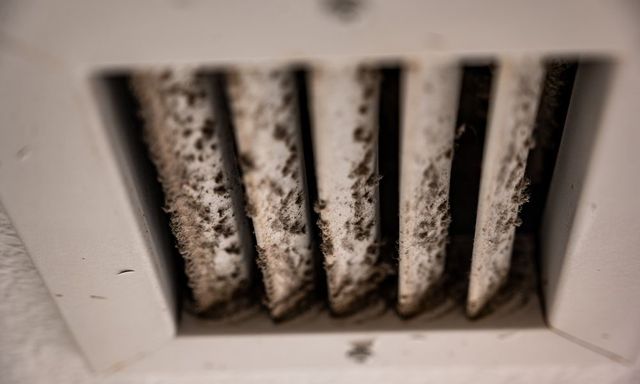
Because HVAC systems move air throughout the home, any issue inside the system can affect every room, not just one area.
Myth #4: “Air Fresheners Improve Indoor Air Quality”
This is a very common misconception.
The fact:
Air fresheners:
- Mask odors
- Do not remove pollutants
- Do not reduce humidity
- Do not address mold or allergens
In some cases, they add more airborne chemicals—making air quality worse, not better.
Mold Spores and IAQ (Even Without Visible Mold)
One of the most surprising IAQ findings for homeowners is that mold spores can affect air quality even when no mold is visible.
This often happens when mold grows:
- Behind walls
- Under flooring
- Inside HVAC systems
- In areas affected by past leaks
Indoor air samples that exceed outdoor spore levels usually indicate hidden mold sources, not surface contamination.
Myth #5: “If No One Is Sick, Air Quality Isn’t a Problem”
Not necessarily.
The fact:
People react differently to air quality conditions.
Some occupants experience:
- Allergy flare-ups
- Sinus irritation
- Headaches
- Fatigue
Others feel little or nothing at all—even in the same home.
Lack of symptoms doesn’t mean air quality is good. It means sensitivity varies.
Ventilation Is Often Overlooked
Another major IAQ issue in Pompano Beach homes is insufficient ventilation.
Many homes have:
- Underused bathroom exhaust fans
- Poor kitchen ventilation
- Laundry areas that trap moisture
Without proper ventilation, moisture and airborne particles remain suspended—degrading air quality over time.
Myth #6: “Changing Air Filters Solves Most Air Quality Problems”
Helpful—but incomplete.
The fact:
Filters help capture particles, but they:
- Don’t remove moisture
- Don’t fix mold sources
- Don’t correct ventilation issues
Filters are part of the solution—but never the whole solution.
Common Sources Linked to Poor IAQ in Pompano Beach Homes
Based on inspection trends, IAQ problems most often trace back to:
- High indoor humidity
- HVAC condensation issues
- Mold growth in hidden areas
- Past water damage
- Poor ventilation
Flooding can affect air quality, but everyday moisture problems are far more common causes.
Early Warning Signs Homeowners Miss
Before IAQ problems become obvious, professionals often notice:
- Persistent indoor humidity
- Musty smells that come and go
- Condensation near vents or windows
- Dust that returns quickly after cleaning
- A home that never feels “dry”
These signs usually appear before major air quality issues are confirmed.
What Homeowners Get Right After Learning the Facts
Once myths are cleared up, homeowners tend to:
- Focus on moisture control
- Pay closer attention to HVAC performance
- Improve ventilation habits
- Investigate recurring humidity or odor issues
- Stop relying on masking solutions
Understanding facts leads to better decisions—not panic.
When Indoor Air Quality Evaluation Makes Sense
IAQ evaluation is especially useful when:
- Humidity stays high indoors
- Allergy symptoms worsen at home
- There’s a history of water damage
- Musty odors persist
- Mold was previously found or removed
Evaluation doesn’t create problems—it clarifies conditions.
Final Thoughts: Facts Make Indoor Air Quality Manageable
In Pompano Beach homes, indoor air quality issues aren’t mysterious or rare. They’re driven by moisture, ventilation, and HVAC performance—not by how clean a home looks.
The real risk comes from believing myths:
- Assuming smell equals safety
- Relying on air fresheners
- Ignoring humidity
When homeowners understand the facts and act early, indoor air quality becomes manageable, affordable, and far less frustrating.
