
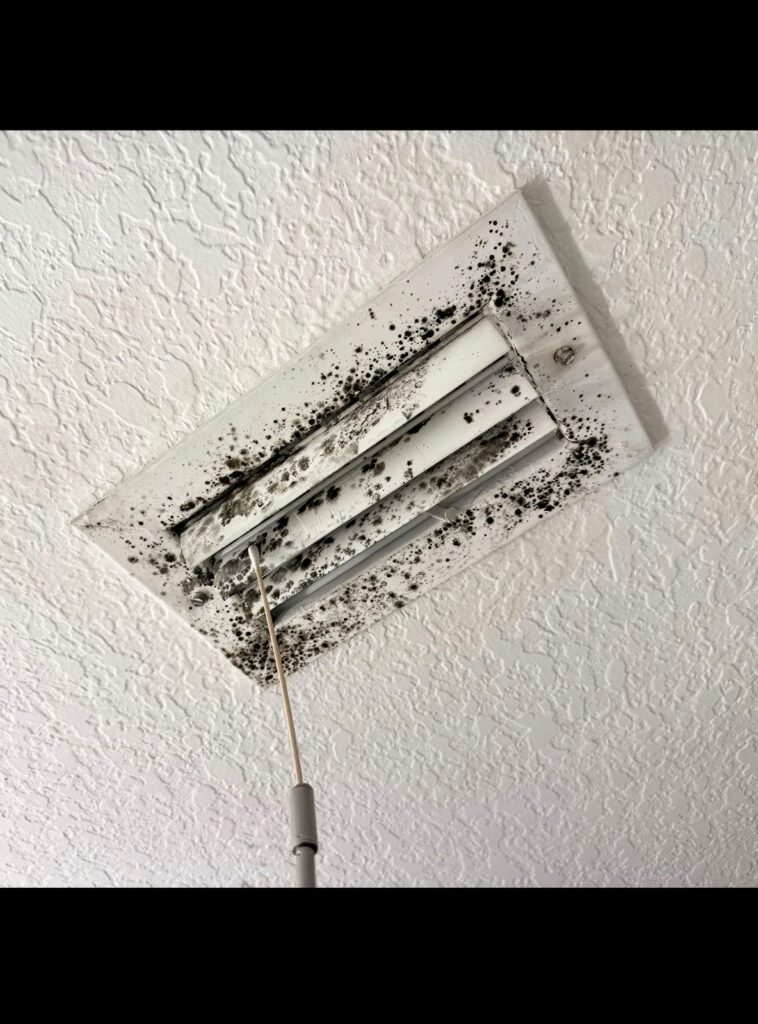
Lessons From Real Inspections: Air Duct Mold Insights for Homes in Plantation
Let me tell you something straight up — your air ducts can look clean from the outside and still hide a science experiment inside.
I’ve inspected plenty of homes in Plantation where everything looked “fine.” Then I opened the air handler or removed a vent cover and found microbial growth clinging to insulation. Homeowners always react the same way: “Wait… that’s inside my system?”
Yes. And your AC circulates that air every single day.
Why Plantation Homes See More Air Duct Mold
Plantation homes run AC almost year-round. Cool air moves through warm ductwork. That temperature difference creates condensation.
Condensation equals moisture. Moisture inside duct systems creates ideal mold conditions.
Here’s what we commonly see during air duct mold inspections in Plantation:
- Condensation buildup on supply vents
- Clogged AC drain lines
- Poor duct insulation
- Dust accumulation inside ducts
- Air handlers with moisture pooling
Ever notice water droplets around your vents? That’s not “normal Florida stuff.” That’s a moisture warning sign.
Lesson #1: Mold Loves AC Coils
During inspections, evaporator coils often surprise homeowners.
Your AC coil pulls humidity from the air. If maintenance lapses, debris builds up on the coil. That debris traps moisture.
We frequently find:
- Mold growth along coil fins
- Slime buildup in drain pans
- Biofilm inside air handlers
Dirty coils create the perfect mold breeding zone. Once spores grow there, your system distributes them through every vent.
I always tell homeowners: if you skip AC maintenance, mold won’t skip you.
Lesson #2: Airflow Problems Create Mold Hotspots
Balanced airflow keeps ducts dry. Poor airflow creates stagnant pockets.
When duct sections receive weak circulation, humidity lingers inside those spaces. That trapped moisture feeds mold growth.
Common airflow issues include:
- Crushed or disconnected duct lines
- Improperly sized HVAC systems
- Blocked return vents
- Leaky duct connections
IMO, airflow imbalance causes more duct mold than visible water leaks.
If one room feels humid while others feel cool, your system might already struggle behind the scenes.
Lesson #3: Insulated Ducts Can Hide Contamination
Plantation homes often use flex ducts with internal insulation. That insulation absorbs moisture easily.
Once insulation gets wet, mold embeds deep inside the material. Cleaning won’t fix it.
We often recommend duct replacement when:
- Insulation shows visible mold
- Moisture damage persists
- Odors remain after cleaning
- Air quality tests show elevated spore levels
Trying to “spray it away” rarely works. Mold roots penetrate porous duct materials quickly.
Lesson #4: Drain Line Neglect Starts Everything
Clogged AC drain lines create hidden water overflow.
When drain pans back up, water spreads inside the air handler and nearby ducts. Mold growth follows within days.
We constantly see:
- Sludge-filled drain lines
- Overflowed drain pans
- Rusted secondary drain switches
FYI, pouring a small amount of vinegar into your AC drain line monthly helps prevent buildup. That tiny step can save thousands in remediation costs.
Simple maintenance beats expensive repairs.
Lesson #5: Surface Cleaning Doesn’t Solve Duct Mold
Homeowners sometimes remove vent covers, wipe visible dust, and assume they solved the issue.
Unfortunately, mold colonies often grow deeper inside duct lines or within the air handler cabinet.
Professional air duct mold remediation in Plantation includes:
- Containment of affected areas
- HEPA vacuum extraction
- Antimicrobial treatment
- Coil cleaning
- Drain line clearing
- Duct replacement if necessary
Without addressing the moisture source, mold returns fast.
Ever wonder why musty smells disappear for a week and then come back? Surface cleaning hides symptoms. It doesn’t eliminate causes.
Signs You Might Have Mold in Your Air Ducts
You don’t need to open ducts to suspect a problem.
Watch for:
- Persistent musty odors when AC runs
- Increased allergy symptoms indoors
- Visible dust buildup around vents
- Water stains near air handlers
- Uneven cooling between rooms
Your AC system should deliver clean, neutral-smelling air. If it smells damp, something isn’t right.
Real Inspection Example: What We Found in Plantation
I recently inspected a two-story home in Plantation with mild allergy complaints.
The homeowner reported no visible mold anywhere. Walls looked spotless.
During the inspection, I found:
- Elevated humidity at 64%
- Condensation inside supply ducts
- Mold growth on the evaporator coil
- Drain line blockage
The homeowner never noticed water overflow. The system quietly circulated spores for months.
After remediation and AC servicing, indoor air quality improved significantly. Sometimes the problem hides in plain airflow.
Why Professional Air Duct Inspection Matters
You can’t diagnose internal duct mold with guesswork.
Professional inspections include:
- Moisture testing
- Visual duct camera checks
- Coil and air handler evaluation
- Humidity measurement
- Air sampling if needed
Air duct mold spreads silently. Proper inspection stops it early.
Plantation’s humidity doesn’t give duct systems a break. Regular maintenance protects your home year-round.
Prevention Tips for Plantation Homeowners
You don’t need to wait for a problem.
Here’s what I recommend:
- Service your HVAC system annually
- Keep indoor humidity below 60%
- Clean drain lines monthly
- Replace air filters regularly
- Inspect vents for condensation
Proactive steps keep your system dry and efficient.
And trust me — clean ducts feel different. The air smells fresher. Cooling feels more balanced. Energy efficiency improves.
Mold Removal vs. Full Duct Remediation
Let’s clear something up.
Basic duct cleaning removes dust.
Duct mold remediation eliminates contamination.
If mold embeds inside insulation, cleaning alone won’t solve it. Replacement becomes necessary.
Professional remediation controls spores during removal. Without containment, you risk spreading contamination throughout the house.
Would you rather solve it once or fight recurring odors forever? Exactly.
Final Thoughts: Your Ducts Deserve Attention
Air ducts stay out of sight. That makes them easy to ignore.
But your HVAC system circulates air through every room daily. If mold grows inside that system, it affects your entire home.
Real inspections in Plantation consistently reveal one truth: moisture control and HVAC maintenance prevent most duct mold issues.
If you notice musty air or unexplained allergy symptoms, schedule a professional air duct mold inspection in Plantation. Early action protects your indoor air, your system efficiency, and your peace of mind.
Because clean air shouldn’t feel like a gamble.
