
Moisture Problems Most Homeowners Miss – Practical Advice From Experts for Homes in Deerfield Beach
In Deerfield Beach, moisture problems don’t usually announce themselves with dripping ceilings or obvious floods. Most of the time, they stay quiet — tucked behind walls, under flooring, or inside HVAC systems — slowly creating conditions that lead to mold, odors, and expensive repairs.
The tricky part? Many homeowners don’t miss moisture problems because they’re careless. They miss them because the signs are subtle, and Florida homes are designed to handle humidity to some degree. This guide focuses on the moisture issues experts actually find during inspections — the ones that don’t look serious at first, but almost always turn into bigger problems when ignored.
No fear tactics here. Just real-world insight and practical advice.
Why Moisture Is a Bigger Deal in Deerfield Beach Homes
Coastal South Florida homes deal with a unique combination of challenges:
- High year-round humidity
- Sudden heavy rainstorms
- High groundwater levels
- Strong sun heating exterior walls
- Constant air conditioning use
Even well-built homes can trap moisture under these conditions. When airflow, drainage, or sealing isn’t perfect (and it rarely is), moisture finds a way in — and stays longer than it should.
Moisture itself isn’t the enemy. Persistent moisture is.
Hidden Moisture Problem #1: Slow Plumbing Leaks You Never See
One of the most common issues experts find in Deerfield Beach homes is slow plumbing leaks inside walls or under cabinets.
These leaks don’t always drip. Instead, they seep just enough to keep surrounding materials damp. Drywall, wood framing, and baseboards absorb that moisture like a sponge.
Signs homeowners often overlook:
- Slight bubbling or soft spots in paint
- Cabinets that smell musty but look fine
- Baseboards that feel swollen or warped
- A water bill that slowly creeps up
Because these leaks don’t cause immediate damage, they can go unnoticed for months — plenty of time for mold to begin forming behind the scenes.
Hidden Moisture Problem #2: Condensation Inside Walls
In hot, humid climates, condensation isn’t limited to cold drinks and bathroom mirrors. It can happen inside walls when warm, humid air meets cooler surfaces.
This often occurs:
- Behind north-facing exterior walls
- Near oversized AC systems that cool too fast
- Around poorly insulated ductwork
Homeowners rarely see this moisture directly. Instead, they notice peeling paint, faint stains, or recurring mold near vents or corners.
The problem isn’t always a leak — it’s temperature imbalance and trapped humidity.
Hidden Moisture Problem #3: Poor Bathroom Ventilation
Bathrooms are obvious moisture producers, but many Deerfield Beach homes still rely on weak exhaust fans or, worse, no ventilation at all.
Experts frequently find:
- Fans that vent into attics instead of outside
- Fans too small for the room size
- Fans rarely used because they’re loud or ineffective
Steam that doesn’t exit the home condenses on walls, ceilings, and framing. Over time, that moisture migrates into adjacent rooms and attic spaces.
If your bathroom mirror stays foggy long after a shower, moisture isn’t leaving — it’s settling.
Hidden Moisture Problem #4: HVAC-Related Moisture Issues
Air conditioning systems are essential in South Florida, but they’re also a major source of hidden moisture when something isn’t right.
Common HVAC moisture issues include:
- Clogged condensate drain lines
- Overflowing drain pans
- Poor airflow causing excess condensation
- Ductwork sweating in humid spaces
Homeowners often notice symptoms — musty smells, allergy flare-ups, uneven cooling — without realizing the moisture source is inside the system.
Unchecked HVAC moisture doesn’t just affect comfort. It creates ideal conditions for mold inside ducts and air handlers.
Hidden Moisture Problem #5: Exterior Water Intrusion
Even without flooding, water can enter homes through surprisingly small openings.
Experts commonly find moisture intrusion around:
- Aging window seals
- Hairline cracks in stucco
- Improperly sealed roof penetrations
- Sliding glass doors exposed to wind-driven rain
In Deerfield Beach, storms can push rain horizontally, forcing water into places gravity normally wouldn’t allow.
Because the damage starts inside wall cavities, homeowners often don’t notice until staining, odors, or mold appear — long after the initial intrusion.
Why DIY Moisture Checks Often Miss the Real Issue
Many homeowners try to check for moisture themselves, which is great — but visual inspections only catch part of the story.
Moisture problems are often:
- Behind finished surfaces
- Intermittent rather than constant
- Dependent on weather conditions
Professional inspections use moisture meters, thermal imaging, and airflow measurements to locate problems that eyes and noses can’t.
That doesn’t mean homeowners are helpless. It means knowing when it’s time to dig deeper.
Practical Expert Advice to Reduce Moisture Problems
Experts focus on controlling moisture, not just reacting to damage. Practical steps include:
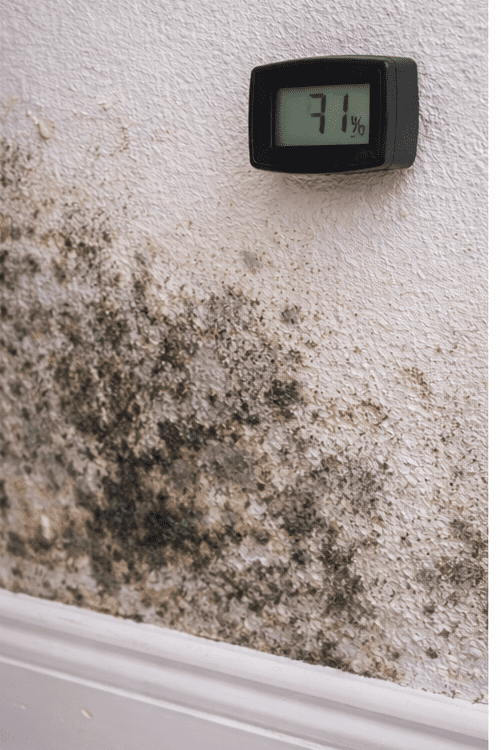
- Keep indoor humidity between 45–55%
- Use bathroom exhaust fans during and after showers
- Change HVAC filters regularly to maintain airflow
- Clear AC drain lines annually
- Seal exterior cracks and window gaps promptly
- Monitor musty odors — they’re early warning signs
Small maintenance habits often prevent big remediation bills.
When Moisture Problems Turn Into Mold Issues
Moisture doesn’t automatically mean mold, but mold can’t exist without moisture. When damp materials stay wet for extended periods, mold growth becomes likely.
The earlier moisture is identified and corrected, the easier — and cheaper — the solution.
Waiting until mold is visible usually means the moisture problem has been active for much longer than anyone realized.
Final Thoughts for Deerfield Beach Homeowners
Moisture problems aren’t always dramatic, but they are persistent. In Deerfield Beach homes, the most costly issues are usually the ones homeowners never see — until they’ve been active for months or years.
The goal isn’t panic. It’s awareness.
By understanding where moisture hides and addressing small warning signs early, homeowners can protect indoor air quality, prevent mold growth, and avoid unnecessary repairs.
Smart moisture control isn’t about fear — it’s about paying attention before small problems grow into big ones.
