
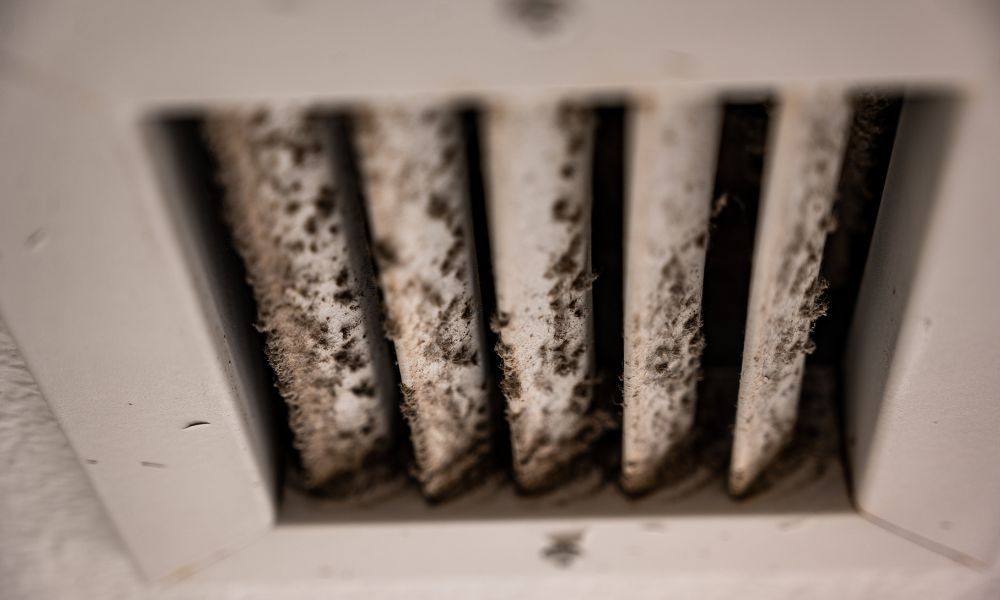
The Science Explained Simply: Air Duct Mold Insights for Homes in South Florida
Air duct mold sounds complicated, but the science behind it is actually pretty simple. Mold doesn’t magically appear because ducts are “dirty.” It shows up when moisture, airflow, and time line up just right. Real inspections inside homes across South Florida show the same pattern over and over: air duct mold isn’t mysterious—it’s predictable.
Let’s break it down in plain language, minus the fear tactics and technical overload.
First, What Air Duct Mold Actually Is
Air duct mold isn’t floating around randomly. It grows on surfaces inside the HVAC system when conditions allow it.
That usually means mold growing on:
- Duct liner insulation
- Supply or return duct surfaces
- Air handler components
- Areas where condensation forms repeatedly
No moisture? No mold. It really is that simple.
The Basic Science: Mold Needs Three Things
Mold growth always follows the same formula.
Mold needs:
- Moisture
- A surface to grow on
- Time
Air ducts already provide two of those. Moisture is the deciding factor.
Why South Florida Homes Create Ideal Conditions
South Florida homes naturally give mold a head start.
Local conditions include:
- High year-round humidity
- Constant air conditioning use
- Warm temperatures
- Limited natural drying
- Frequent storms
When moisture sneaks into the duct system, mold doesn’t need much encouragement.
Condensation: The Real Trigger Behind Duct Mold
Cold Air Meets Warm, Humid Air
Here’s the simple science part.
When cold air flows through ducts and meets warm, humid air outside them, condensation forms. That moisture settles on duct surfaces.
Inspectors commonly see condensation:
- Inside supply ducts
- On duct insulation
- Near vents and registers
- Inside air handlers
Repeated condensation feeds mold growth quietly over time.
Why Duct Mold Often Starts Where You Can’t See It
Air ducts hide extremely well. Mold doesn’t need to show itself to spread.
Most air duct mold starts:
- Inside insulated duct liners
- Above ceilings
- Inside walls
- In attic duct runs
By the time mold appears near vents, it’s often been growing for a while.
The Role of Humidity Inside the Duct System
Humidity doesn’t just affect rooms—it affects ducts too.
High indoor humidity:
- Slows drying
- Increases condensation
- Keeps insulation damp
- Extends mold growth cycles
IMO, humidity control matters more than duct cleanliness in preventing mold.
Why Dust Alone Doesn’t Cause Air Duct Mold
Dust gets blamed unfairly.
Here’s the reality:
- Dust does not cause mold
- Dust becomes food only when moisture exists
- Dry dust stays harmless
- Wet dust supports mold growth
Moisture turns dust into a problem—not the other way around.
HVAC Design and How It Impacts Mold Growth
Cooling Isn’t the Same as Dehumidifying
Many systems cool air quickly but don’t run long enough to remove moisture effectively.
Inspectors often find duct mold linked to:
- Oversized HVAC systems
- Short cycling
- Poor airflow balance
- Inadequate return air
Cold air with high humidity still creates condensation inside ducts.
Why Air Duct Mold Affects the Whole House
Air ducts don’t stay isolated.
Once mold grows inside ducts:
- Airflow distributes spores
- Multiple rooms get affected
- Odors travel easily
- Indoor air quality drops
That’s why duct mold often feels like a “whole-house” issue.
Musty Odors: A Science-Based Clue
Musty smells come from microbial activity interacting with airflow.
Inspectors often notice:
- Odors strongest during AC cycles
- Smells near vents
- Odors that fade, then return
FYI, odors often appear before visible mold does.
Why Air Duct Mold Keeps Coming Back After Cleaning
Cleaning removes debris—not conditions.
Mold returns when:
- Condensation continues
- Humidity stays high
- Insulation remains damp
- Drainage issues persist
If moisture stays, mold comes back. That’s the science.
Air Duct Cleaning vs Mold Remediation
These get confused constantly.
- Duct cleaning removes dust and debris
- Mold remediation addresses moisture, contamination, and spread
Cleaning without moisture control almost guarantees regrowth.
What Inspections Focus On With Air Duct Mold
Inspections don’t start with vents—they start with moisture behavior.
Inspectors evaluate:
- Humidity levels
- Condensation patterns
- Duct insulation condition
- Air handler drainage
- Airflow balance
- System runtime
Mold always traces back to moisture patterns.
Why Air Duct Mold Is So Common in South Florida
It’s not bad luck—it’s climate.
South Florida homes face:
- Constant humidity
- Heavy AC use
- Condensation-prone systems
- Slow natural drying
Without active moisture control, ducts stay vulnerable.
What Actually Prevents Air Duct Mold
Prevention focuses on changing conditions, not chasing mold.
Effective prevention includes:
- Managing indoor humidity
- Improving airflow
- Addressing condensation
- Maintaining HVAC drainage
- Fixing insulation issues
- Responding quickly to moisture
When ducts stay dry, mold struggles to survive.
Early Warning Signs Homeowners Miss
Watch for:
- Musty smells during cooling
- Odors near vents
- Dust returning quickly
- Rooms that never feel fresh
- Condensation on registers
These signs usually appear before visible growth.
Why Ignoring Air Duct Mold Costs More
Delayed action expands the problem.
Ignoring duct mold often leads to:
- Widespread contamination
- Insulation removal
- Air handler remediation
- Higher labor costs
- Longer disruption
Early attention keeps remediation smaller and cheaper.
Practical, No-Nonsense Advice for South Florida Homes
You don’t need panic—just understanding.
Smart steps include:
- Monitoring indoor humidity
- Watching for condensation
- Checking AC drain lines
- Investigating musty odors early
- Scheduling inspections when issues repeat
Small changes early prevent major HVAC problems later.
Final Thoughts: The Science Isn’t Scary—It’s Predictable
Air duct mold isn’t random, mysterious, or inevitable. Real inspections across South Florida show it follows simple science: moisture + time + airflow. When homeowners understand that formula, they stop chasing symptoms and start controlling conditions.
Keep ducts dry, manage humidity, and address condensation early. Do that, and air duct mold usually stays out of the picture—no fear tactics required 🙂
