
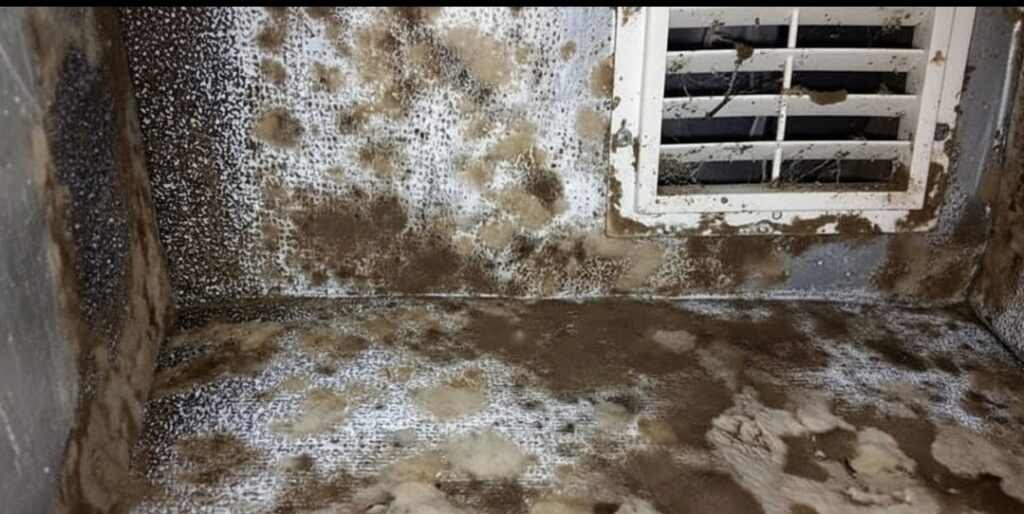
The Science Explained Simply: HVAC Mold Insights for Homes in Broward County
Your air conditioner does two main things: it cools air and removes humidity. That process creates condensation.
And condensation means water.
Mold needs only three things to grow:
- Moisture
- Dust or organic particles
- Warm temperatures
Inside an HVAC system, all three show up regularly. Dust moves through ducts, moisture forms on coils, and South Florida heat keeps everything warm enough for growth.
Ever seen a cold drink sweat on a hot day? The same principle happens inside your air handler every time it runs.
Where Mold Usually Starts in HVAC Systems
Mold rarely appears everywhere at once. It usually starts in one damp location and spreads gradually.
The most common starting points include:
- Evaporator coils
- Condensate drain pans
- Flexible duct insulation
- Air handler cabinets
Dust sticks to damp surfaces, spores settle, and growth begins quietly. Most homeowners don’t notice anything at this stage, which explains why mold sometimes spreads before anyone realizes it exists.
How Mold Spreads Through HVAC Systems
This part sounds complicated, but it’s actually simple.
Every time your AC runs, air moves through the ducts. If mold grows somewhere in the system, microscopic spores travel with that airflow.
Here’s how the process usually unfolds:
- Mold develops in a damp HVAC component
- Airflow carries spores through ductwork
- Spores settle in vents, rooms, or insulation
- Humidity allows new growth to begin
Nothing dramatic, nothing sudden—just airflow doing its job.
FYI, this slow spread explains why homeowners often smell mold in several rooms even when the source sits in one place.
Why Broward County Homes See HVAC Mold More Often
Homes across Broward County—from Coral Springs to Davie to Deerfield Beach—share similar environmental conditions:
- High humidity year-round
- Long AC usage seasons
- Heavy summer storms
- Warm attic spaces
These factors increase condensation inside systems and slow drying.
Inspection data from the region consistently shows that HVAC moisture ranks among the leading causes of indoor mold growth.
That surprises many homeowners who expect mold only after flooding or major leaks.
Signs Mold May Be Developing in Your HVAC System
HVAC mold often gives subtle warnings before becoming visible.
Watch for:
- Musty odor when the AC starts
- Smell stronger near certain vents
- Dark dust or spotting around registers
- Increased allergy symptoms indoors
- Rooms feeling more humid than usual
One sign alone doesn’t confirm mold, but several together usually indicate a moisture or airflow issue.
Ever noticed symptoms improving when you leave the house for a few hours? That often points toward indoor air quality.
The Role of Humidity (The Real Driver)
Humidity drives mold growth more than anything else.
Indoor humidity above 60% allows spores to grow easily. HVAC systems sometimes struggle to control humidity when:
- Filters clog
- Drain lines partially block
- Systems short-cycle
- Duct leaks pull humid attic air inside
Even small humidity imbalances can create localized mold conditions.
IMO, humidity control prevents more mold problems than any cleaning method ever could.
How Mold Inspection Identifies HVAC Issues
A professional mold inspection focuses on finding the cause, not just the symptoms.
Inspectors typically check:
- Air handler interiors
- Evaporator coils
- Drain pans and lines
- Ductwork condition
- Indoor humidity levels
They also look for airflow patterns and hidden moisture.
That step matters because cleaning mold without fixing moisture rarely solves the problem long term.
When Mold Testing Helps
Not every situation requires testing, but mold testing helps in specific cases:
- Odors persist without visible mold
- Multiple rooms smell musty
- Health concerns arise
- HVAC contamination seems likely
Air sampling compares indoor and outdoor spore levels to determine whether mold spreads through the system.
Testing removes guesswork, and honestly, guesswork causes more stress than the problem itself most of the time.
Mold Removal vs Mold Remediation (A Difference That Matters)
Many homeowners assume these terms mean the same thing. They don’t.
Mold removal addresses visible contamination.
Mold remediation fixes the moisture conditions that allowed mold to grow.
Remediation often includes:
- Clearing drain lines
- Sealing duct leaks
- Improving airflow
- Adjusting humidity control
Without remediation, mold often returns. I’ve seen that happen more times than I can count :/
Practical Steps Homeowners Can Take Right Now
You don’t need complicated tools to reduce HVAC mold risk. A few habits make a big difference.
Change Filters Regularly
Replace filters every 1–3 months to maintain airflow and reduce dust buildup.
Monitor Humidity
Keep indoor humidity between 45% and 55% whenever possible.
A small hygrometer gives you a clear picture of indoor conditions.
Schedule Routine Maintenance
Annual HVAC inspections catch small problems early—before mold spreads.
Pay Attention to Smells
Musty odors often appear before visible mold. Acting early saves time and money.
Simple steps, big impact. 🙂
Areas of the Home Most Affected by HVAC Mold
When spores circulate, they usually settle in predictable places:
- Bedrooms farthest from the air handler
- Guest rooms with closed doors
- Closets near vents
- Ceiling corners around supply registers
These areas receive less airflow, so humidity lingers longer.
Ever opened a closet and noticed a faint stale smell? That often signals a ventilation or humidity imbalance.
Why Early Action Saves Money and Stress
Small HVAC mold problems stay manageable. Larger ones spread into:
- Insulation
- Drywall
- Flooring
- Structural materials
Across Broward County, early mold inspection, mold testing, mold removal, and mold remediation consistently prevent larger repairs later.
And honestly, dealing with a small issue early feels far less stressful than handling a major one later.
Final Thoughts
HVAC mold follows simple science: moisture forms, spores travel through airflow, and growth develops where humidity lingers. Once you understand that process, the problem stops feeling mysterious.
For homeowners in Broward County, the smartest approach stays straightforward:
- Watch for musty odors
- Maintain HVAC systems regularly
- Schedule inspections when warning signs appear
- Address moisture problems quickly
