
The Science Explained Simply: HVAC Mold Insights for Homes in Lauderhill
HVAC mold sounds technical, expensive, and honestly a little intimidating. Most homeowners in Lauderhill assume it’s something that only happens in old systems or poorly maintained homes. What we actually see inside homes tells a much simpler story. HVAC mold isn’t complicated. It’s predictable. And once you understand the basic science behind it, the whole issue becomes a lot less mysterious.
Here’s the key takeaway upfront: HVAC mold forms because moisture behaves the same way every single time. Temperature, humidity, and airflow work together in ways that either keep a system dry—or quietly turn it into a perfect mold environment. Let’s break it down without the jargon.
Mold Needs Only Three Things to Grow
This part is refreshingly simple.
The Basic Mold Formula
Mold grows when it has:
- Moisture
- Moderate temperatures
- Something organic to feed on
Homes already provide warmth and food. Moisture is the deciding factor. HVAC systems don’t cause mold, but they create moisture by design, which puts them right at the center of the problem.
Why HVAC Systems Naturally Produce Moisture
This is where everything starts.
How Cooling Air Creates Water
When your AC runs:
- Warm air passes over cold evaporator coils
- Moisture condenses out of the air
- Water collects in the drain pan
This process works exactly as intended. The issue isn’t condensation—it’s what happens when that moisture doesn’t drain, dry, or disappear fast enough.
Why Lauderhill Homes Are Especially Vulnerable
Climate changes how fast problems develop.
Local Conditions That Matter
Homes in Lauderhill deal with:
- High year-round humidity
- Long cooling seasons
- Heavy AC usage
- Slower drying between cycles
That means HVAC systems stay cool and damp for long stretches. When moisture lingers, mold doesn’t need much encouragement.
The Evaporator Coil: Where HVAC Mold Usually Starts
Most HVAC mold begins here.
Why Coils Attract Mold
Evaporator coils:
- Stay cold during operation
- Collect condensation constantly
- Trap dust and organic particles
Dust becomes food. Moisture sticks around. Mold spores activate. Growth starts quietly on coil surfaces long before homeowners notice any signs.
Drain Pans and Drain Lines: Small Issues, Big Impact
Drainage problems accelerate mold growth fast.
What Happens When Drainage Fails
When drain pans or lines clog:
- Water pools instead of draining
- Moisture stays active longer
- Mold growth speeds up
In Lauderhill inspections, slow or clogged drains show up in a large percentage of HVAC mold cases.
Internal Insulation: Mold’s Favorite Hiding Spot
This part surprises most homeowners.
Why HVAC Insulation Matters
Internal insulation:
- Absorbs moisture easily
- Dries very slowly
- Can’t be cleaned like metal surfaces
Once mold grows inside insulation, wiping or spraying doesn’t fix the issue. This is why inspection matters before deciding what truly needs cleaning or replacement.
Airflow Turns Local Mold Into a Whole-Home Problem
This is where spread happens.
How Mold Moves Through HVAC Systems
Once mold grows inside HVAC components:
- Spores enter the airflow
- Air distributes spores through ductwork
- Spores settle in multiple rooms
This explains why mold sometimes appears in places far from the HVAC unit itself.
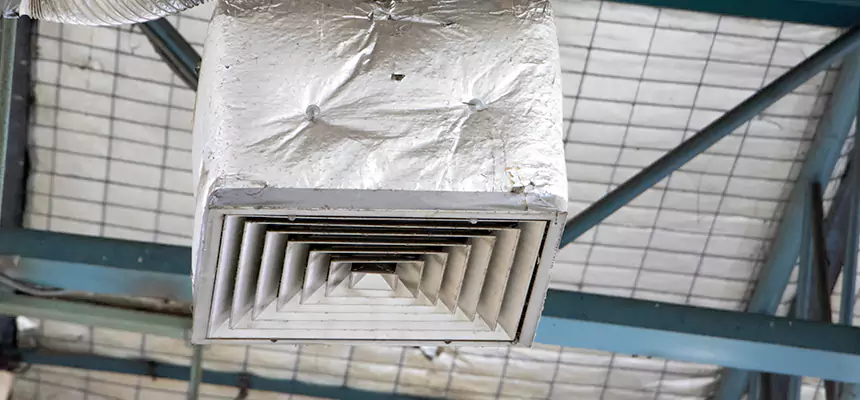
Why Mold Often Shows Up at Vents First
This confuses homeowners constantly.
The Science Behind Moldy Vents
Supply vents:
- Sit at temperature transition points
- Collect condensation
- Catch spores moving through airflow
Mold at vents doesn’t usually mean the vent caused the problem. It usually means something upstream already exists inside the system.
Condensation Is the Earliest Warning Sign
Condensation shows up before mold.
Where We See Condensation During Inspections
In Lauderhill homes, condensation commonly appears:
- On supply registers
- On metal duct boots
- Inside air handlers
- On refrigerant lines
Condensation means moisture is present where it shouldn’t be. Mold often follows if nothing changes.
Why HVAC Filters Don’t Prevent Mold Growth
Filters get a lot of credit they don’t deserve.
What Filters Actually Do
Filters:
- Catch particles entering the system
- Improve general air cleanliness
They do not:
- Remove moisture
- Dry coils or drain pans
- Prevent mold growth inside components
A clean filter doesn’t equal a mold-free HVAC system.
Why HVAC Mold Rarely Smells at First
Smell isn’t a reliable signal.
The Science of Mold Without Odor
Early mold growth:
- Releases spores without strong smell
- Stays hidden on coils or insulation
- Affects air quality quietly
By the time musty odors appear, mold often existed for a while.
Mold Removal vs Mold Remediation in HVAC Systems
This difference determines success.
Why Mold Removal Alone Fails
Removal:
- Cleans visible areas
- Leaves moisture active
- Allows regrowth
Why Mold Remediation Works
Proper remediation includes:
- Containment to prevent spore spread
- HEPA air filtration
- Cleaning or removing contaminated components
- Correcting moisture and drainage
- Preventive treatments
Remediation changes the conditions that allowed mold to grow in the first place.
Why HVAC Mold Keeps Coming Back in Some Homes
This pattern shows up often.
The Real Reason Mold Returns
When HVAC mold returns, inspections usually reveal:
- Ongoing humidity issues
- Poor drainage
- Incomplete component cleaning
- Moisture never fully corrected
Mold doesn’t come back randomly. The environment stayed mold-friendly.
Health Symptoms Often Lead Inspectors to HVAC Mold
People feel it before they see it.
Common Complaints We Hear
In Lauderhill homes with HVAC mold, homeowners often report:
- Allergy symptoms indoors
- Sinus irritation
- Fatigue or headaches
- Symptoms improving outside the home
These patterns frequently point straight to the HVAC system.
Mold Inspection Makes HVAC Mold Understandable
Inspection removes guesswork.
What HVAC-Focused Inspection Identifies
Inspection helps pinpoint:
- Where mold is growing
- Why moisture stays present
- Which components are affected
- How far spores have spread
This prevents unnecessary duct replacement or incomplete cleanup.
Mold Testing: When the Science Needs Confirmation
Testing isn’t always required, but it has a place.
When Testing Makes Sense
Testing supports inspection when:
- Symptoms exist without visible mold
- HVAC contamination seems likely
- Documentation is required
Testing confirms exposure. Inspection explains the source.
Why Ignoring HVAC Mold Gets Expensive
Time multiplies cost quickly.
What Happens When Mold Is Ignored
Delays often lead to:
- Wider contamination
- Duct involvement
- Component replacement
- Higher remediation costs
Early correction keeps repairs focused and manageable.
Simple Habits That Reduce HVAC Mold Risk
Prevention doesn’t require perfection.
What Low-Risk Homes Usually Do
Homes with fewer HVAC mold issues tend to:
- Control indoor humidity
- Keep drain lines clear
- Address condensation early
- Inspect systems regularly
Consistency matters more than any single upgrade.
When HVAC Mold Needs Immediate Attention
Don’t wait when:
- Mold appears at multiple vents
- Condensation persists
- HVAC smells damp during operation
- Health symptoms worsen indoors
At this stage, spread usually already started.
Final Thoughts: HVAC Mold Follows Simple Science
HVAC mold in Lauderhill homes doesn’t happen because systems fail. It happens because moisture stays where it shouldn’t, for longer than it should. Once you understand that, everything else falls into place.
Watch condensation. Control humidity. Inspect early. Fix moisture—not just mold. When homeowners understand the science behind HVAC mold, problems stop feeling overwhelming and start getting solved correctly the first time.
