
The Science Explained Simply: HVAC Mold Insights for Homes in Tamarac
HVAC mold sounds technical—and a little scary—until you break it down into basic science. In Tamarac homes, inspectors don’t find mold because systems are “dirty” or because homeowners did something wrong. They find it because cooling, humidity, moisture, and airflow interact in predictable ways.
Once you understand that interaction, HVAC mold stops being mysterious. It becomes explainable, preventable, and manageable. This guide explains how HVAC mold actually forms and spreads, using plain language and real inspection insight—no hype, no scare tactics.
The One Scientific Rule That Explains HVAC Mold
Everything starts here:
👉 Mold needs moisture to grow.
Mold spores are always present in indoor air. That’s normal. They only become a problem when they land on a surface that stays damp long enough to support growth.
If moisture is controlled, mold cannot grow—no matter how many spores exist.
Why HVAC Systems Are Naturally Prone to Moisture
Air conditioners don’t just cool air—they remove moisture from it. That process creates condensation.
Here’s the simple science:
- Warm, humid air enters the HVAC system
- Air passes over cold evaporator coils
- Moisture condenses out of the air
- That water must drain away and dry
When drainage, airflow, or humidity control isn’t ideal, moisture lingers. Lingering moisture is what allows mold to grow—not dirt, not neglect, not bad luck.
Why Tamarac Homes See HVAC Mold More Often
Local conditions matter. In Tamarac, inspections repeatedly show factors that increase moisture stress:
- High humidity most of the year
- Heavy seasonal rain
- Near-constant air-conditioning use
- Ductwork routed through warm attic spaces
- Slab foundations that hide plumbing leaks
From a science perspective, these conditions slow evaporation. When moisture enters HVAC components, it often doesn’t dry fast enough on its own.
Where HVAC Mold Actually Starts (And Where It Doesn’t)
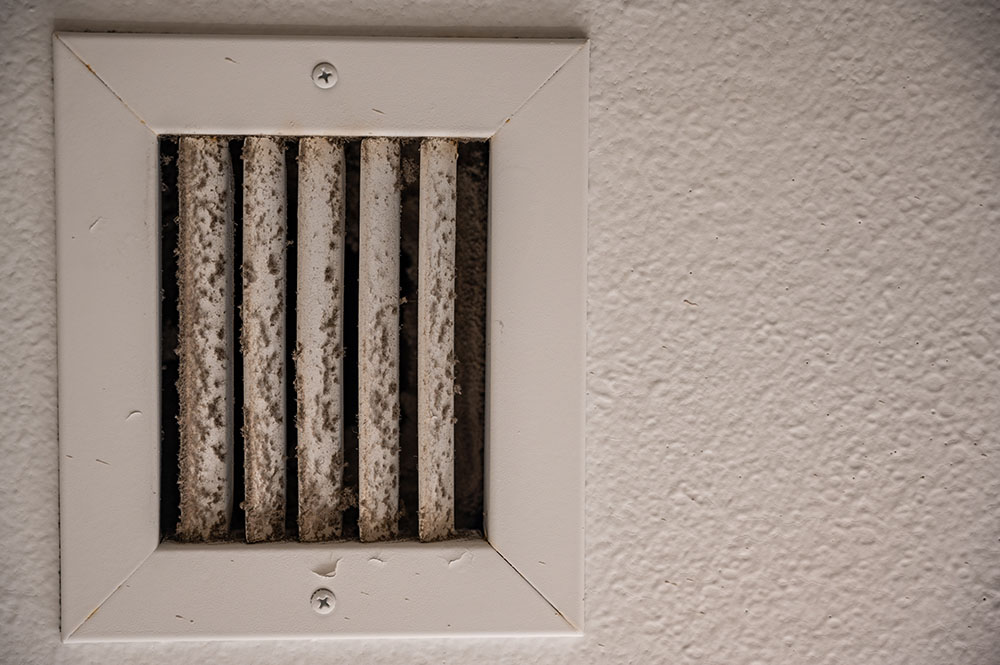
One of the biggest misconceptions: mold starts at air vents.
Science—and inspections—say otherwise.
Mold most often starts:
- On evaporator coils
- Inside air handlers
- In drain pans
- In damp duct insulation
- Near return plenums
Supply vents are usually where mold is noticed, not where it begins.
Dust Isn’t the Enemy—Moisture Is
Another misunderstanding is blaming dust.
Here’s the simple truth:
- Dust alone does not cause mold
- Moisture + dust = mold
Dust provides organic material mold can feed on. Moisture allows it to grow. Clean ducts with condensation still grow mold. Dusty ducts without moisture usually don’t.
This is why moisture readings matter more than appearance.
How Mold Spreads Through HVAC Systems (Step by Step)
This sounds complex, but it’s straightforward science:
- Moisture forms on HVAC components
- Mold begins growing on damp surfaces
- Airflow passes over those surfaces
- Mold releases microscopic spores
- Spores travel through ductwork
- Spores exit through supply vents
HVAC systems don’t create mold.
They transport spores once mold already exists.
Why HVAC Mold Can Feel “Everywhere”
Because HVAC systems recirculate air, spores can pass through the system many times per day.
That means:
- Odors may come and go
- Symptoms may feel inconsistent
- One small growth area can affect multiple rooms
This doesn’t mean the entire system is always contaminated—but it explains why HVAC mold can feel widespread even when growth is localized.
The Role of Humidity (Often Missed)
In many Tamarac inspections, there’s no active leak.
Instead, inspectors find:
- Indoor humidity staying too high
- Condensation forming repeatedly
- Cooling without effective dehumidification
Oversized AC units, poor airflow, or dirty coils can cool air quickly without removing enough moisture—creating perfect mold conditions.
Why DIY HVAC Mold Fixes Usually Fail (Scientifically)
DIY efforts usually focus on what’s visible:
- Spraying vents
- Cleaning accessible surfaces
- Fogging treatments
Science explains why these don’t last:
- Mold grows into porous materials
- Moisture remains after surface cleaning
- Spores continue circulating
If moisture conditions don’t change, mold simply regrows.
HVAC Mold and Health: What Science Actually Shows
HVAC mold doesn’t affect everyone the same way.
Common reactions include:
- Sneezing or congestion
- Sinus irritation
- Headaches
- Fatigue
- Worsening allergies or asthma
Some people feel nothing at all.
Science shows that exposure level and individual sensitivity matter more than mold type or color.
Early HVAC Warning Signs Science Explains Well
Before visible mold appears, inspectors often note:
- Musty odors when AC turns on
- Condensation near vents
- Indoor humidity that stays high
- Dust returning quickly after cleaning
- Uneven cooling
These signs reflect moisture problems, not mold severity—and they usually appear first.
Why Timing Changes Everything
From a scientific standpoint, time matters because:
- Moisture penetrates deeper over time
- Mold spreads into adjacent materials
- Drying becomes harder
Inspection patterns consistently show:
- Early action = localized issues
- Delayed response = broader HVAC involvement
- Long delays = higher costs
Mold doesn’t suddenly worsen—it progresses because moisture remains longer.
What Actually Prevents HVAC Mold (Based on Science)
Effective prevention focuses on:
- Proper AC sizing
- Clean evaporator coils
- Clear drain lines
- Controlled indoor humidity
- Good airflow
- Dry duct insulation
When HVAC systems dry properly, mold cannot grow—no matter how many spores exist naturally.
Practical, Science-Based Advice for Tamarac Homeowners
No fear required—just smart steps:
- Monitor indoor humidity
- Address condensation promptly
- Maintain HVAC drainage and coils
- Investigate musty startup odors
- Avoid surface-only fixes
These steps align with how mold actually behaves.
When a Closer Look Makes Sense
Evaluation is reasonable when:
- Humidity stays high despite cooling
- Odors appear when the AC starts
- Mold was found elsewhere in the home
- HVAC systems show repeated condensation
- Mold returns after cleaning
Evaluation confirms conditions—it doesn’t create problems.
Final Thoughts: HVAC Mold Follows Simple Science
In Tamarac homes, HVAC mold isn’t mysterious or inevitable. It follows clear, basic rules:
- Moisture enables growth
- Dust provides food
- Airflow moves spores
- Time allows spread
Homeowners who understand the science don’t panic—and they don’t waste money on temporary fixes. They control moisture, keep systems dry, and stop HVAC mold before it becomes disruptive.
