
Why Mold Keeps Returning After DIY Cleaning – Lessons From Real Inspections for Homes in
Let’s be honest for a second. If DIY mold cleaning actually worked long-term, we’d be out of a job. But inspection after inspection across Florida proves the same thing: mold keeps coming back because cleaning fixes the look, not the problem. And yeah, that gets frustrating fast.
We’ve walked into countless homes where the walls look freshly scrubbed, the smell seems gone, and the homeowner feels confident. Then we check behind a wall, inside the HVAC system, or under a sink—and there it is. Still growing. Still spreading. Still winning.
The Biggest DIY Myth: “If I Can See It, I Can Fix It”
This is the number one mistake homeowners make. Mold doesn’t just sit on surfaces. It grows into materials.
Real inspections across Florida show mold hiding:
- Behind drywall
- Inside cabinets
- Under flooring
- Inside HVAC air handlers
When you clean what you see, mold simply stays put behind the scenes and waits for moisture to do its thing again.
Moisture Never Left (That’s the Real Issue)
Here’s the hard truth: mold never returns on its own. It comes back because moisture never left.
In Florida homes, we almost always find:
- High indoor humidity
- AC condensation issues
- Small plumbing leaks
- Past water damage that never fully dried
If moisture stays, mold stays. Cleaning without moisture control is basically cosmetic work.
Why Mold Comes Back in the Same Spot
Homeowners often tell us, “It keeps coming back in the exact same place.” That’s not bad luck—that’s physics.
That spot usually has:
- Ongoing condensation
- Poor airflow
- Hidden moisture behind the surface
Until that condition changes, mold treats that location like home base.
HVAC Systems Keep the Cycle Alive
This part catches people off guard. Even if you clean a wall perfectly, your HVAC system can re-seed mold spores throughout the house.
Inspection data repeatedly shows:
- Mold near air handlers
- Moisture in ductwork
- Spores circulating every AC cycle
So yeah, you clean one room… and the HVAC brings it right back. Rude, but true.
DIY Cleaning Often Spreads Mold (Oops)
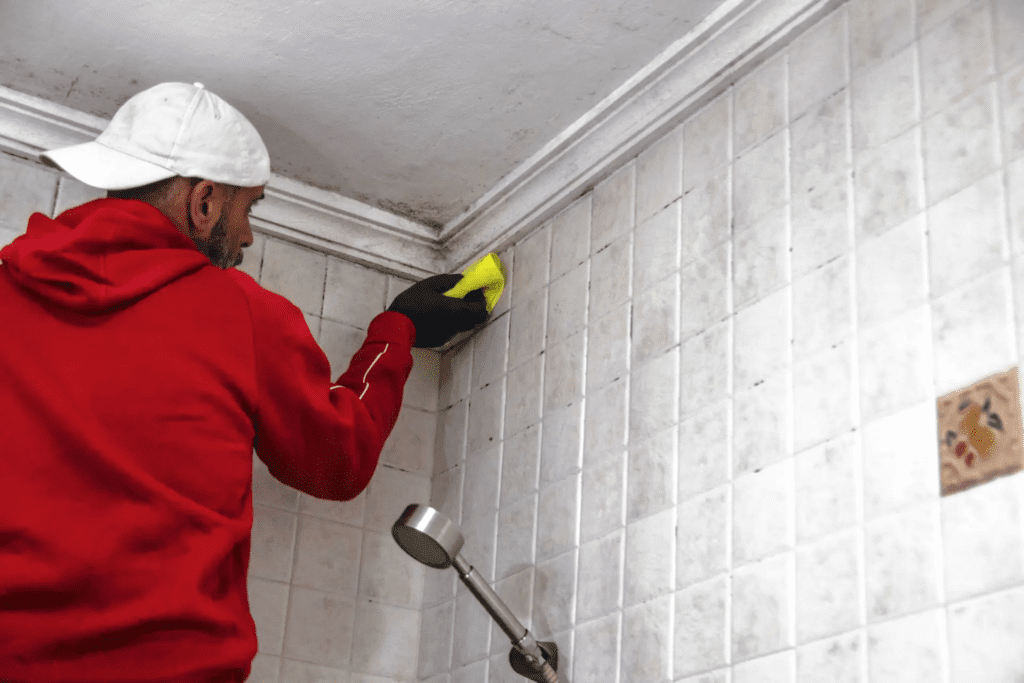
Scrubbing mold without containment releases spores into the air. That’s not opinion—that’s what we measure during inspections.
After DIY attempts, we often find:
- Mold appearing in new areas
- Faster regrowth
- Larger affected zones
IMO, this is why DIY cleaning sometimes makes things worse instead of better. 😬
Paint Is Not a Mold Solution
Fresh paint makes homeowners feel accomplished. Mold feels amused.
We regularly find mold:
- Behind freshly painted walls
- Under “mold-resistant” paint
- Behind new cabinets
Paint hides stains. It does not remove moisture or kill mold inside materials.
Humidity Is the Silent Accomplice
Florida humidity deserves its own section. High humidity alone can support mold growth—no leaks required.
Inspection readings often show:
- Indoor humidity above safe levels
- Condensation on vents
- Damp air even when cool
When humidity stays high, mold never really leaves.
Why Real Inspections Change Everything
Inspections don’t guess—we verify. We measure moisture, check HVAC systems, and look where homeowners can’t.
A proper inspection helps:
- Find hidden mold
- Identify moisture sources
- Stop repeat growth
That’s how you break the cycle for good.
What Actually Stops Mold From Coming Back
Here’s what works, based on real inspection data:
- Fix moisture issues
- Control indoor humidity
- Address HVAC contamination
- Remove affected materials when needed
When conditions change, mold stops showing up. Simple, not dramatic.
Final Thoughts
DIY cleaning feels productive, but Florida inspections prove the same lesson over and over: mold keeps returning because the root cause stays untouched.
Homes across deal with constant humidity, so surface cleaning alone never wins this fight.
If mold keeps coming back, stop scrubbing and start solving.
