
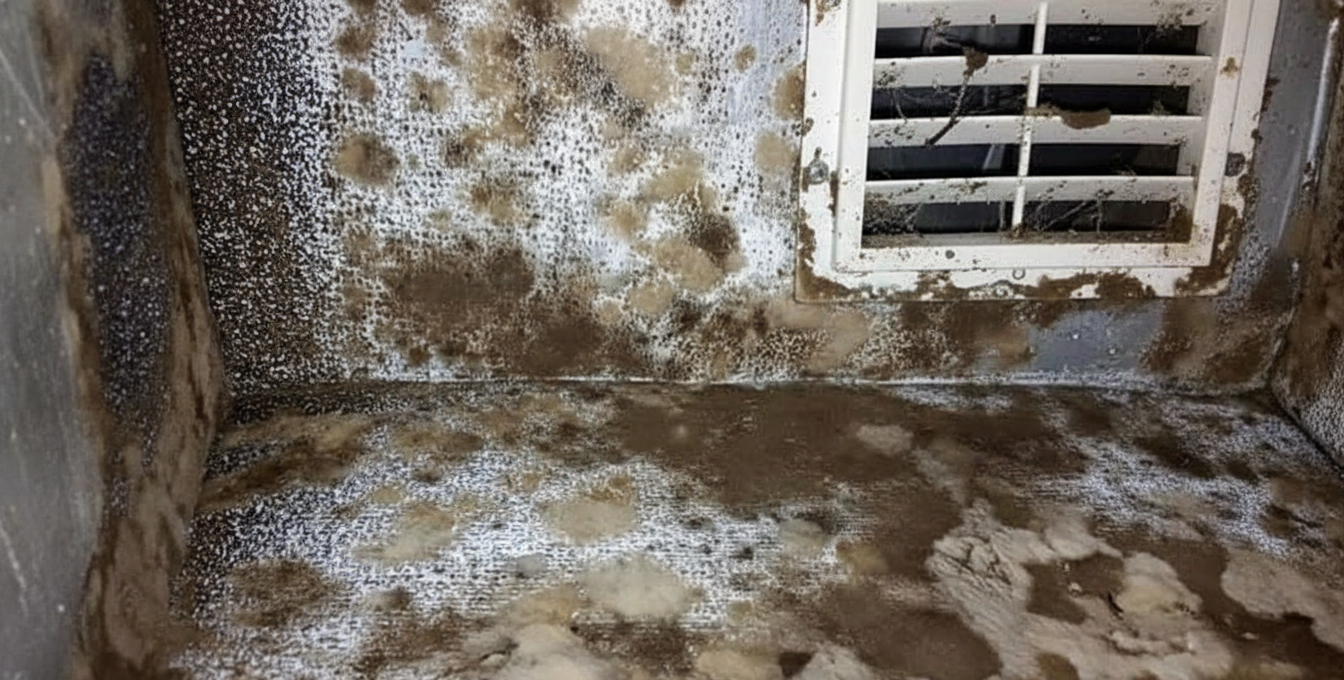
Why Mold Loves Air Duct Systems
Alright, let’s talk about one of my favorite topics — not because it’s fun, but because it drives homeowners absolutely crazy: mold in air ducts.
If you live in Florida (or anywhere humid, really), this is something you’ve got to understand. Your air ducts are basically a mold playground, and ignoring it only makes the problem worse. After years of handling mold inspection, testing, and full duct remediation, here’s the real deal on why mold absolutely loves these systems.
Air Ducts: The Perfect Mold Environment
Mold needs three things to thrive:
- Moisture
- Organic material to feed on
- Warmth
Guess what? Air ducts check all three boxes in Florida homes.
- Moisture: AC condensation, leaks, or humid air often leads to water pooling inside ductwork. Even small amounts trapped behind insulation are enough.
- Organic material: Dust, pollen, pet dander, and tiny debris accumulate inside ducts — basically mold buffet tables.
- Warmth: Ducts inside walls and attics stay warm, perfect for mold growth.
Ever wonder why your AC smells musty sometimes? That’s mold thriving in your vents.
How Mold Gets Into Air Ducts
Mold spores are everywhere — outdoors, on clothing, even in the dust you sweep up. Your HVAC system circulates air constantly, giving spores a free ride.
Common ways mold infiltrates duct systems:
- Dirty return vents sucking in dust and spores
- Leaky ducts pulling in humid attic air
- Condensation forming on coils and duct insulation
Once inside, spores attach to surfaces and multiply silently.
Signs You Might Have Mold in Your Ducts
You don’t need to open every vent to check. Some clues are obvious:
- Musty or moldy odor when AC turns on
- Increased allergy symptoms indoors
- Visible dust accumulation that seems “wet” or clumpy
- Uneven airflow or unexpected humidity spikes
FYI, these symptoms often appear before you ever see mold.
Why DIY Cleaning Often Fails
Many homeowners try vacuuming or wiping vents. Here’s why it rarely works:
- Spores deep inside insulation or duct material remain untouched
- Disturbing spores can release them into living spaces
- Moisture sources aren’t addressed, so mold grows back
Bottom line: cleaning alone doesn’t fix the problem. You need professional duct remediation.
Professional Duct Mold Remediation: What Works
When we handle mold in ducts, we always:
- Identify and fix moisture sources — condensation, leaks, or improper insulation
- Contain the area — to prevent spores from spreading during cleaning
- Use HEPA air scrubbers and negative pressure — traps spores safely
- Remove or clean contaminated materials — duct insulation, damaged duct sections, or filters
- Test air quality after remediation — ensures indoor air is safe
Doing it right prevents mold from coming back.
Prevention Tips for Homeowners
Want to make your ducts less hospitable to mold?
- Keep indoor humidity below 60%
- Service AC systems regularly
- Clean drain lines and drip pans
- Seal leaky ducts
- Replace air filters on schedule
- Schedule routine duct inspections
A little maintenance goes a long way in keeping mold at bay.
Why It Matters
Mold in air ducts isn’t just unsightly — it spreads spores throughout your home, affecting air quality, health, and property value.
Ignoring it might feel easier, but your family and your home’s HVAC system will pay the price later.
Think of it this way: your ducts are a highway. Mold just wants to ride along. Make sure you close the toll gates before it sets up camp.
