
Lessons From Real Inspections: HVAC Mold Insights for Homes in Davie
HVAC mold is one of the most misunderstood issues inspectors encounter in Davie homes. Some homeowners assume it only happens in neglected systems. Others worry that a single spot means the entire home is contaminated. Real inspections paint a more balanced picture.
Across Davie, HVAC mold shows up for predictable reasons tied to moisture, airflow, and time—not because systems are “dirty” or because homeowners did something wrong. This article breaks down what inspectors actually see during real inspections, where HVAC mold usually starts, and what homeowners can learn from these findings without panic or exaggeration.
Why HVAC Mold Appears So Often in Davie Homes
Davie homes operate under constant moisture pressure. From inspection reports, several local factors show up repeatedly:
- High humidity most of the year
- Heavy rain during storm season
- Near-continuous air-conditioning use
- Ductwork routed through warm attic spaces
- Slab foundations that hide plumbing leaks
When moisture isn’t managed perfectly, HVAC components become one of the first places mold conditions develop.
Lesson #1: HVAC Mold Rarely Starts at the Vents
One of the biggest misconceptions inspectors hear is, “I saw mold at a vent, so that must be where it started.”
Real inspections show the opposite.
Inspectors most often find mold:
- Inside air handlers
- On evaporator coils
- In drain pans
- In damp duct insulation near the unit
Supply vents are usually where mold becomes visible, not where it begins. By the time it reaches vents, growth has often been present deeper in the system for weeks or months.
Lesson #2: Moisture Matters More Than Cleanliness
Many homeowners assume HVAC mold is caused by dust or lack of cleaning. Inspection data says otherwise.
What inspectors consistently see:
- Dusty systems with no moisture → no mold
- Clean systems with condensation → mold growth
Dust provides food, but moisture is the deciding factor. Without moisture, mold can’t grow—no matter how dirty a system looks.
Lesson #3: Condensation Problems Are Common and Overlooked
Condensation is one of the most frequent contributors inspectors find in Davie HVAC systems.
Common inspection findings include:
- Clogged or slow AC drain lines
- Oversized AC units cooling too quickly
- Dirty evaporator coils reducing dehumidification
- Poor airflow inside the system
When condensation forms repeatedly and doesn’t dry, HVAC components stay damp long enough for mold to establish.
Lesson #4: HVAC Systems Don’t Create Mold—They Move It
This distinction is critical.
Inspectors emphasize that HVAC systems:
- Do not create mold spores
- Do not automatically contaminate a home
However, once mold grows inside the system, airflow can distribute spores throughout the home, making a localized problem feel widespread.
This explains why musty odors or irritation may appear in multiple rooms even when mold growth is limited to one HVAC component.
Lesson #5: HVAC Mold Appears in New and Older Homes
Another surprise for many homeowners: HVAC mold isn’t limited to older systems.
Inspection records show mold in:
- Older homes with aging drainage components
- Newer homes with tightly sealed construction
- Renovated homes where airflow patterns changed
Newer systems may cool efficiently but fail to remove enough moisture, while older systems may drain poorly. Age alone doesn’t predict HVAC mold.
Lesson #6: Cleaning Alone Rarely Fixes HVAC Mold
Inspectors frequently revisit homes where ducts were already cleaned or fogged.
What they often find:
- Mold returning after duct cleaning
- Condensation still present
- No improvement in moisture conditions
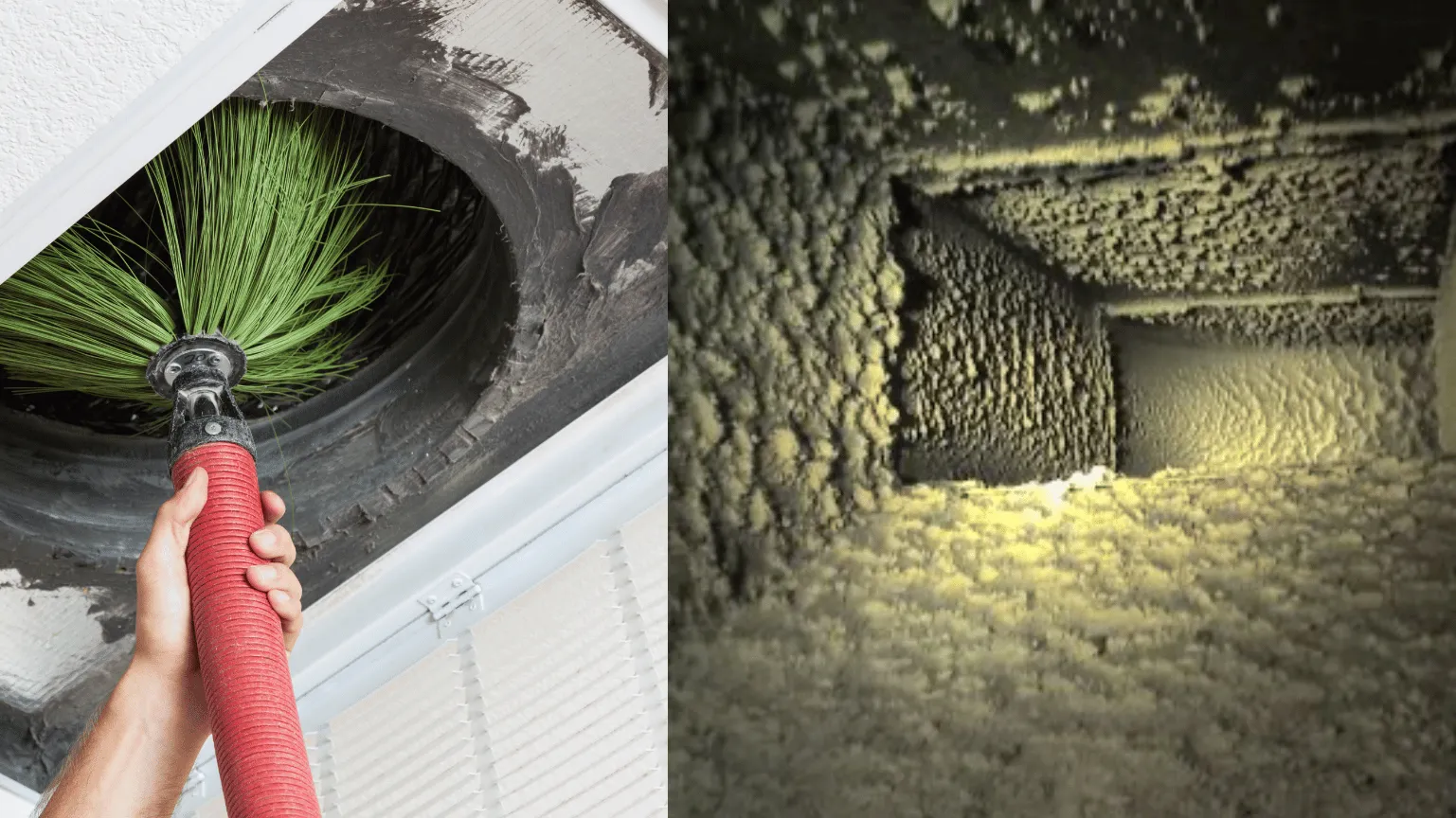
Cleaning removes debris, not moisture. If condensation and humidity aren’t corrected, mold conditions usually return.
Lesson #7: Insulated Ductwork Is a Common Trouble Spot
In Davie homes, insulated ductwork running through warm attics is a frequent mold location.
Inspectors often find:
- Moisture trapped inside duct insulation
- Mold growing beneath the insulation surface
- Sections staying damp long after AC cycles
Once insulation becomes contaminated, surface cleaning is often ineffective because mold grows within the material.
Lesson #8: Health Symptoms Don’t Always Match Findings
Another consistent inspection lesson: symptoms vary widely.
Inspectors often encounter:
- Homes with confirmed HVAC mold but minimal symptoms
- Homes with mild findings and noticeable allergy complaints
Sensitivity depends on the individual. That’s why inspections focus on environmental conditions, not symptom severity alone.
Lesson #9: Early Warning Signs Are Subtle
Before visible HVAC mold appears, inspectors often note:
- Musty odors when the AC turns on
- Excess condensation near vents
- Indoor humidity that stays high
- Dust returning quickly after cleaning
- Uneven cooling between rooms
These signs usually show up well before mold becomes obvious.
Lesson #10: Time Is the Biggest Cost Factor
Inspection timelines show a clear pattern:
- Early evaluation = localized HVAC issues
- Delayed response = broader system involvement
- Long delays = higher remediation costs
HVAC mold doesn’t suddenly become expensive. It becomes expensive because moisture is allowed to persist over time.
What Inspectors Focus On Instead of Fear
Professionals don’t treat HVAC mold as a crisis. They treat it as a moisture management issue.
Their focus includes:
- Identifying condensation sources
- Measuring moisture levels
- Evaluating airflow and drainage
- Inspecting duct insulation condition
- Preventing regrowth through humidity control
When moisture is controlled, HVAC mold stops spreading—even though spores naturally exist.
Practical Takeaways for Davie Homeowners
From real inspections, homeowners who avoid recurring HVAC mold usually:
- Monitor indoor humidity
- Address AC drain issues promptly
- Maintain evaporator coils
- Investigate musty startup odors
- Avoid surface-only fixes
These steps align with how HVAC mold actually behaves in Davie homes.
When HVAC Mold Evaluation Makes Sense
Based on inspection patterns, evaluation is especially useful when:
- Musty odors appear during AC startup
- Humidity stays high despite cooling
- Mold was found elsewhere in the home
- Ducts run through warm attic spaces
- Mold keeps returning after cleaning
Evaluation provides clarity—not alarm.
Final Thoughts: Real Inspections Tell a Predictable Story
In Davie homes, HVAC mold isn’t rare—but it isn’t mysterious either. Real inspections show it follows simple rules:
- Moisture enables growth
- Insulation and dust provide support
- Airflow distributes spores
- Time allows expansion
Homeowners who understand these lessons don’t panic and don’t ignore warning signs. They address moisture early, keep systems dry, and prevent HVAC mold from becoming a repeat issue.
