
image_group{“query”:[“hidden mold behind drywall Florida”,”mold under kitchen sink Florida”,”attic mold South Florida home”,”HVAC mold air handler Florida”,”moisture meter wall mold inspection”]}
Practical Advice From Experts: Hidden Mold Insights for Homes in entity[“city”,”Miramar”,”florida, us”]
Hidden mold is the kind of problem that doesn’t announce itself—and in Miramar homes, that’s exactly why it sticks around. By the time homeowners see mold, experts often find it’s been growing quietly for a while. The good news? Once you understand where it hides and why, it becomes far easier (and cheaper) to deal with.
Here’s the straight, practical advice inspectors share after real inspections inside Miramar homes.
Hidden Mold Is Far More Common Than Visible Mold
One of the biggest surprises for homeowners: many homes with no visible mold still test positive for mold issues.
Inspectors frequently uncover hidden growth:
- Behind clean-looking drywall
- Under kitchen and bathroom cabinets
- Inside wall cavities near small leaks
- Beneath flooring or baseboards
If mold had to be obvious to be a problem, inspections wouldn’t find much. Reality says otherwise.
Moisture Is Always the Root Cause
Experts don’t chase mold first—they track moisture.
In Miramar homes, hidden mold is most often linked to:
- AC drain line backups or condensation
- Slow plumbing leaks inside walls
- Window or sliding door seepage
- High indoor humidity that never fully drops
Even minor moisture issues, when left alone, create the perfect conditions for mold to grow out of sight.
HVAC Systems Are a Major Clue
Many hidden mold cases lead back to the AC system.
Inspectors commonly find:
- Mold near air handlers or evaporator coils
- Standing water in drain pans
- Damp duct insulation feeding growth
- Odors that appear only when the AC runs
Because HVAC systems circulate air throughout the home, hidden mold near the system can affect multiple rooms—even if only one area shows symptoms.
Attics Tell a Story Homeowners Rarely See
Attics are one of the most overlooked spaces—and one of the most revealing.
In Miramar inspections, experts often find:
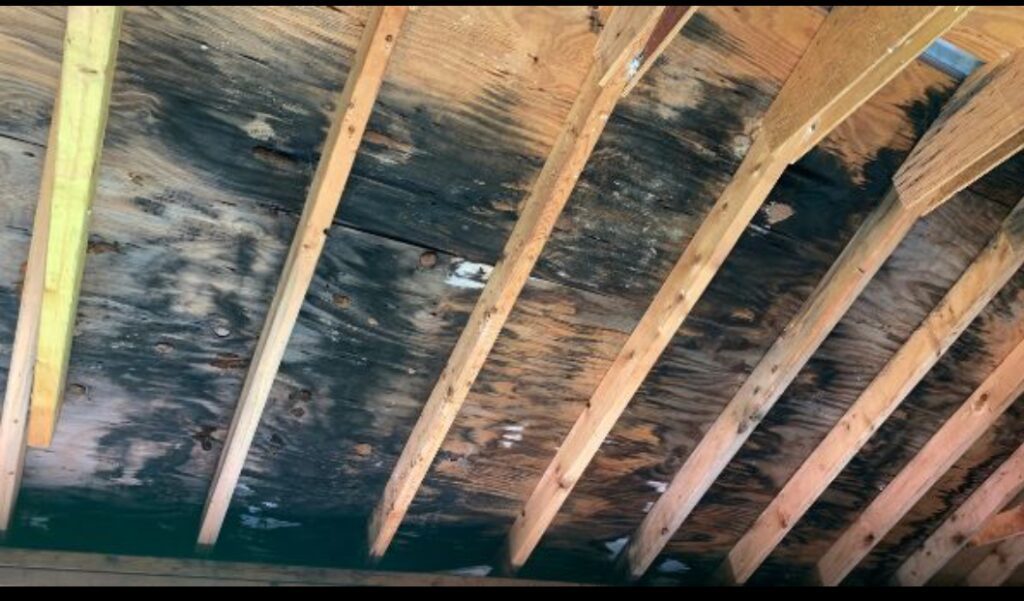
- Mold on roof decking from trapped humidity
- Poor ventilation causing condensation
- Small roof leaks that never reached the ceiling below
By the time a stain appears inside, attic mold is often already established.
Kitchens and Bathrooms Hide More Than They Show
Yes, mold shows up in kitchens and bathrooms—but not because they’re dirty.
Hidden growth is commonly found:
- Under sinks from slow leaks
- Behind cabinets where airflow is limited
- Above bathroom ceilings due to poor exhaust ventilation
Repeated cleaning without fixing leaks or ventilation usually lets mold keep growing quietly.
Why Homeowners Don’t Notice Hidden Mold Right Away
Inspectors see the same reasons again and again:
- Odors come and go
- Symptoms feel like allergies
- Growth stays behind surfaces
- Damage looks cosmetic at first
By the time mold becomes visible, it often isn’t new—it’s just finally obvious.
What Experts Actually Look For During Inspections
Professional inspections go far beyond what’s visible.
Experts rely on:
- Moisture meters to find damp materials
- Thermal imaging to locate hidden moisture
- Air sampling to compare indoor vs outdoor levels
- Patterns across rooms and systems
The goal is understanding why mold is present, not just where it’s seen.
Patterns That Signal Bigger Hidden Problems
Certain findings raise immediate red flags in Miramar homes:
- Mold appearing in more than one room
- Musty odors tied to AC operation
- Moisture with no obvious source
- Past water damage with no follow-up testing
These patterns often mean hidden mold is spreading—or likely to.
Practical Expert Advice That Actually Helps
Instead of panic or harsh chemicals, experts consistently recommend:
- Investigate musty smells early
- Address humidity and condensation quickly
- Maintain AC systems and drain lines
- Check under sinks and behind cabinets periodically
- Inspect attics after storms or leaks
Early action almost always means simpler fixes.
The Miramar Reality
Miramar homes face the same pressures as the rest of South Florida—heat, humidity, and constant AC use. Hidden mold isn’t rare, and it’s not a sign of neglect. It’s usually a sign that moisture stayed hidden too long.
Final Takeaway
What experts see inside Miramar homes makes one thing clear: hidden mold thrives on moisture, time, and silence. When homeowners know where to look and act early, mold stays manageable—and often invisible for good.
Don’t wait for obvious stains. Pay attention to moisture, odors, and airflow. That’s how hidden mold loses its advantage.
